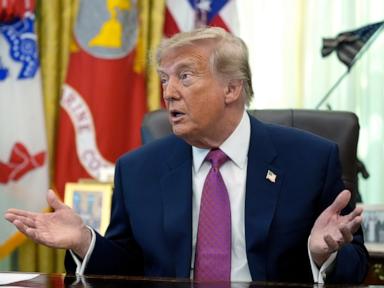
President Donald Trump signed an executive order directing the Department of the Interior to officially scrub the name Lake Ontario from federal databases and replace it with Lake America. This administrative stroke follows a familiar playbook. It mirrors his previous decree targeting the Gulf of Mexico, transforming domestic mapping conventions into instruments of geopolitical theater. Yet, beneath the surface of this cartographic provocation lies a more calculated strategy. It weaponizes nomenclature to signal an unyielding posture in an escalating trade war with Canada, even as the practical utility of the directive remains entirely confined to American borders.
The timing of the decree is hardly accidental. Trade negotiations between Washington and Ottawa collapsed after the White House imposed steep fifty percent tariffs on roughly twenty billion dollars worth of Canadian goods, including dairy products, lumber, and manufactured items. When Canadian Prime Minister Mark Carney walked away from the bargaining table and characterized the economic pressure as a hostile posture, the administration responded not just with economic counterpunches, but with a symbolic rewriting of North American geography. Also making waves recently: Cartographic Coercion The Mechanics Of Executive Hydrographic Renaming And Bilateral Trade Friction.
The Limits of Federal Cartography
To understand the weight of this decision, one must examine the mechanics of American geographic naming conventions. Under federal law, the executive branch possesses broad authority over how domestic agencies designate physical landmarks. Within hours of the president signing the order at the Resolute Desk, the United States Geological Survey updated its Geographic Names Information System to reflect the new designation. Federal maps, contracts, and documents originating from Washington will now default to Lake America.
However, geography respects no single sovereign when a body of water is shared. Lake Ontario is an international waterway split between the United States and Canada, managed through decades of shared treaties and environmental pacts. The executive order carries zero legal or administrative weight north of the international border. Canadian officials immediately dismissed the move as political posturing, with Prime Minister Carney noting that the four-hundred-year-old name originates from the Wendat word ontari'io, signifying a great lake or shining waters. Additional insights regarding the matter are covered by USA Today.
State-level resistance adds another layer of friction to the initiative. New York Governor Kathy Hochul publicly rejected the federal rebranding, declaring that her administration and state agencies will continue using the historical designation. When local governance and state mapping departments refuse to adopt a federal edict, the result is administrative chaos. Private mapmakers and global navigation companies now face a fragmented landscape where digital products must balance local user locations against federal compliance standards, much like the dual labeling that occurred following the Gulf of Mexico decree.
History as a Political Prop
This administrative maneuver represents a broader trend of utilizing historical revisionism and nationalist symbolism to pressure foreign adversaries. By targeting a name rooted in Indigenous and Canadian heritage, the administration taps into a potent brand of cultural nationalism. It sends an unmistakable signal to domestic voters that traditional international partnerships are secondary to unilateral economic dominance.
Critics from both sides of the political aisle have pointed out the transactional nature of the dispute. While hardline trade advisers praise the aggressive stance against what they describe as unfair Canadian trade practices, moderate regional politicians caught in the crossfire view the naming dispute as an unnecessary escalation. Agricultural exporters in New York and manufacturing sectors across the Great Lakes basin rely heavily on seamless cross-border commerce. Alienating a primary trading partner over hydronyms threatens to entrench supply chain disruptions that hurt domestic producers far more than they injure Ottawa.
The Cost of Symbolic Diplomacy
The practical reality of international relations rarely bends to executive signatures. Canada has made it clear that no amount of digital map-redrawing will alter its sovereign terminology or domestic governance. As the thirty-day window for federal agencies to complete the transition ticks down, the division between administrative reality and physical geography widens.
The lake remains where it has always been, straddling an international boundary while bearing two entirely different names depending on which side of the water one happens to stand. What began as a breakdown in tariff negotiations has thus expanded into a permanent fixture of modern statecraft, where borders are contested not just with tariffs and trade barriers, but with ink, pixels, and executive orders.