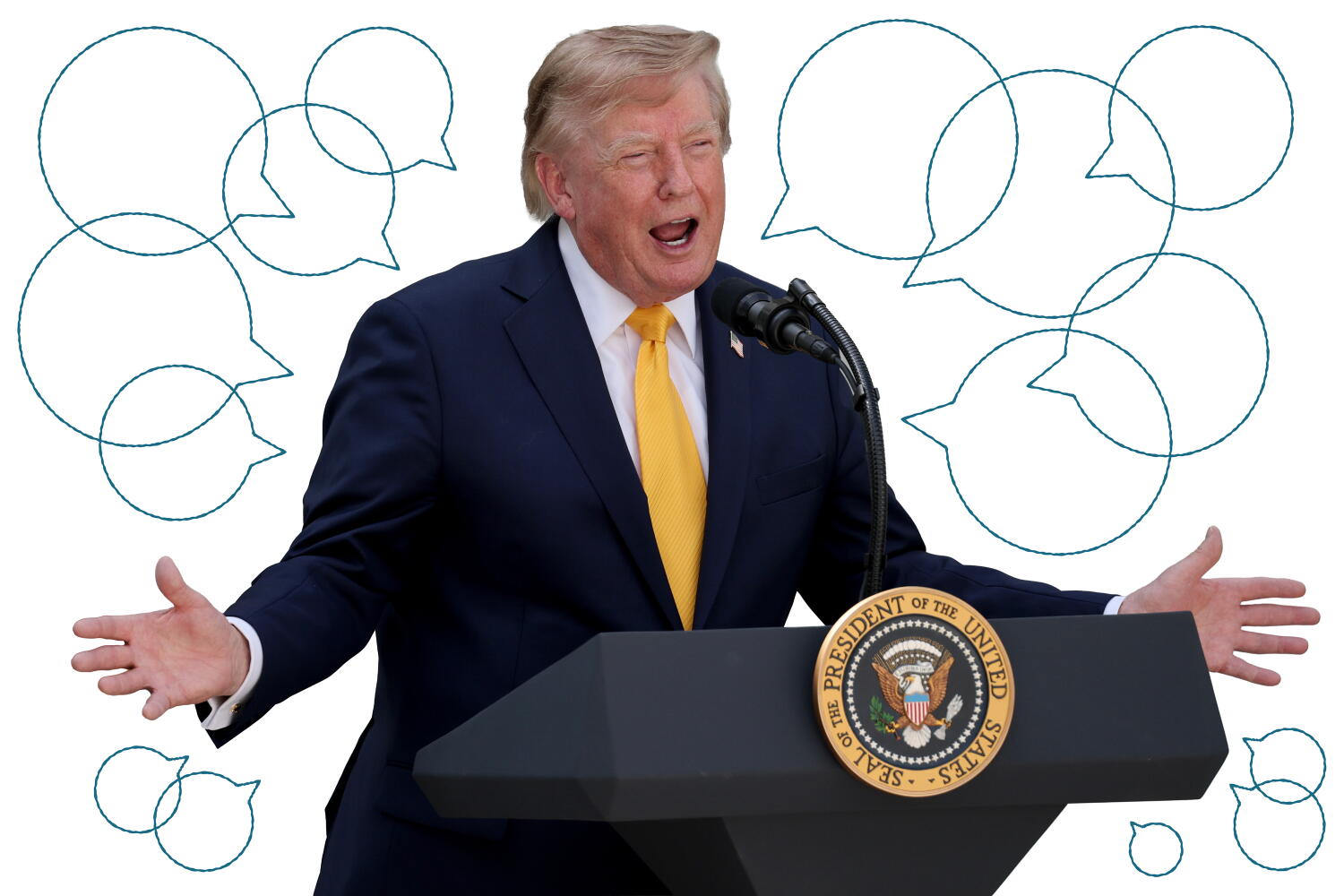
Six months after President Donald Trump promised a brief, weeks-long military campaign against Iran, his administration is confronting the grinding reality of a prolonged stalemate. What began in late February as a self-described "little excursion" has morphed into a multi-billion-dollar economic and naval confrontation. As munitions stockpiles thin and the critical Strait of Hormuz remains heavily disrupted, the White House has pivoted its messaging entirely. The president who once guaranteed a rapid resolution now insists he is in no hurry to bring Tehran back to the negotiating table.
This rhetorical shift is not merely a change in tone. It is a calculated defensive maneuver designed to obscure strategic miscalculations that date back to the opening weeks of the conflict.
The Anatomy of a Slipping Timeline
When the first wave of U.S. and Israeli airstrikes targeted Iranian leadership and military installations, administration officials privately and publicly forecasted a swift collapse of the clerical regime. They pointed to degraded air defenses and the elimination of key government figures as proof that conventional military pressure alone would yield immediate political surrender.
That assessment ignored decades of institutional hardening within the Islamic Republic.
By month six, the financial toll on the United States has surpassed thirty-seven billion dollars, while global energy markets continue to absorb the shock of a constricted Strait of Hormuz. Only a fraction of the daily commercial traffic that once moved through the vital waterway now risks the passage. Yet, administration briefings routinely emphasize that the waterway is open, citing a handful of daily transits that represent a mere trickle compared to pre-war volume.
This disconnect between podium declarations and maritime reality highlights a deeper administrative vulnerability.
Logistics, Munitions, and the Limits of Squeeze Tactics
Behind the sudden embrace of a patient posture lies a pressing logistical constraint. Months of continuous air operations and naval deployment have severely depleted high-end precision munitions inventories. Military planners have quietly warned the White House that sustaining high-tempo kinetic strikes risks compromising U.S. readiness in other global theaters.
Faced with these inventory ceilings, the administration has rebranded its approach from active military degradation to total economic containment. Treasury officials recently rolled out aggressive threats of secondary sanctions targeting any entity or nation trading with Tehran.
This strategy relies heavily on the premise that complete financial isolation will break the regime where bombs could not. Analysts who have tracked Iranian sanctions evasion networks for years remain skeptical. Tehran has spent decades refining underground shipping channels, utilizing dark-fleet tankers, and selling heavily discounted crude to intermediaries who bypass Western oversight.
China remains the primary variable in this equation. For an economic blockade to achieve the absolute zero-leakage effect envisioned by administration hardliners, Washington must be willing to penalize major Chinese financial institutions. Whether the White House possesses the political appetite to trigger a full-scale trade rupture with Beijing over Iranian oil exports is doubtful.
The Politics of Endless Entanglement
For a leader who built his political brand on dismantling the legacy of protracted Middle Eastern engagements and criticizing predecessors for open-ended military commitments, the six-month milestone represents an uncomfortable paradox.
Publicly, the administration pushes back against comparisons to past conflicts in Iraq and Afghanistan, noting the absence of ground troops inside Iranian territory. Yet the sharing of social media graphics boasting premature victory slogans reveals an administration acutely sensitive to public fatigue.
Diplomatic off-ramps floated by regional mediators in Qatar and Pakistan have found little traction in Washington. Trump’s insistence that he is in no hurry to talk effectively freezes formal diplomacy, leaving the conflict suspended in a permanent state of maritime confrontation and economic warfare.
As the calendar moves toward critical domestic midterms, the strategy has shifted from securing a definitive victory to managing an indefinite stalemate. The rhetoric of a quick end has vanished, replaced by the quiet acknowledgment that containing Iran is no longer a sprint, but an open-ended endurance test.
Trump signals caution on Iran: “I'm in no hurry… we'll give it one shot
This clip captures President Trump outlining his cautious approach and deliberate pacing regarding further escalation with Tehran.
http://googleusercontent.com/youtube_content/1