Most weekend news roundups treat major geopolitical shifts and local infrastructure failures like trivial footnotes between coffee breaks. That's a mistake. When you look closely at what's actually happening beneath the surface—from acoustic stealth breakthroughs in Chinese naval engineering to concrete cracks in one of the world's most reliable transit systems—you start seeing a much bigger picture about engineering, accountability, and power in East Asia.
I've spent years tracking Asia-Pacific defense tech and urban infrastructure, and honestly, the intersection of these two stories tells you everything about where the region is headed. On one hand, you have relentless state-backed military innovation pushing physics to its limits. On the other, you have aging civic networks struggling under the weight of rapid expansion and cost-cutting pressures. Let's break down what actually happened, why the standard headlines miss the real stakes, and what else slipped under the radar.
The Quiet Revolution in Chinese Torpedo Technology
Naval warfare doesn't get the flashy press that hypersonic missiles or stealth fighter jets do. Yet anyone who understands maritime strategy knows that whoever controls the undersea battlespace controls the Pacific.
Recent developments in China’s torpedo tech point to a massive leap in both propulsion and acoustic stealth. For decades, Western navies relied on a simple acoustic advantage. American and allied submarines were quieter, their sonar arrays were sharper, and their torpedoes could distinguish between a real hull and a decoy far more reliably. That gap has narrowed fast.
Chinese naval researchers, particularly teams working out of institutions like Northwestern Polytechnical University in Xi'an, have been obsessing over two specific problems: cavitation noise and wake homing.
When a traditional torpedo tears through the water at high speeds, it creates tiny vacuum bubbles that collapse violently. That's cavitation. It sounds like a freight train underwater, giving a targeted ship precious minutes to deploy countermeasures or turn away. Modern Chinese designs are tackling this through advanced pump-jet propulsors and thermal propulsion systems that burn specialized fuels without leaving a massive bubble trail.
Why Supercavitation and AI Guidance Change the Math
You've probably heard of supercavitation—enveloping a torpedo in a gas bubble so it flies underwater with almost zero drag. Russia pioneered this with the VA-111 Shkval decades ago, though those early models were basically unguided underwater rockets. They couldn't steer well because the gas bubble blinded their sonar sensors.
Chinese engineers have been working on controllable supercavitation paired with fiber-optic and acoustic-homing hybrid guidance. If you can steer a weapon traveling at over 200 knots underwater, traditional surface ship defenses become almost useless. There simply isn't enough reaction time.
Even on conventional heavyweight torpedoes, like upgrades to the Yu-6 and newer electric-propulsion variants, the real upgrade isn't just the explosive payload. It's the onboard processing. Modern guidance algorithms allow these weapons to hunt in packs, share target data via acoustic modems, and ignore standard acoustic decoys by analyzing the magnetic and wake signatures of a vessel.
For naval planners in Washington, Tokyo, and Canberra, this means surface fleets can't operate with the same assumptions they held ten years ago. Anti-submarine warfare has to happen much further out from the carrier group, relying heavily on unmanned underwater vehicles and seabed sensor networks rather than just destroyers pinging active sonar.
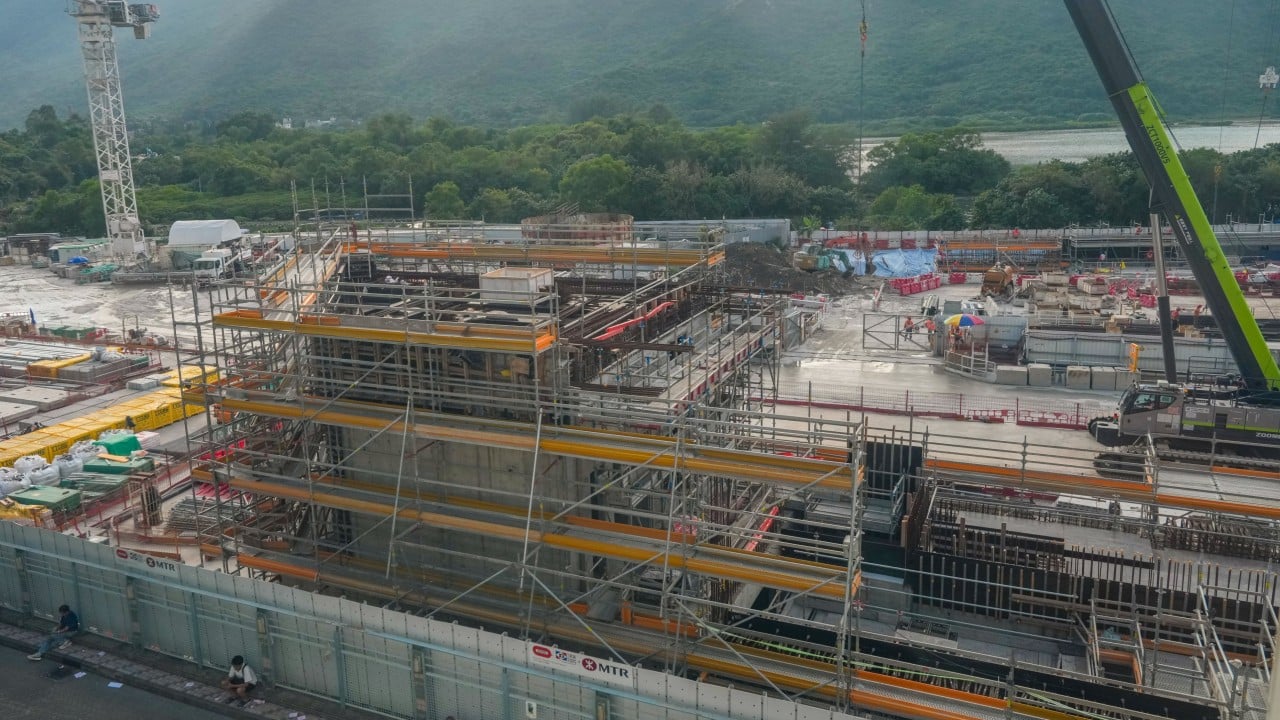
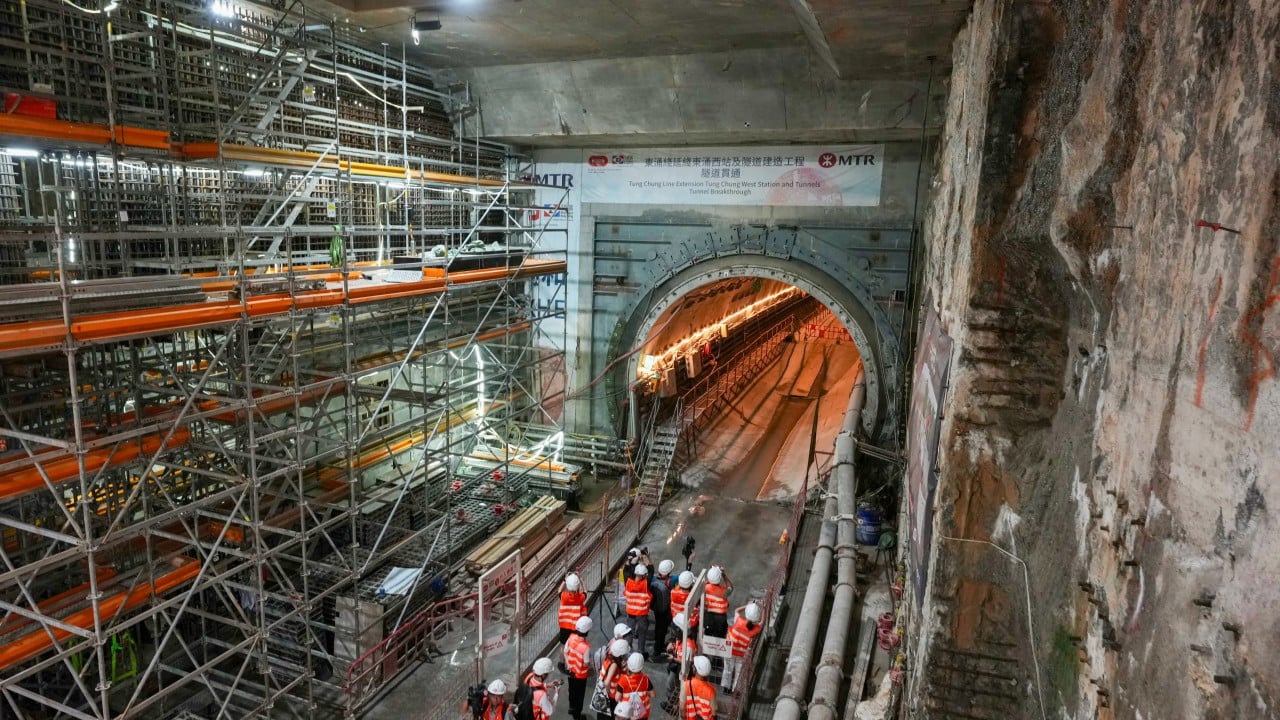
What Went Wrong at the Hong Kong MTR Station
Shift gears from deep-ocean warfare to the daily commute of millions. For years, Hong Kong’s Mass Transit Railway (MTR) was the gold standard for global public transit. Transit planners from New York to London flew to Hong Kong to study how the MTR Corporation managed a 99.9% on-time rate while actually turning a profit through its "rail plus property" model.
That reputation took serious hits over the past decade, particularly during the construction of the Shatin to Central Link, and recent reports of structural defects at MTR stations prove those headaches aren't entirely in the rearview mirror.
When defects show up in concrete pours, platform screen doors, or steel reinforcement couplers, it's rarely just a bad batch of cement. In my experience looking at major civil engineering failures, systemic defects almost always trace back to fragmented subcontracting and aggressive timeline compression.
The Subcontracting Trap in Mega-Projects
Here is how these problems actually happen on the ground. A primary contractor wins a massive bid from the rail operator. They then slice the job into dozens of smaller packages and hand them off to Tier 2 and Tier 3 subcontractors. Each layer takes a margin. By the time you get to the crew actually tying rebar or pouring concrete at 3:00 AM during a four-hour maintenance window, the budget is tight and the clock is ticking.
If a steel bar doesn't thread properly into a coupler, a rushed foreman faces a terrible choice: halt the pour, report the non-conformance, and eat a massive financial penalty, or cut the threaded end of the rebar to make it look like it fits and pour the concrete before the inspector arrives.
That exact scenario played out during the Hung Hom station scandal years ago, leading to an independent Commission of Inquiry and millions of dollars in remediation work. When fresh defects surface at other stations—whether it's water seepage, hairline concrete cracking, or misaligned track components—commuters right away ask if the underlying culture of oversight ever truly changed.
The MTR Corporation still runs one of the safest, cleanest, and most efficient train networks on the planet. You aren't taking your life into your hands stepping onto a Tsuen Wan Line train. Still, transparency matters. When defects are discovered, delayed public disclosures erode the exact public trust that allows a transit agency to function smoothly.
Three Other Critical Stories You Probably Missed
Weekend news cycles have a nasty habit of burying structural shifts beneath celebrity gossip and hot-take politics. Beyond Chinese naval hardware and Hong Kong’s transit maintenance, three other developments deserve your attention if you want to understand what's actually moving the needle right now.
1. The Quiet Squeeze on Asian Semiconductor Supply Chains
Everyone talks about advanced two-nanometer chips and AI data centers, but the real bottleneck in global manufacturing right now is legacy nodes and specialty packaging. Foundry utilization rates across Taiwan, South Korea, and mainland China are diverging sharply. While high-end AI chipmakers are booked solid into next year, mid-tier manufacturers making power management chips and automotive sensors are fighting a brutal price war.
Chinese domestic foundries have poured billions into mature-node capacity—28-nanometer and above—with heavy state subsidies. That's great if you're an automaker looking for cheap microcontrollers, though it's squeezing profit margins for legacy chipmakers in Taiwan and Japan who can't match state-backed pricing.
2. Southeast Asia’s Grid Bottleneck
Countries like Vietnam, Malaysia, and Indonesia have successfully pitched themselves as the "China Plus One" manufacturing hubs of the world. Factories are going up fast. Data centers are breaking ground every month. There's just one massive problem: the power grids can't keep up.
Northern Vietnam experienced severe rolling blackouts during peak summer heatwaves recently, costing foreign electronics manufacturers hundreds of millions of dollars in lost production. Building a factory takes eighteen months. Building high-voltage transmission lines and upgrading national power grids takes five to ten years. Until Southeast Asian governments solve their transmission bottlenecks and modernize their renewable energy buy-in policies, foreign investment is going to hit a hard physical ceiling.
3. Demographic Shifts Forcing Pension Reforms Across East Asia
While headlines focus on birth rate statistics in South Korea, Japan, and China, the immediate financial impact is hitting pension funds and labor laws right now. Raising the statutory retirement age—long considered political suicide across the region—is no longer optional.
China has begun rolling out gradual increases to its retirement ages, which had remained unchanged since the 1950s despite life expectancy jumping by decades. Meanwhile, corporate hiring practices across Tokyo and Seoul are shifting away from strict seniority-based pay toward merit and contract-based roles for workers in their sixties. If you run a business in Asia, your talent pool is aging rapidly, and your HR policies need to adapt before your best institutional knowledge walks out the door.
How to Read the News Without Getting Played
If you're trying to stay informed without drowning in sensationalism, stop reading daily outrage cycles and start looking for patterns across different sectors. Notice how all these stories connect back to physical reality. You can't fake acoustic physics underwater, you can't wish away bad concrete in a subway tunnel, and you can't run an AI data center without copper wires and megawatts of power.
When you read about a new military breakthrough, look past the state media hype and ask what specific engineering hurdle was cleared—propulsion, guidance, or manufacturing scale. When you read about an infrastructure defect, look at the contracting chain and the regulatory oversight behind it, not just the press release apologizing for the delay.
Pick two or three primary industry sources—defense journals like Naval News, engineering digests, or regional financial filings—and spend thirty minutes every Sunday reading deep-dive reports instead of scrolling algorithmic feeds. You'll spot the real trends months before they hit the front page.