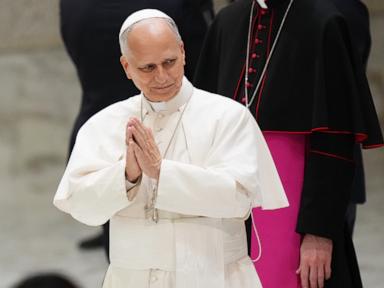
The Vatican has confirmed that the Pope will meet privately with survivors of clergy sexual abuse during an upcoming apostolic journey to Latin America. While church officials frame these encounters as vital moments of pastoral healing and institutional listening, survivor advocacy groups across the region view the announcements with deep skepticism, arguing that closed-door audiences routinely substitute symbolic empathy for structural accountability, transparent canonical records, and enforceable child protection laws.
For decades, the Catholic Church has relied on a predictable diplomatic playbook during international papal visits. A brief line appears on the official itinerary. A small, carefully vetted group of victims is ushered into a private room away from television cameras. Afterward, the Holy See Press Office issues a terse communique describing the Pope’s deep sorrow, his prayers for the victims, and his commitment to zero tolerance.
It is an effective public relations mechanism. It is also an arrangement that leaves the fundamental power imbalances inside regional dioceses entirely untouched.
The Architecture of Papal Diplomacy
To understand why these private meetings generate such fierce debate, one must look at how papal travel is constructed. An apostolic journey is not a spontaneous pastoral visit; it is a meticulously choreographed state and ecclesiastical operation negotiated months in advance between the Vatican Secretariat of State, the local apostolic nuncio, and the national bishops' conference.
Every minute is accounted for. When a meeting with abuse survivors is added to the schedule, the selection process rarely involves independent victim networks or secular legal advocates. Instead, local church authorities—often the very institutions accused of mishandling abuse allegations—frequently play a decisive role in identifying and vetting who gets into the room.
This creates an immediate conflict of interest. Survivors who have accepted quiet financial settlements, or those whose cases remain buried in diocesan archives, often find themselves excluded from the guest list. Those who do attend are typically bound by strict protocols of discretion, leaving them unable to share the substance of the conversation without violating the implicit trust of the pastoral encounter.
Why Latin America Represents a Critical Fault Line
Latin America is home to roughly forty percent of the world’s baptized Catholics. For generations, the institutional church in countries across Central and South America operated with near-total cultural and political impunity, shielded by concordats with national governments and deep social deference toward the priesthood.
That shield cracked dramatically over the past fifteen years. High-profile scandals in Chile, Mexico, Argentina, Peru, and Colombia exposed systemic patterns of clerical abuse and institutional cover-ups that mirrored the crises previously uncovered in Ireland, the United States, and Australia.
Consider the precedent set in Chile in 2018. During a January visit to Santiago, Pope Francis initially defended Bishop Juan Barros, accusing victims of slander for claiming Barros had witnessed and ignored abuse committed by the notorious priest Fernando Karadima. The public backlash was immediate and devastating. Within months, the Vatican was forced to dispatch Archbishop Charles Scicluna to conduct an emergency investigation, resulting in a 2,300-page dossier that documented widespread institutional failure. Every active Chilean bishop subsequently offered their resignation in Rome.
That episode permanently altered how the press and the public view papal trips to the region. The era of taking Vatican assurances at face value ended in Santiago.
The Gap Between Roman Decrees and Local Enforcement
In 2019, the Vatican promulgated Vos estis lux mundi ("You are the light of the world"), an apostolic letter establishing universal procedural norms for reporting clerical sexual abuse and holding bishops accountable for cover-ups. On paper, the legislation was a milestone. It mandated that every diocese worldwide establish a public, accessible system for receiving abuse reports and removed the veil of pontifical secret from abuse trials.
In practice, enforcement across Latin America remains wildly inconsistent.
Canon law is not self-executing. Its application depends entirely on the willingness of local metropolitans—archbishops overseeing regional provinces—to investigate their fellow bishops and priests. In rural dioceses or nations with weak civil judicial systems, reporting mechanisms often exist only as obscure email addresses buried on diocesan websites. Survivors who come forward frequently report being met with hostility, legal intimidation, or prolonged canonical silence that stretches across years.
The Anatomy of a Closed-Door Encounter
What actually happens when a Pope meets with survivors? Based on accounts from those who have participated in similar audiences in Rome, Washington, Dublin, and Santiago, the format follows a consistent emotional arc.
The setting is stripped of royal pomp. There are no Swiss Guards in the room, no formal thrones, and minimal staff—usually just a translator and a senior Vatican official taking notes. The Pope listens as each survivor recounts their trauma, often speaking for fifteen to twenty minutes without interruption. Tears are common. Apologies are offered face-to-face.
For individual survivors, the psychological weight of hearing the head of the Catholic Church validate their suffering cannot be dismissed. Many describe the moment as profoundly cathartic, a personal lifting of a burden they carried for decades while local priests called them liars.
Yet personal catharsis does not translate into institutional reform.
When the doors open, no binding legal directives are issued. No canonical files are turned over to secular prosecutors. The local bishop who transferred an abusive priest from parish to parish often remains in his cathedral, seated in the front row at the papal Mass the following morning.
Three Structural Demands Advocates Say Are Being Ignored
If the Vatican wants upcoming meetings in Latin America to represent a genuine turning point rather than another exercise in crisis management, independent legal experts and survivor coalitions point to three non-negotiable benchmarks that remain unmet.
Mandatory Reporting to Civil Authorities
Currently, Vatican law requires church officials to comply with local civil reporting laws where they exist. In several Latin American jurisdictions, however, mandatory reporting statutes for religious figures are either weak or riddled with exemptions regarding the seal of confession and internal church communications. Advocates argue the Vatican must enforce an internal rule requiring bishops to report every credible allegation directly to secular police, regardless of local statutory loopholes.Full Access to Secret Diocesan Archives
Under canon law, every diocese maintains a "secret archive" containing records of canonical trials, disciplinary actions, and confidential investigations into clergy misconduct. Secular prosecutors across Latin America routinely struggle to obtain these files, as dioceses invoke religious autonomy or diplomatic immunity to block subpoenas. Without access to these archives, patterns of serial abuse and administrative negligence remain hidden from public view.Independent Lay Oversight Boards
Diocesan review boards tasked with assessing abuse claims are still largely appointed by, and accountable to, the local bishop. True accountability requires independent commissions staffed by secular child protection specialists, forensic psychologists, and legal professionals who possess the authority to audit church personnel files and publish their findings without episcopal censorship.
The Risk of Institutional Fatigue
There is a quieter danger hovering over the Vatican's current approach to the abuse crisis. It is the risk of institutional fatigue.
Inside the Roman Curia, a prevailing sentiment suggests that the heavy legislative lifting has already been done. With the revision of Book VI of the Code of Canon Law in 2021—which explicitly criminalized the sexual abuse of minors and vulnerable adults by clergy—many canonists view the legal framework as complete. From this perspective, the crisis has entered a maintenance phase, best managed through occasional pastoral gestures and quiet administrative discipline.
On the ground in Latin America, the reality looks entirely different. New investigations continue to surface in countries like Bolivia, where the 2023 publication of the late Jesuit priest Alfonso Pedrajas’s personal diary exposed decades of systematic abuse across Catholic boarding schools, sparking nationwide protests and criminal probes into surviving church superiors.
The Bolivian scandal demonstrated that the crisis is not a historical artifact from the 1970s and 1980s. It is an ongoing governance failure perpetuated by silence and institutional self-preservation.
Weighing Pastoral Care Against Systemic Justice
To be fair to the Vatican, navigating a global institution of 1.3 billion members presents genuine logistical and legal complexities. The Pope is not an absolute monarch with instant operational control over every parish priest in the Andes or the Amazon basin. Local bishops wield significant autonomous authority under canon law, and removing a sitting prelate requires canonical due process to avoid retaliatory schisms or prolonged ecclesiastical appeals.
Furthermore, refusing to meet with survivors during a foreign trip would draw immediate, justifiable condemnation for coldness and indifference. Meeting with victims is a baseline moral obligation for any religious leader confronting institutional sin.
The problem is not that the meetings happen. The problem is that they are treated as the culmination of the church's response rather than its bare minimum starting line.
When a survivor walks out of a private room in a nunciature, the cameras flash, the press releases go out, and the papal motorcade moves on to the next stadium Mass. Meanwhile, the parish files remain locked in the chancery basement, the civil statutes of limitations continue to tick down for victims seeking justice in secular courts, and the mechanisms that enabled the abuse remain fully operational.
Real accountability begins only when the doors to those archives open as wide as the doors to the papal audience room.