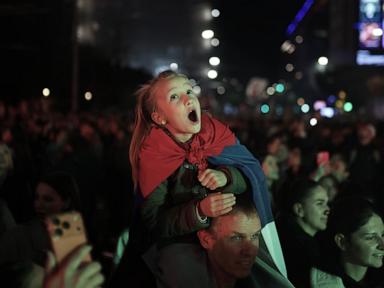
Western commentators love a clean revolutionary fairy tale. Young idealists march in the winter cold, outsmart an entrenched strongman, and ride a wave of moral purity straight into the halls of power. That is the lazy consensus currently dominating coverage of Serbia.
It is also completely detached from how political power actually functions in the Balkans.
Watching analysts frame Serbia’s student movement as a group of plucky novices facing "tough challenges" as they "prepare to take power" reveals a fundamental misunderstanding of both street protest and statecraft. The students did not build a governing machine. They built a horizontal, leaderless veto coalition held together by shared outrage over systemic corruption, state capture, and institutional decay—most visibly triggered by the catastrophic Novi Sad railway station canopy collapse in late 2024.
Outrage is jet fuel for a blockade. It is poison for a cabinet meeting.
If you want to understand what happens next in Belgrade, stop asking whether these students are ready to govern. Start asking why the very mechanisms that allowed them to win the streets will guarantee their paralysis the moment they touch the levers of the state.
The Myth of the Leaderless Advantage
Political theorists like Zeynep Tufekci have spent a decade documenting what happens when digitally networked, leaderless movements collide with institutional politics. In her landmark work Twitter and Tear Gas, Tufekci identifies a fatal flaw in horizontal protest movements: tactical freeze. Because these movements rely on consensus-based decision-making—like the student plenums (plenumi) utilized across Serbian universities—they excel at scaling rapidly and resisting decapitation by state security forces.
There is no single leader for Aleksandar Vučić’s media apparatus to smear, buy off, or arrest. That was their superpower.
Now, flip the board. Imagine a scenario where representatives of this movement sit across from European Union negotiators regarding Kosovo, or manage energy contracts with Russian state enterprises, or decide whether to greenlight lithium mining in the Jadar Valley.
A plenum cannot negotiate a sovereign debt restructuring. Direct democracy at the faculty level works when the demand is binary: publish the documents, prosecute the negligent, step down. It collapses into endless, exhausting factionalism the second the question shifts from what are we against? to who pays for the budget deficit?
I have watched this exact movie play out across Central and Eastern Europe over the last twenty years. From the aftermath of Otpor! in 2000—which toppled Slobodan Milošević only to watch the successor coalition (DOS) tear itself apart within three years—to civic uprisings in Romania and Bulgaria, the pattern never changes. Street movements confuse legitimacy with capacity. Having the moral high ground does not give you control over the Ministry of the Interior, the intelligence services (BIA), or the sprawling network of state-owned enterprises that employ hundreds of thousands of Serbian voters.
You Do Not "Take Power" in a Captured State
Mainstream reporting treats the Serbian government like a neutral vehicle waiting for a new driver. Hand over the keys, adjust the mirrors, and drive toward Brussels.
That is a fantasy.
Political scientists Anna Grzymala-Busse and Ivan Krastev have extensively mapped the architecture of post-communist "state capture." In Serbia, the ruling Serbian Progressive Party (SNS) does not merely occupy the state; it has fused with it. Patronage networks run from the top of the executive branch down to municipal sanitation contracts, local clinic directorships, and public-sector job security.
When a student-backed coalition wins an election or forces a transitional government, they do not inherit an obedient bureaucracy. They inherit an insurgency embedded inside their own ministries.
Consider what happens on Day One:
- Administrative Sabotage: Mid-level career bureaucrats whose livelihoods depend on the old patronage network will slow-walk every directive, leak confidential drafts to sympathetic tabloids, and bury reform bills in procedural quicksand.
- Media Asymmetry: Even if public broadcasters like RTS are forced to open up, the private media ecosystem remains overwhelmingly aligned with entrenched oligarchic interests. Every policy misstep—and amateurs make plenty—will be amplified into an existential crisis within hours.
- Economic Leverage: Major domestic contractors and foreign investors who cut deals under the previous administration hold immense leverage over employment and capital flows. Cross them recklessly, and unemployment spikes before your first hundred days are over.
To dismantle a captured state, you have to purge and rebuild institutions simultaneously while keeping the lights on and pensions paid. That requires ruthless administrative discipline, legal expertise, and centralized command. Those are the exact traits the student movement spent months rejecting as "authoritarian."
The Opposition Parasite Problem
Let’s address the elephant in Belgrade that polite diplomatic coverage tiptoes around: the relationship between the students and Serbia’s existing opposition parties.
For years, Serbia’s fragmented opposition parties failed to land a decisive blow against the ruling establishment. They lacked credibility, suffered from bitter personal rivalries, and frequently alienated voters outside Belgrade’s urban core. The students succeeded precisely because they kept those politicians at arm's length, refusing to let party logos hijack their marches or blockades.
Yet you cannot run a parliamentary republic without political parties.
The moment the movement transitions from protest to electoral politics, it faces an impossible binary choice:
- Form a new political party from scratch: This requires building local municipal boards in 174 cities and municipalities across Serbia, raising millions in transparent campaign financing, and vetting thousands of candidates—all before the entrenched political machine crushes them in rural districts where state media dominates.
- Partner with the existing opposition: The second the students endorse or merge with established opposition figures, they transfer their hard-won moral purity to politicians the public already distrusts. The ruling party’s propagandists will immediately rebrand the entire movement as a Trojan horse for old-guard elites.
Either path fractures the coalition. The radical wing of the student body will scream betrayal if compromises are made with career politicians. The pragmatists will realize that ideological purity wins zero seats in central and southern Serbia.
Dismantling the "People Also Ask" Illusions
When international observers look at Serbia right now, they keep asking the wrong questions. Let's tear down the three most common misconceptions driving the current narrative.
"Can the student movement unite Serbia’s fragmented political scene?"
No. Unity in protest is an illusion created by a shared enemy. When the demand is accountability for a tragedy, left-wing anarchists, pro-EU liberals, and moderate nationalists can march side by side under Serbian flags. The moment you draft a governing platform, those groups become mortal enemies. Ask a crowd of 100,000 protesters in Slavija Square what Serbia’s policy should be on EU sanctions against Russia, NATO cooperation, or the status of Kosovo. The unity vanishes in thirty seconds.
"Will European Union backing guarantee a smooth democratic transition?"
Stop waiting for Brussels to save Serbian democracy. The EU’s primary strategic interest in the Western Balkans is stability, border control, and access to critical raw materials—specifically lithium. For over a decade, European capitals tolerated democratic backsliding in Belgrade because the government delivered predictable transactional cooperation. Brussels will praise the students' democratic spirit in press releases while quietly pressuring any new government not to disrupt existing security and economic agreements. If the students expect unconditional European financial and political rescue, they are setting themselves up for bitter disillusionment.
"Is ideological purity the movement's greatest asset?"
It is their greatest liability. Politics is the art of distributing scarce resources among competing interest groups. Movements that treat compromise as moral corruption inevitably devour themselves. Look at Podemos in Spain or the Five Star Movement in Italy. Both surged out of anti-establishment street protests promising to break the corrupt political caste. Both hit a brick wall the moment they entered government, forced to choose between abandoning their core promises or collapsing the state budget. Within one electoral cycle, both lost their revolutionary sheen and fractured into irrelevance.
The Brutal Trade-Off of My Own Argument
Critics of this realist view will argue—rightly, to a point—that hyper-pragmatism is exactly how Balkan politics rotted from the inside out. If you tell young reformers to immediately adopt the cynical machinery of traditional party politics, you risk killing the very civic awakening that broke decades of voter apathy.
That is a real danger. Cynicism is cheap, and the students have already proved the cynics wrong once by sustaining mass mobilization far longer than anyone predicted.
Still, recognizing the moral power of a movement does not excuse ignoring the mechanics of power. You do not win a chess match by flipping the board over and declaring victory; you have to actually play the endgame with the pieces remaining.
What the Movement Must Do to Survive Contact with Power
If the leaders emerging from Serbia’s faculties want to avoid becoming a footnote in Balkan history, they need to abandon the romanticism of the street immediately. Here is what survival actually requires:
- Enforce a Clean Break Between Protest and Governance: The student plenums must formally dissolve their role as policy arbiters. Establish a dedicated, hierarchical political vehicle with clear leadership accountability. Consensus politics is dead the day an election is called.
- Build a Shadow Cabinet of Technocrats, Not Activists: Students should not be running ministries. Their job is to act as a generational political vanguard while recruiting seasoned, untainted legal scholars, economists, and administrative veterans—including members of the Serbian diaspora—to execute the brutal work of institutional audit and reform.
- Target the Bureaucracy with Selective Amnesty: You cannot fire half a million public-sector workers. A smart transitional strategy draws a hard line between the top tier of corrupt political appointees—who face immediate prosecution—and the vast majority of rank-and-file civil servants, who are offered job security in exchange for administrative loyalty to the new legal order.
- Win the Media War Before Passing a Single Law: On day one of taking office, the absolute priority is dismantling state control over public broadcasting and cutting off public subsidies to propaganda outlets. Without breaking the information monopoly in the provinces, any economic or judicial reform will be invisible to half the electorate.
The barricades were the easy part. In the streets, every villain has a name, every demand is righteous, and the crowd is always on your side. Inside the ministries, the villains wear civil service badges, the budgets never balance, and your allies start sharpening their knives before the inauguration speech is over.
Serbia’s students proved they know how to bring a government to its knees—now comes the part where revolutions usually die.