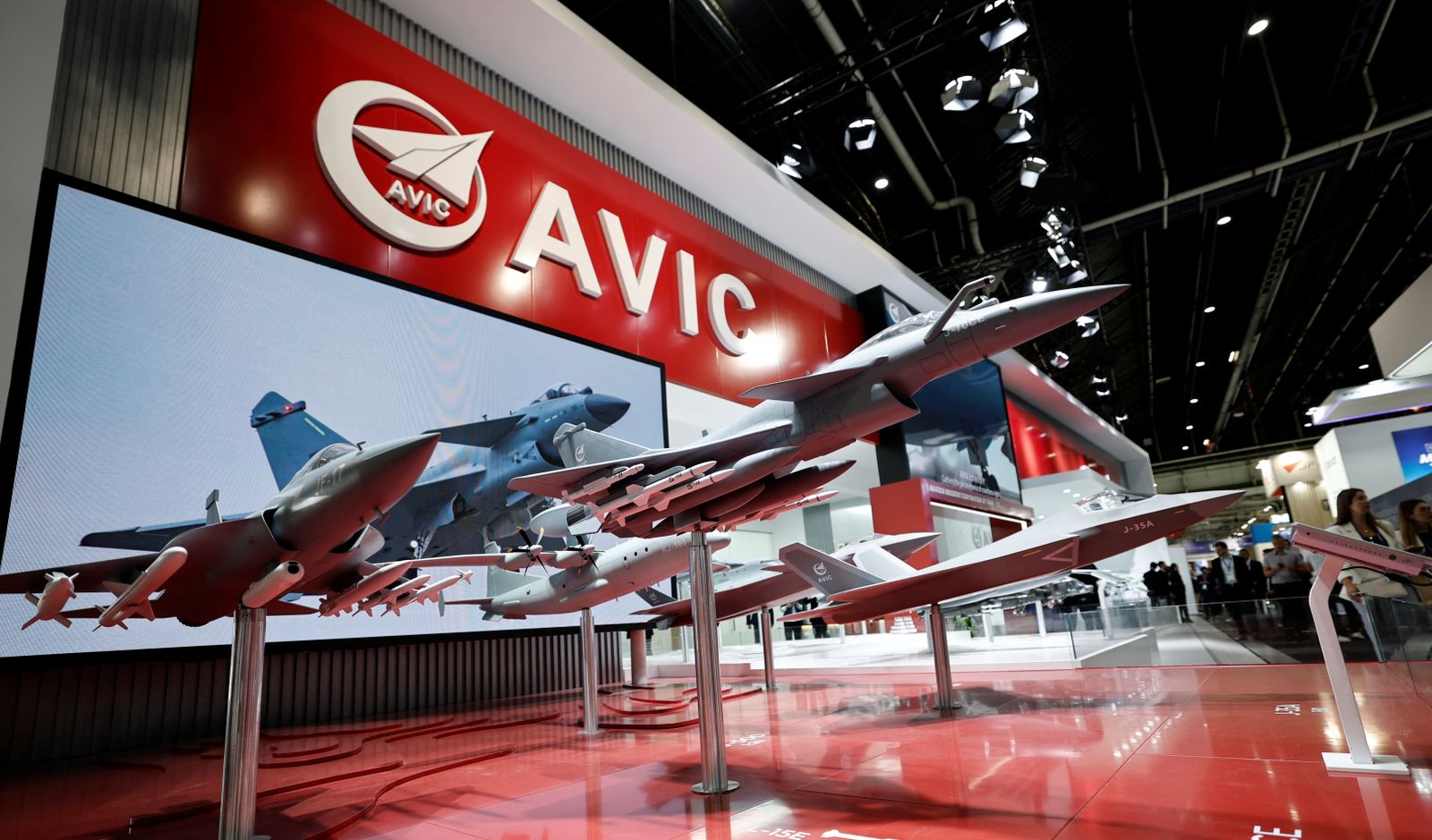
Arms sales aren't just about brochures and airshow demos anymore. In the world of high-stakes defense procurement, nothing sells a fighter jet like a fresh kill on the evening news. We're seeing this play out in real-time as Chengdu Aircraft Corporation (CAC) and its parent company, AVIC, watch their order books swell. The catalyst wasn't a breakthrough in stealth tech or a fancy marketing campaign. It was the messy, high-altitude dogfights over the Himalayas.
When the dust settled from the recent air skirmishes between India and Pakistan—most notably the massive engagement in May 2025 and the earlier 2019 Balakot incident—the global defense community stopped looking at Chinese jets as "budget alternatives." They started seeing them as "battle-tested." For a country like China, which has long struggled to shake the "knock-off" reputation of its hardware, these clashes provided the kind of operational validation that money can't buy.
The Performance Gap That Disappeared
For decades, the narrative was simple. If you wanted the best, you bought American or French. If you were broke, you bought Chinese. That hierarchy is dead. During the recent "Operation Sindoor" and the skirmishes that preceded it, the Pakistan Air Force (PAF) didn't just survive; they held their own against high-end Western and Russian platforms.
The stars of the show? The JF-17 Block III and the J-10C Vigorous Dragon.
I’ve seen how this shifts the math for defense ministers in Africa and Southeast Asia. When a $40 million J-10C is credited with going toe-to-toe with a $120 million Rafale, the economic argument becomes impossible to ignore. It’s not just about the sticker price. It’s about the fact that these Chinese systems are now integrated with the PL-15 air-to-air missile, which many analysts believe outranges the American AIM-120D.
Market Caps and Missile Locks
The financial world reacted faster than the diplomats. After the latest clash, CAC’s market capitalization jumped by over $7.6 billion in a single week. That’s a 25% surge driven by investors betting that the "battle-proven" label will trigger a domino effect across developing markets.
We’re already seeing the results:
- Libya recently signed a deal worth roughly $4 billion for JF-17s and trainers.
- Bangladesh is in deep talks to overhaul its fleet with Chinese-Pakistani hardware.
- Iraq has shifted from "interested" to "active negotiations" after seeing the PAF’s operational success.
- Saudi Arabia is even exploring a "jets-for-loans" swap, a move that would have been unthinkable a decade ago when they were exclusively a Boeing and Lockheed shop.
The logic here is cold and pragmatic. If you’re a mid-sized power, you don't just want a plane; you want a plane that the U.S. can't turn off with a software update if they don't like your domestic policy. China doesn't attach "political strings" to its exports. They sell you the jet, the missiles, and the training, then they walk away.
Why the JF-17 is the AK-47 of the Skies
The JF-17 isn't trying to out-stealth an F-35. It’s trying to be the most reliable, affordable, and lethal tool for a country that can't afford a billion-dollar maintenance bill. It’s "good enough" in the best way possible.
I’ve noticed that the biggest mistake Western analysts make is comparing these jets in a vacuum. They look at thrust-to-weight ratios on paper. They miss the ecosystem. China is offering a "sovereign supply chain." They aren't just selling a jet; they’re selling the ability to build and maintain it locally, as Pakistan has done at the Kamra complex. That’s a level of autonomy that the West simply doesn't offer to most of the world.
The Myth of Inferiority is Dead
It’s time to be honest. The old trope that Chinese engines are unreliable or their radars are "noisy" is outdated. The WS-10B Taihang turbofans are now standard, and the AESA radars being exported are competitive with anything coming out of Europe.
The India-Pakistan clashes served as a live-fire laboratory. When the PAF claimed to have struck an S-400 air defense system—the supposed "gold standard" of Russian tech—with a hypersonic missile launched from a Chinese-designed platform, the shockwaves hit every defense ministry in the world. Whether you believe the specific kill claims or not, the operational reality is that these jets are now part of a sophisticated, integrated kill web.
What This Means for the Global Arms Trade
We're witnessing a massive realignment. The surge in sales for AVIC and CAC isn't a fluke. It's a signal that the "non-aligned" world is tired of the Western monopoly. They want hardware that works, they want it cheap, and they want it without a lecture on human rights or geopolitical loyalty.
If you’re looking at the defense sector, watch the "Pakistani buffer." Many countries prefer buying the JF-17 through Pakistan to avoid direct diplomatic friction with Washington, but the money and the tech still flow back to Beijing.
To stay ahead of this trend, keep a close eye on the following:
- The Saudi-Pakistan Loan Conversion: If this $4 billion deal closes, it marks the definitive end of Western-only dominance in the Gulf.
- The PL-15 Integration: Any news of further range extensions for Chinese air-to-air missiles will directly correlate with new jet orders.
- Maintenance Hubs: Watch where China builds its next regional "service centers." These are the real anchors of long-term defense influence.
The era of Chinese jets being the "budget choice" is over. They’re now the "battle choice," and that makes them twice as dangerous to the established order.