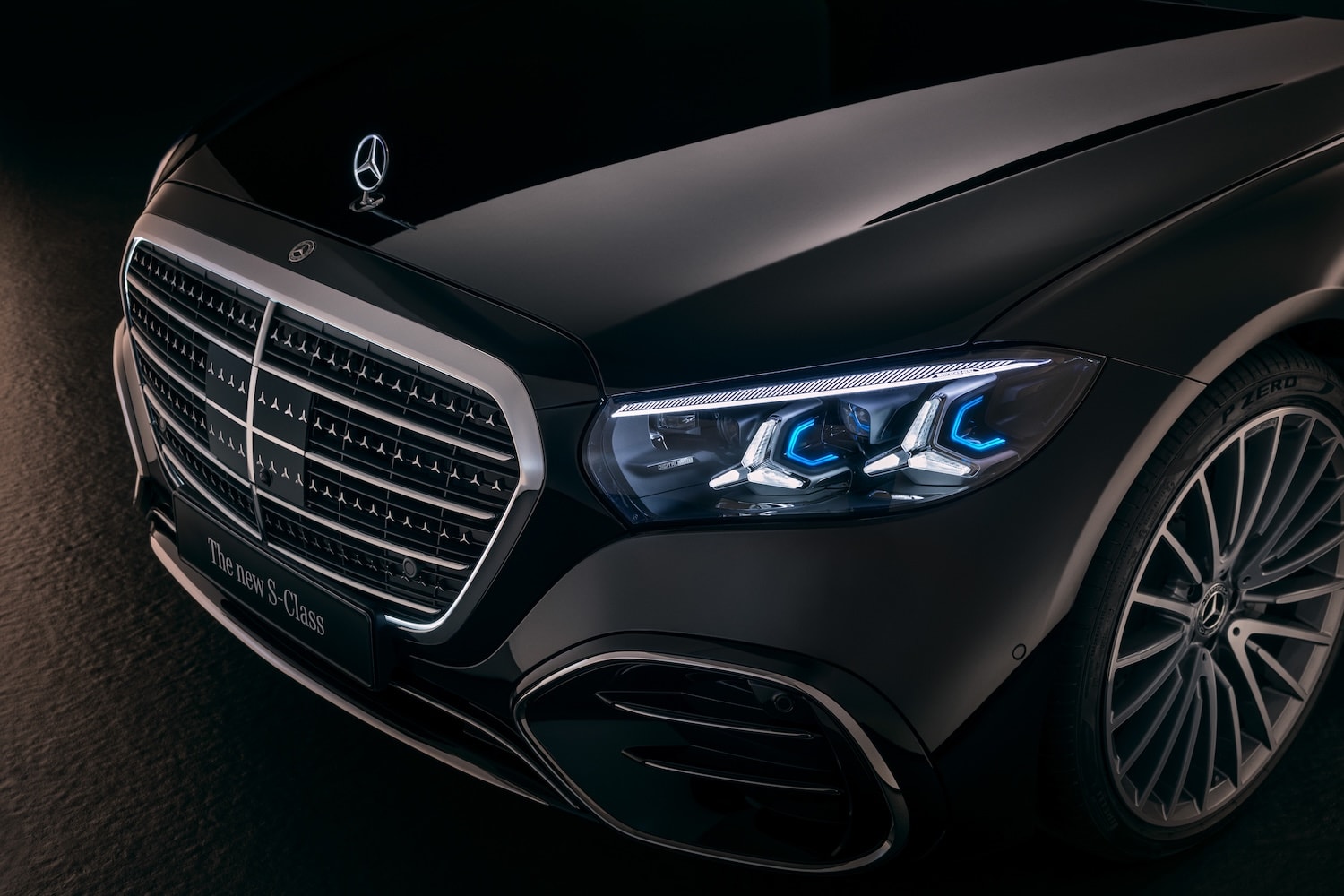
Mercedes-Benz is facing a structural crisis in China that prestige alone can no longer solve. The Stuttgart giant recently reported a staggering 57% drop in operating profit for 2025, driven largely by a 19% collapse in Chinese deliveries. While management points toward "model transitions" and "temporary headwinds," the reality is far more permanent. The three-pointed star is no longer the default aspiration for the world’s most important car buyers. In its place, a domestic wave led by BYD and Geely has redefined luxury from leather and wood to silicon and software.
For decades, the S-Class was an untouchable fortress. If you were a successful entrepreneur in Shanghai or Beijing, you bought a Mercedes to signal you had arrived. That social contract has expired. Today’s wealthy Chinese consumer, often younger and far more tech-literate than their European counterpart, views traditional German engineering as a legacy artifact. They are trading their keys for vehicles like the BYD Yangwang U8 or the Xiaomi SU7—cars that offer better integration with their digital lives at a fraction of the cost.
The Software Deficit
The most glaring wound is the gap in digital architecture. Mercedes-Benz spent years perfecting the internal combustion engine, only to find the battlefield has moved to cockpit intelligence and autonomous driving. In China, a car is a mobile living room. If the voice assistant cannot control every smart home device or the navigation lacks lane-level precision in a Shenzhen monsoon, the buyer walks.
Domestic rivals are moving at "China speed," updating software monthly and launching new hardware cycles every 18 months. Mercedes operates on traditional European timelines, where a mid-cycle refresh takes four years. By the time a new E-Class hits the showroom floor, its infotainment system feels a generation behind the latest flagship from Li Auto or Nio. This isn’t a minor preference; it is the primary reason the "Entry" and "Core" segments for Mercedes are bleeding out.
Investors are starting to lose patience with the "luxury first" strategy championed by CEO Ola Källenius. The plan was simple: sell fewer cars, but make more money on each one by focusing on the high end. It worked while the S-Class and Maybach dominated. But as BYD moves upmarket with its premium sub-brands, even that top-tier fortress is being shelled. When a domestic competitor offers a car with 1,000 horsepower and a revolving cinema screen for half the price of an EQS, the "brand tax" Mercedes demands feels increasingly like a bad investment.
The Margin Trap
The financial fallout is brutal. The passenger car division is now guiding for margins as low as 3%, a number that would have been unthinkable just two years ago. To put that in perspective, Mercedes was targeting 14% margins during its post-pandemic peak. The company is now trapped in a vicious cycle: it must spend billions on R&D to catch up in the EV race, but the very market meant to fund that transition is evaporating.
To stop the bleeding, the company has announced a €5 billion cost-saving program and is cutting up to 30,000 jobs. These are the defensive crouches of a firm that knows its primary profit engine has stalled. The aggressive price wars initiated by Tesla and escalated by BYD have forced Mercedes into a corner. They cannot cut prices without destroying their "luxury" brand equity, yet they cannot maintain sales volume at current prices.
A Cultural Misalignment
There is a deeper, more subtle issue at play: the "German knows best" attitude. For years, Mercedes designed cars in Stuttgart and localized them for China. That model is dead. Chinese competitors are co-creating their cars with their users, using data from social media and direct feedback to pivot features in real-time.
Mercedes is trying to pivot. They’ve deepened partnerships with Chinese tech firms like Momenta for autonomous driving and ByteDance for AI features. They are launching "China-fit" models like the long-wheelbase electric GLC L. But these are reactionary moves. They are playing the game on their rivals' home turf, using their rivals' rules.
The 2026 outlook offers no immediate relief. The company expects revenue to remain flat and is banking on a massive product offensive of 40 new models over three years to win back the market. However, volume is not the solution to a brand identity crisis. Unless Mercedes can prove it can build a computer on wheels that happens to be a luxury car—rather than a luxury car that happens to have a computer—the three-pointed star will continue to dim in the East.
The era of selling history is over. The new era belongs to those who sell the future, and right now, that future is being built in Shenzhen, not Stuttgart.