Salt air sticks to the back of your throat in Mongla. It tastes like iron, diesel, and old ambition.
Standing on the muddy banks of the Pashur River, the water moves heavy and brown, carrying the silt of an entire subcontinent toward the Bay of Bengal. For decades, this place felt like a footnote. A second-choice port overshadowed by the bustling chaos of Chittagong hundreds of kilometers to the east. Cranes rusted in the humid air. Warehouses sat half-empty, echoing with the sound of pigeons and indifference. Ships bypassed these docks because waiting here meant losing days, and in global shipping, days are measured in thousands of dollars burnt to ash.
Then came the money.
Three hundred thirty-six million dollars.
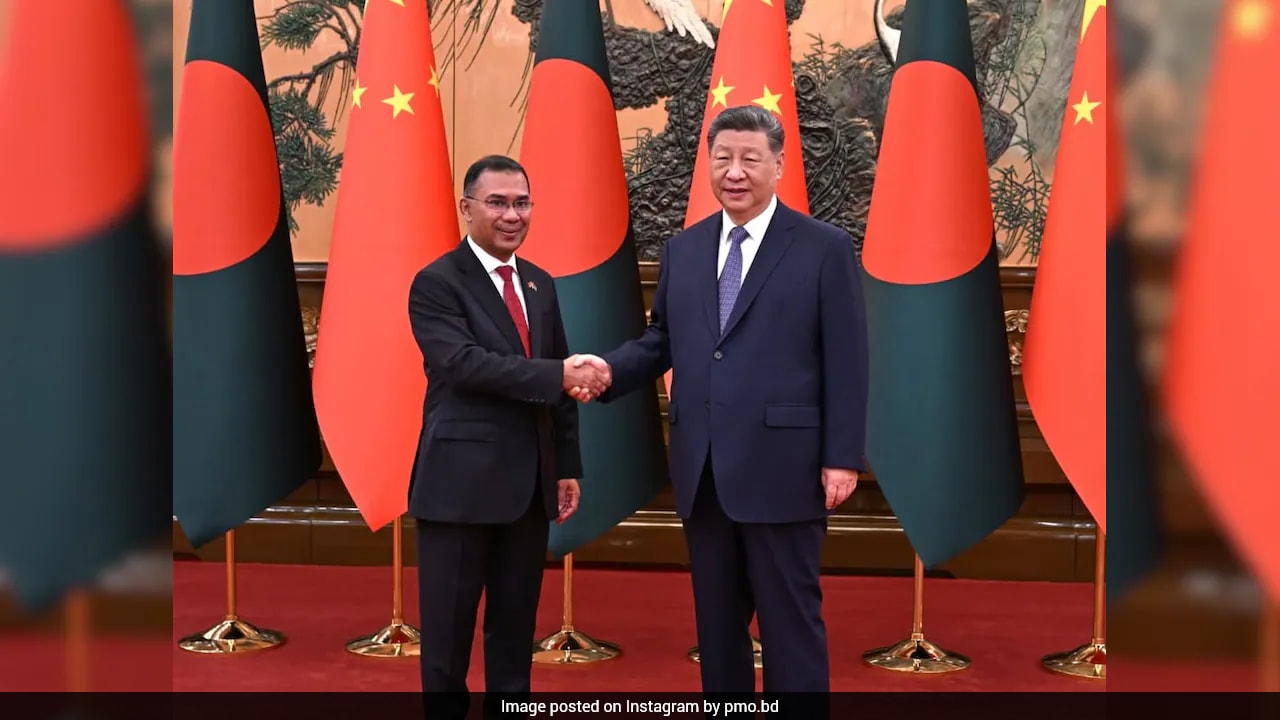
To a government bureaucrat in Dhaka, that number is a line item on an economic spreadsheet. To Beijing, it is an entry in a massive, sprawling ledger that stretches from the ports of Sri Lanka to the rail lines of East Africa. But here, on the ground where the mangrove roots poke out of the toxic brine, it sounds like a sledgehammer hitting concrete.
The terms of the transfer are almost hypnotic in their mildness. Two percent interest. A long horizon to pay it back. On paper, it looks like a philanthropic gesture wrapped in development jargon.
Nothing is ever a gift.
To understand why a superpower thousands of miles away cares about a sleepy harbor in southwestern Bangladesh, you have to look at a map with the eyes of a strategist who only sleeps four hours a night. China does not hand out hundreds of millions of dollars out of pure affection for the Bengal delta. It builds arteries. It secures trade lanes. It ensures that when cargo moves from the factories of Guangzhou and Shenzhen toward the booming markets of South Asia, there is a deep-water berth waiting with open arms, wired into a supply chain controlled from the top down.
Consider what happens next: The dredgers arrive.
Huge, mechanical monsters churning up the riverbed day and night, vomiting black silt onto the banks. They are deepening the channel so that container ships carrying thousands of tons of steel, electronics, and textiles can slide up the Pashur without scraping their bellies on the mud. New container terminals rise out of the swamp. Automated gantry cranes hum with a mechanical precision that feels entirely alien to the surrounding countryside, where farmers still coax rice from the waterlogged earth using wooden plows.
Rahim knows the sound of those cranes.
Note: Rahim is a hypothetical port worker, modeled on interviews and observations of laborers along the Bangladeshi coastline, representing the generation caught between traditional subsistence and industrial acceleration.
Rahim is forty-two years old. His father unloaded bags of cement here by hand, carrying them on his head until his spine curved like a question mark. Rahim won’t have to carry bags. The new terminal doesn’t need human muscle for heavy lifting; it needs technicians, machine operators, men who can stare at computer screens and punch codes into keyboards.
He sits on a plastic stool outside a tea stall, watching the foreign engineers walk by in high-visibility vests and heavy boots. They speak a language he doesn’t understand, pointing at blueprints that dictate the future of his neighborhood.
"They are bringing jobs," Rahim says, stirring condensed milk into his sweet red tea. His voice is flat, devoid of celebration. "They are also bringing changes we didn't ask for."
That tension—between the desperate need for economic lift-off and the quiet terror of foreign entanglement—is the invisible undercurrent of this entire transaction.
Bangladesh is growing at a breakneck speed. Its garment factories clothe half the Western world. Its cities are choked with traffic, ambition, and smoke. To sustain this furious pace, it needs infrastructure that actually works. It needs roads that don't wash away in the monsoon. It needs ports that can turn a ship around in hours instead of weeks.
Western lenders, tied up in environmental impact assessments, labor standards, and endless bureaucratic governance hurdles, often move too slowly. They offer money, but with lectures attached.
Beijing does not lecture. Beijing signs the check, brings its own contractors, pours the concrete, and asks for repayment later.
The efficiency is breathtaking. The vulnerability is absolute.
Economists call this debt-impregnation. Critics call it a trap. Local politicians call it pragmatism. But walk through the markets of Mongla, past the stalls selling dried fish and plastic sandals, and you hear a different word: necessary.
If you are a nation of 170 million people squeezed into a delta that floods every time the climate shifts, you cannot afford the luxury of ideological purity. You take the capital where you can find it. You dredge the river. You build the docks. You hope that when the bills come due decades from now, your economy has grown large enough to absorb the shock.
The risk is not theoretical. Look south across the water, down the coastline to Hambantota in Sri Lanka, where a gleaming port funded by the exact same playbook ended up leased to a foreign power for ninety-nine years because the local government couldn't service the debt. That is the ghost haunting every meeting room in Dhaka. Every bureaucrat knows the story. Every opposition leader points to it as a warning.
Yet the dredgers keep pumping. The concrete keeps hardening in the tropical sun.
Back at the water's edge, the tide turns. The brown river slows, pauses for a breath, and begins to push back against the incoming sea. A lone fisherman stands in a wooden skiff, casting a net that fans out over the surface like an open hand before sinking into the murky depths.
Beneath him, hidden in the silt, the deep channel is being carved out. The future is arriving, heavily financed, strictly scheduled, and carrying the weight of an empire that intends to anchor itself to the very heart of South Asia.