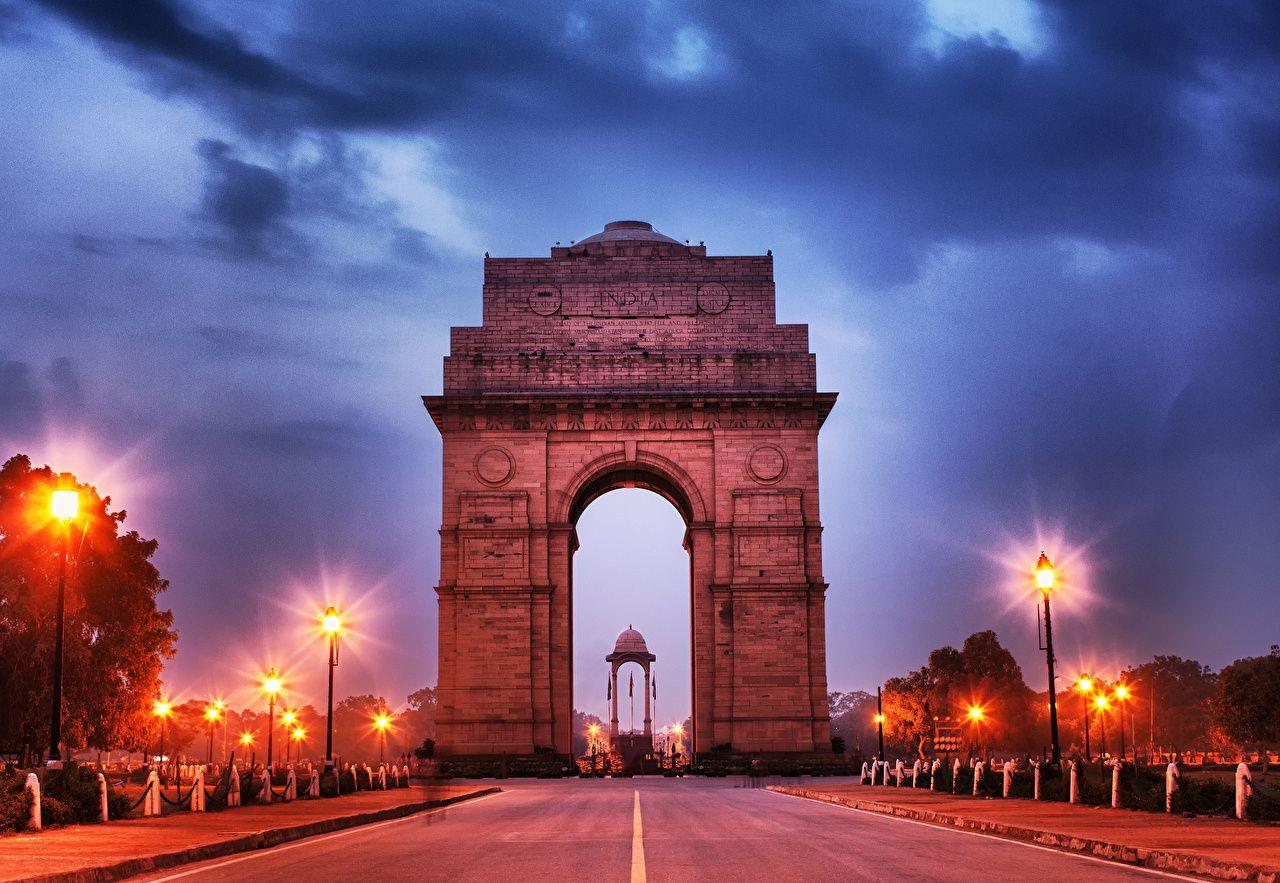
The physical architecture of international diplomacy often speaks louder than any communique. When Indian Prime Minister Narendra Modi welcomed Russian President Vladimir Putin and Chinese President Xi Jinping to New Delhi for a high-stakes multilateral summit, the symbolism was immediate, heavy, and impossible to ignore. Hovering over every handshake, bilateral chat, and closed-door negotiation was the long, unpredictable shadow of Washington. Yet, reducing this gathering to a mere anti-Western coalition misses the deeper structural fractures tearing at the expanded bloc from within.
For months, Western foreign policy analysts framed the expanded multilateral group as an existential threat to the dollar-dominated global financial order. The reality inside the conference rooms of the Indian capital is far more transactional, fragile, and fraught with bilateral distrust. This is not a monolith marching in lockstep against American hegemony. It is an uneasy congregation of competing regional powers whose primary common denominator is a shared desire to hedge against United States pressure, even as they eye one another with deep-seated suspicion.
To understand why this summit matters, one must examine the fundamental tension between Beijing and New Delhi. The Himalayan border dispute remains an open wound, frozen in a tense military standoff that has militarized thousands of square miles of high-altitude terrain. When Xi Jinping touches down in India, he does so not as an ideological brother-in-arms, but as a strategic competitor locked in a fierce, silent race for dominance across the Global South. Modi’s invitation to both Xi and Putin is a masterclass in strategic autonomy, but it is also an exhausting tightrope walk. New Delhi refuses to choose camps, maintaining robust trade and defense ties with Moscow while simultaneously deepening intelligence and technological partnerships with Washington through the Quad.
The economic engine driving this alignment is equally complex. Dedollarization has become the catchphrase of the bloc, championed loudly by Moscow as it faces suffocating Western sanctions over the war in Ukraine. Trade in national currencies, particularly the Chinese yuan and the Indian rupee, sounds pragmatic on paper. In practice, it has created massive trade imbalances. Russia has accumulated billions of rupees sitting idle in Indian banks because the volume of Russian imports from India fails to match the staggering value of discounted Russian crude oil flowing eastward. Moscow wants hard currency or goods it actually needs; New Delhi is protective of its currency convertibility and wary of funding a permanent trade deficit with its northern neighbor. Beijing, meanwhile, is eager to internationalize the yuan, casting an ambitious shadow over currency sovereignty for every developing economy that signs on.
Washington's looming shadow is felt most acutely in the calculus of secondary sanctions and financial plumbing. Many emerging economies sitting at the table want the diplomatic leverage that membership provides without triggering economic retaliation from the West, where their most lucrative export markets still reside. Trade flows stubbornly obey capital logic, regardless of political rhetoric. When a developing nation attempts to settle cross-border energy trades in alternative currencies, commercial banks balk at the regulatory compliance nightmares and the lack of deep liquidity pools. The ambition of a shared currency or an independent payment infrastructure runs headfirst into the iron wall of global capital markets, which remain anchored to Western financial institutions.
Putin’s presence in New Delhi adds another layer of geopolitical friction. Isolated by Western capitals, Moscow views the grouping as its primary diplomatic lifeline. The Kremlin needs visible proof that Russia is neither isolated nor defeated on the global stage. Energy shipments remain the lifeblood of this relationship, with India and China acting as the primary shock absorbers for Russian hydrocarbons displaced from European markets. Yet, New Delhi’s accommodation of cheap Russian oil is purely interest-driven, born of domestic inflation management rather than ideological solidarity. If Washington offers more favorable terms or if secondary enforcement tightens dramatically, that pragmatic loyalty will be tested to its absolute limits.
The expansion of the bloc to include energy heavyweights like Iran, the United Arab Emirates, and Saudi Arabia has only magnified these internal contradictions. Riyadh and Tehran maintain a volatile, historically fraught relationship, despite a Beijing-brokered diplomatic thaw. Bringing sworn rivals into the same tent does not automatically harmonize their regional ambitions; it simply moves the theater of competition indoors. Energy policy within the grouping is dictated by cartel economics and national self-interest, not multilateral altruism. Saudi Arabia balances its long-standing security architecture with the United States against lucrative commercial partnerships in East Asia, refusing to be conscripted into an explicitly anti-Western bloc.
Behind the polished veneer of family photos and diplomatic handshakes lies a profound strategic divergence over the future of global governance. Beijing envisions a restructured international order with itself at the undisputed center, utilizing alternative institutions to project economic gravity and rewrite global trade rules. New Delhi envisions a multipolar world where India acts as a distinct pole, refusing subordination to either Washington or Beijing. Moscow, weakened by protracted conflict, increasingly risks becoming a junior economic partner to Beijing while retaining its nuclear heft and raw material dominance.
These competing visions mean that joint communiques are masterpieces of diplomatic ambiguity. They agree on what they oppose: Western financial dominance, unilateral sanctions, and exclusionary security pacts. They struggle immensely to agree on what they actually want to build. Without a shared security umbrella, a unified currency, or ideological harmony, the coalition remains an alignment of convenience rather than a true alliance.
The summit in New Delhi is a testament to India's diplomatic agility and the shifting tectonic plates of geopolitics. It demonstrates clearly that the Global South is no longer willing to accept a unipolar world order dictated from Western capitals. However, mistaking this transactional hedging for a cohesive geopolitical bloc is a dangerous analytical error. As Xi, Putin, and Modi navigate their complicated triangular dynamic, the real story is not the unity of the rising powers, but the deep, unresolved fissures running directly through the middle of them.


