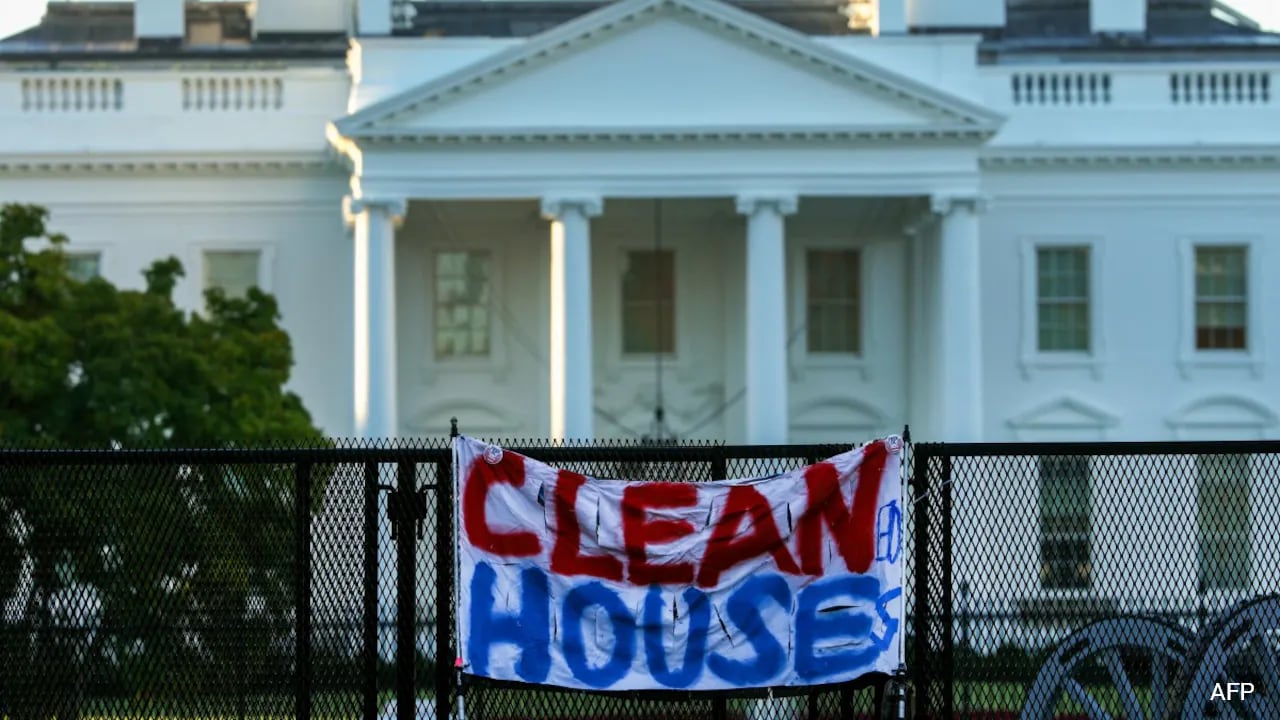
A Democratic Congress cannot seize control of the White House situation room, nor can it unilaterally negotiate peace treaties or order airstrikes. What it can do, however, is starve the executive branch of cash, freeze weapon shipments, drag cabinet officials into televised interrogations, and rewrite the statutory guardrails that presidents rely on to wage shadow wars.
If Democrats control the House, the Senate, or both, their primary weapon against Donald Trump’s foreign policy on Iran, Israel, and Ukraine is the constitutional power of the purse paired with aggressive oversight.
Washington insiders often overstate presidential omnipotence in global affairs. The Constitution splits war and diplomatic powers deliberately, creating what legal scholars famously call an invitation to struggle. While the Oval Office holds the commander-in-chief title and dominates day-to-day diplomacy, Congress writes the checks and sets the legal boundaries. When those two branches collide across party lines, foreign policy does not merely slow down. It fractures into an institutional trench war where every dollar, every ambassadorial nomination, and every arms sale becomes a hostage.
The Myth of the Imperial Presidency in Foreign Affairs
Presidents love to pretend they have a blank check overseas. They do not. For decades, both Republican and Democratic administrations have stretched the 2001 and 2002 Authorizations for Use of Military Force (AUMF) to justify everything from drone strikes in Yemen to troop deployments in Syria, banking on congressional inertia to avoid a political backlash. That deference evaporates the moment an opposition party takes the gavel on Capitol Hill.
A Democratic majority changes the operating environment overnight. Suddenly, the committees that rubber-stamped White House requests transform into subpoena factories. The House Foreign Affairs Committee, the Senate Foreign Relations Committee, and the Armed Services committees control the legislative calendar and the investigative spotlight.
Consider how appropriations riders work in practice. Congress does not have to pass a sweeping, veto-proof foreign policy manifesto to alter reality on the ground. Instead, appropriators tuck specific prohibitions into massive, must-pass government funding bills or the annual National Defense Authorization Act (NDAA). A single sentence buried on page 842 can forbid the Pentagon from spending a dime on a specific deployment, a weapons transfer, or a diplomatic initiative. A president can veto the entire bill, of course, but shutting down the Department of Defense over a single policy rider is a political gamble few commanders-in-chief survive unscathed.
Still, there is a hard ceiling to congressional power. A president retains the veto pen, requiring a two-thirds supermajority in both chambers to override—a mathematical fantasy in a polarized Congress. Furthermore, the executive branch controls intelligence sharing, covert operations, and the sheer speed of diplomatic signaling. Congress moves in months; an aircraft carrier strike group moves in days. Understanding this asymmetry is the only way to separate genuine legislative teeth from performative floor speeches.
Forcing the Ukraine Lifeline Through a Reluctant White House
Nowhere is the clash between executive skepticism and congressional institutionalism sharper than on Ukraine. If the White House moves to slash military aid, condition support on territorial concessions to Moscow, or bypass NATO commitments, a Democratic Congress has several concrete levers to keep Kyiv supplied—even if it cannot force the president to pick up the phone and cheer for Volodymyr Zelenskyy.
Weaponizing the NDAA and Supplemental Bills
The most direct route is tying Ukraine funding to domestic priorities the White House desperately wants. In legislative politics, nothing moves alone. Democrats can refuse to advance border security funding, defense procurement packages for U.S. contractors, or debt ceiling extensions unless they include ironclad, multi-year Ukraine Security Assistance Initiative (USAI) appropriations.
Crucially, how Congress writes the text matters as much as the dollar figure. Past aid packages relied heavily on Presidential Drawdown Authority (PDA), which allows the president to pull weapons directly from U.S. stockpiles. Because PDA is discretionary, a hostile president can simply refuse to sign the drawdown orders, letting billions in authorized aid sit untouched in warehouses.
To counter this, a Democratic Congress can shift funds away from discretionary drawdowns and toward mandatory, contracted procurement through USAI, or explicitly mandate expenditure timelines in statutory text. The Impoundment Control Act of 1974 legally prohibits a president from refusing to spend money Congress has appropriated unless both chambers explicitly agree to a rescission request. If the White House tries to slow-walk or freeze Congressionally mandated funds—the exact behavior that triggered Trump’s first impeachment in 2019—the Government Accountability Office (GAO) can issue formal legal violations, handing House Democrats immediate grounds for litigation and public hearings.
Locking In Sanctions and NATO Guardrails
Beyond cash and artillery shells, Democrats can use legislation to tie the administration’s hands on Russian sanctions. Congress has done this before. In 2017, lawmakers passed the Countering America’s Adversaries Through Sanctions Act (CAATSA) by an overwhelming bipartisan margin, specifically designed to strip the White House of the unilateral power to lift sanctions on Moscow without formal congressional review.
A Democratic majority can expand that architecture by:
- Codifying existing executive orders into permanent statute so they cannot be undone with the stroke of a Sharpie.
- Mandating secondary sanctions on foreign banks and shipping firms facilitating Russian energy or defense trades, removing presidential waiver authority unless strict national security certifications are met.
- Enforcing the NATO exit prohibition passed in the FY2024 NDAA, which explicitly bars any president from suspending, terminating, or withdrawing the United States from NATO without a two-thirds Senate vote or an act of Congress.
Even if the White House downgrades diplomatic rhetoric toward Kyiv, starving Moscow of sanctions relief and guaranteeing industrial-scale weapons contracts keeps the transatlantic architecture intact until the next presidential election.
Conditioning Weapons and Redrawing Red Lines on Israel
The political terrain surrounding Israel is far more volatile for Democrats than Ukraine, largely because their own caucus is divided between traditional pro-Israel institutionalists and a growing progressive wing demanding strict human rights accountability. Yet that internal tension does not stop a Democratic majority from fundamentally altering U.S.-Israel dynamics, particularly if the White House pursues an unconditional, hands-off approach to Israeli military operations or West Bank annexation.
The Arms Export Control Act and Leahy Law Enforcement
The United States provides roughly $3.8 billion annually in military aid to Israel under a ten-year Memorandum of Understanding. That money does not flow automatically; it is appropriated every single year by Congress. Under the Arms Export Control Act (AECA), the executive branch must formally notify Congress of major foreign military sales, giving lawmakers a 15-to-30-day window to pass a Joint Resolution of Disapproval.
While a president can veto a resolution of disapproval, the procedural mechanism forces a public, recorded vote in the Senate—a nightmare scenario for an administration trying to quietly rush precision-guided munitions or heavy bombs out the door.
More quietly, a Democratic Congress can tighten the screws through end-use monitoring and strict enforcement of the Leahy Law, which prohibits the U.S. government from using funds to assist foreign military units credibly implicated in gross violations of human rights. By inserting specific reporting requirements into the State and Foreign Operations appropriations bill, lawmakers can demand detailed, unclassified certifications on how U.S.-supplied munitions are used in Gaza or the West Bank before the next tranche of funding is released.
Blocking Diplomatic Normalization Deals
Suppose the White House attempts to broker a grand bargain in the Middle East—such as a revived normalization pact between Israel and Saudi Arabia—that sidelines Palestinian statehood in exchange for a formal U.S.-Saudi mutual defense treaty and civilian nuclear cooperation.
Here, a Democratic Senate holds an absolute, unbreakable trump card. Under the Constitution, a formal mutual defense treaty requires two-thirds ratification in the Senate. Without Democratic votes, any security guarantee promised to Riyadh is worth no more than an executive handshake, which a future president can void on day one. Furthermore, under Section 123 of the Atomic Energy Act, Congress retains statutory review power over any nuclear cooperation agreement, allowing a Democratic majority to block uranium enrichment technology transfers unless stringent non-proliferation and regional diplomatic conditions are met.
Constraining Escalation and Reviving Diplomacy on Iran
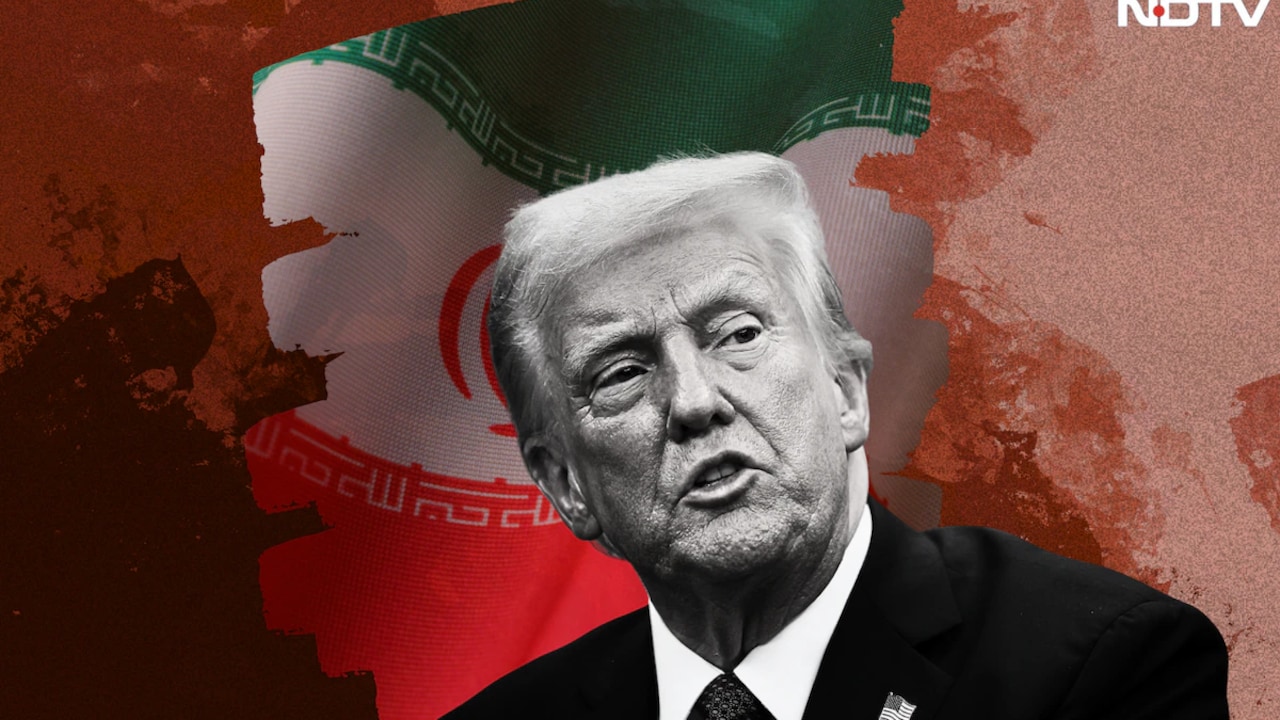
When it comes to Iran, the core fear among Capitol Hill Democrats is sleepwalking into a regional war—either through a return to "maximum pressure" economic warfare that provokes Iranian retaliation against U.S. bases, or through direct military strikes on Iranian nuclear facilities.
Reclaiming War Powers
The most potent tool in the congressional arsenal is the War Powers Resolution of 1973. Under this law, any member of Congress can introduce a privileged resolution forcing a floor vote to terminate unauthorized U.S. hostilities within 60 to 90 days. Because these resolutions carry privileged status, committee chairs cannot bury them; leadership must bring them to the floor.
If the White House orders strikes inside Iran or deploys combat troops to the Persian Gulf without explicit congressional authorization, a Democratic House and Senate can pass a War Powers resolution directing the removal of U.S. forces. Even if the president vetoes it, the political and legal fallout strips the administration of domestic legitimacy and signals to regional allies—and adversaries—that the U.S. government is divided at the water's edge.
To prevent the White House from claiming pre-existing legal cover, Democrats can also attach riders to defense bills explicitly clarifying that neither the 2001 nor the 2002 AUMF authorizes military force against Iran. That single clarification removes the executive branch’s favorite legal loophole for launching unilateral strikes.
Financial Sabotage and Sanctions Waivers
Conversely, if Democrats want to keep a diplomatic off-ramp open with Tehran—whether to freeze Iran’s nuclear enrichment program or secure the release of detained Americans—they face an uphill battle against a president determined to crush the Iranian economy. Congress cannot force the State Department to negotiate a new nuclear deal, nor can it compel the Treasury Department to issue sanctions waivers to European or Asian buyers of Iranian oil.
What it can do is use confirmation holds and budgetary trade-offs to extract concessions. In the Senate, the Foreign Relations Committee controls the confirmation pipeline for every ambassador, assistant secretary of state, and Treasury sanctions official. A Democratic chair can simply freeze all non-essential diplomatic nominations until the administration provides classified briefings on its Iran strategy, maintains existing humanitarian trade channels, or refrains from blowing up multilateral diplomacy at the United Nations Security Council.
The Structural Friction That Slows Everything Down
Outside of specific regional flashpoints, a Democratic Congress possesses a massive, often overlooked power: the ability to gum up the machinery of the national security state. Foreign policy requires personnel, intelligence, and bureaucratic bandwidth. Capitol Hill controls all three.
Consider the Senate confirmation bottleneck. At the start of any presidential term, or following a mid-term reshuffle, hundreds of senior roles across the Pentagon, State Department, and intelligence community require Senate advice and consent. When the opposition party controls the Senate, those nominees face grueling vetting, endless written questions for the record, and prolonged floor delays. Leaving key regional assistant secretary posts empty forces the White House to rely on temporary "acting" officials who lack statutory authority and carry far less weight when negotiating with foreign counterparts.
Simultaneously, the House and Senate Intelligence Committees can turn the administration’s own covert operations into public headaches. Under Title 50 of the U.S. Code, the president must keep the "Gang of Eight"—the top leaders of both parties in both chambers and the intelligence committees—fully informed of all covert actions. While lawmakers cannot easily leak classified findings without violating federal law, they can hold open hearings with intelligence chiefs, demand declassification reviews of politically inconvenient assessments, and cut funding from specific black-budget programs inside the classified annex of the intelligence authorization bill.
Where Congress Hits a Brick Wall
It is a mistake, however, to confuse friction with control. Anyone claiming a Democratic Congress can fully reverse or "flip" a president’s foreign policy is ignoring how modern executive power actually works.
First, the president owns the global microphone. When a U.S. president stands at a podium in Brussels, Jerusalem, or Washington and questions the value of an alliance, threatens tariffs on a treaty partner, or signals indifference to a foreign invasion, that rhetoric alters geopolitical reality instantly. Foreign leaders do not base their survival calculations on subtle appropriations riders passed by a House subcommittee; they watch what the commander-in-chief says and does. A single late-night social media post from the Oval Office can undo six months of careful congressional reassurance.
Second, emergency authorities give the president vast maneuvering room. Statutes like the International Emergency Economic Powers Act (IEEPA) allow a president to declare a national emergency and impose sweeping sanctions, freeze assets, or restrict trade with minimal input from Capitol Hill. While Congress can theoretically terminate a national emergency via a joint resolution, doing so requires overriding a guaranteed presidential veto. In practice, IEEPA functions as an unchecked economic weapon in the hands of the executive branch.
Third, diplomacy is inherently reactive. Congress operates on a legislative calendar built around recesses, committee markups, and floor schedules. Crises in the Taiwan Strait, the Strait of Hormuz, or Eastern Europe unfold in real time. By the time lawmakers draft a bill, debate amendments, and reconcile House and Senate versions, the facts on the ground have already hardened into a new reality.
The Real Endgame on Capitol Hill
Ultimately, a Democratic Congress does not flip foreign policy by seizing the steering wheel. It flips it by slamming on the brakes, throwing spikes across the road, and forcing the driver to negotiate every turn.
By locking Ukraine aid into mandatory procurement contracts, codifying Russian sanctions against unilateral rollback, enforcing strict human rights vetting on Israeli arms transfers, and stripping away outdated war authorizations for Iran, lawmakers can build a durable statutory cage around the Oval Office. It is messy, slow, and maddeningly imperfect—yet in a constitutional system designed to prevent any single leader from owning the nation's fate abroad, institutional gridlock is often the sharpest check left on the board.