Blood smells like copper. Anyone who has spent enough time near a canvas ring—or in the back of an ambulance—knows that metallic tang instantly. It hangs in the humid air of a crowded arena, mixing with stale beer, cheap cologne, and the sour sweat of men who paid fifty dollars to watch other men break their knuckles against bone.
Inside the venue, there are rules. There is a referee in a blue shirt, a ringside physician with a penlight, and a bell that forces the violence to stop every two minutes.
Outside on the concrete, there is no bell.
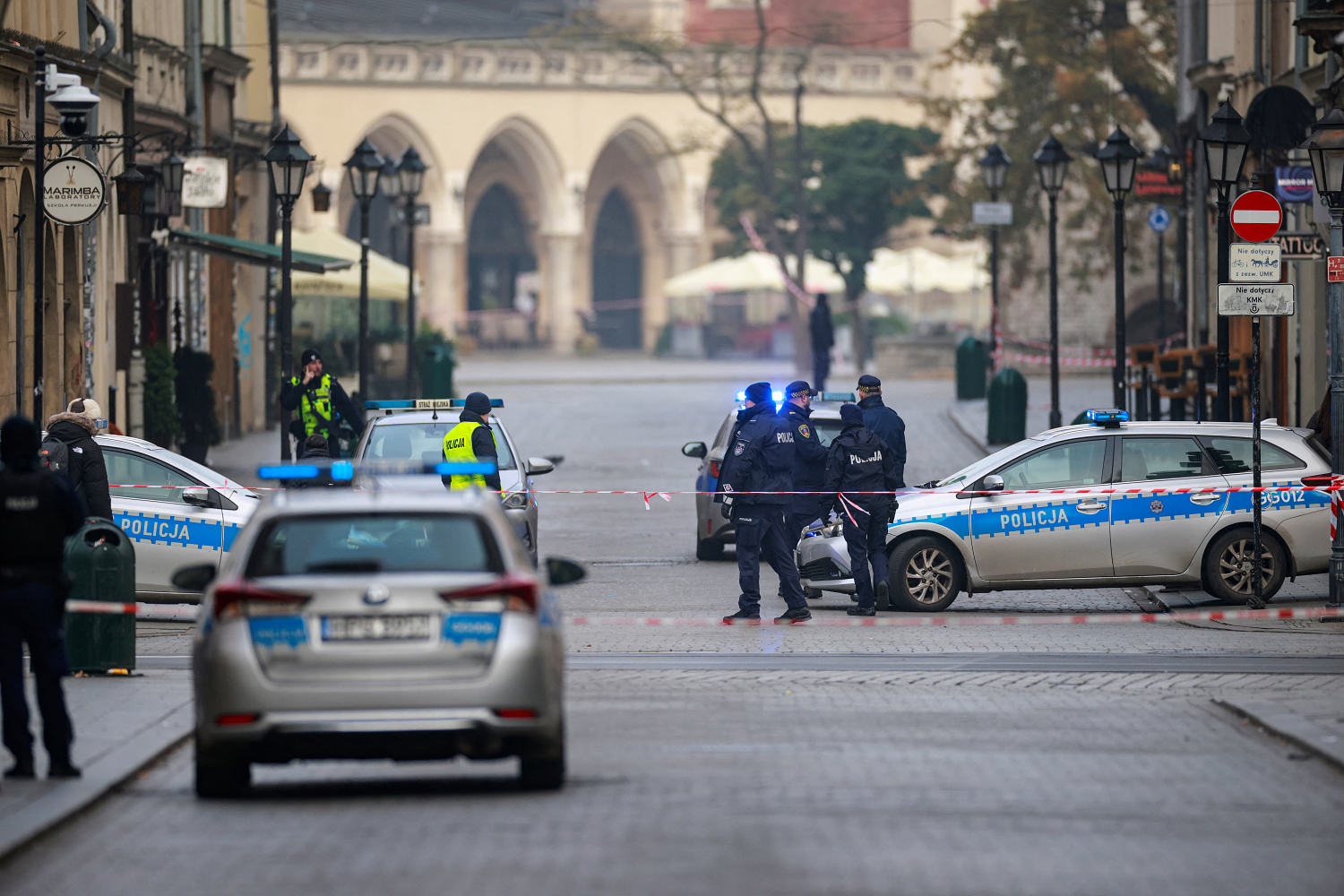
The police blotter reads like a footnote. Two arrests. Several officers injured. A brawl spilling out onto the asphalt after a bare-knuckle fighting event. In the sterile language of municipal reporting, it is a standard Saturday night disturbance—a brief flare-up of rowdy spectators, quickly contained, filed away by Monday morning.
But the dry facts miss the terrifying truth of what happens when sanctioned brutality leaves the building.
Consider a hypothetical spectator—let’s call him Marcus. Marcus isn’t a hardened criminal. He’s a thirty-two-year-old warehouse supervisor who spent his week moving pallets under fluorescent lights, swallowing frustration, feeling invisible. On Saturday night, he buys a ticket to a bare-knuckle boxing card. He watches two fighters stand toe-to-toe, trading ungloved hooks until skin splits and blood sprays across the front row. The crowd roars. The primal thrill is intoxicating, a vicarious release for a man whose daily life offers no outlet for rage.
Then the main event ends. The house lights come up. Two thousand people, marinated in alcohol and vicarious adrenaline, are funneled through narrow exit doors onto a dimly lit sidewalk.
Marcus bumps shoulders with another guy in the parking lot. A spilled drink. A sharp word. Inside the arena, that tension belonged to the fighters. Out here, in the cold night air, Marcus is still riding the chemical high of a fight he didn't even participate in. His nervous system doesn't know the show is over.
And standing ten feet away is a patrol officer working an overtime shift, trying to direct traffic.
The Anatomy of Contagious Aggression
To understand why a bare-knuckle fighting event so easily bleeds into street violence, you have to understand how the human brain processes spectacle. Neuroscientists call it mirror neuron activation, though any bouncer who has worked outside a combat sports arena can explain it without a medical degree. When we watch extreme, unvarnished violence, our brains don't merely observe it; they rehearse it.
Unlike traditional boxing or mixed martial arts, where four-to-ten-ounce gloves act as shock absorbers—protecting the hands so fighters can throw harder, extending the bout—bare-knuckle fighting is shockingly raw. Without padding, every strike carries the immediate threat of laceration. Cut tissue bleeds profusely. The visual feedback is visceral, immediate, and deeply unsettling to the civilized veneer we spend our lives maintaining.
I have stood along the perimeter of local fight nights, watching the faces in the crowd rather than the men in the ring. You can see the transformation happen in real time. At the start of the night, people are laughing, checking their phones, eating nachos. By the third bout, after the first heavy knockdown, the posture of the room changes. Shoulders tense. Jaws clench. People lean forward, yelling instructions—Break his nose! Drop him!—as if they are the ones absorbing the impact.
Psychologists refer to this as the "excitation transfer" theory. The physiological arousal generated by watching a brutal contest—spiking cortisol, surging testosterone, a racing heart—does not evaporate the moment the winner’s hand is raised. It lingers in the bloodstream for twenty to forty minutes. If a person steps out of the venue during that window and encounters a minor friction point—a slow line at the exit, a fender bender, a verbal slight—the brain misattributes that leftover chemical surge to the new annoyance.
A trivial shove suddenly feels like a mortal threat.
The Thin Blue Line on Overtime
Now shift your perspective to the uniform standing by the curb.
When local police departments assign officers to combat sports events, they are rarely deploying riot squads. Usually, it is a handful of patrol officers working secondary employment—extra-duty shifts meant to keep traffic moving and deter petty theft. They are equipped with standard patrol gear, expecting drunks, maybe a fainting spell, or a dispute over a parking space.
They are not prepared to step between two enraged men who spent the last three hours watching professional brawlers ignore pain.
When a fight breaks out in a crowd of two hundred exiting fans, the geometry of the street turns hostile instantly. In a normal bar fight, bystanders usually step back or try to pull their friends away. Outside a fight venue, the crowd often forms a circle. Phones come out. People chant. The spectacle simply relocates from the canvas to the concrete, and the spectators demand an encore.
For the officers wading into that circle, the danger is chaotic and multi-directional. You aren't dealing with a single suspect; you are dealing with an energized mob where anyone might throw a blindside punch to impress their friends or simply out of blind, drunken panic. An officer tries to restrain one man, gets tackled from behind by another, hits their head on the pavement, or takes a knee to the ribs in the scramble.
The official report simply notes that officers sustained "non-life-threatening injuries" and two suspects were taken into custody. It doesn't capture the torn rotator cuff that requires six months of physical therapy. It doesn't mention the concussion that leaves a cop dizzy in bright sunlight for weeks, or the quiet dread a spouse feels when they get a late-night phone call from a precinct sergeant saying, He's at the hospital, nothing critical, just come down.
A History Written in Scar Tissue
There is a grim irony in watching this play out in the modern era. Bare-knuckle fighting isn't a futuristic innovation; it is a resurrection of the nineteenth-century London Prize Ring rules—a sport that was systematically outlawed across Britain and the United States precisely because of the civil disorder it reliably triggered.
In the 1800s, bare-knuckle bouts were illegal, clandestine affairs held in remote fields or on barges anchored in rivers to evade sheriffs. Authorities didn't ban them out of puritanical concern for the fighters' well-being. They banned them because the events were magnets for riots, gambling syndicates, and widespread street brawls that overwhelmed local constabularies.
When the Marquess of Queensberry rules introduced padded gloves and three-minute rounds in 1867, the goal was to sanitize the spectacle enough to bring it indoors and make it palatable to polite society. For over a century, combat sports fought hard for legitimacy, building regulatory commissions, medical protocols, and strict venue security to prove that controlled violence could coexist with public safety.
Yet over the last decade, bare-knuckle promotions have surged back into the mainstream, sanctioned by state athletic commissions, streamed on major platforms, and hosted in mid-sized civic centers and suburban arenas. The pitch is authenticity: No gloves. No stalling. Pure combat.
And the business model works. Fans flock to it because it feels dangerous in a world that often feels overly sanitized and digital.
The Gap Between the Ring and the Street
The problem isn't that people enjoy watching combat sports. Humans have gathered around circles to watch tests of physical endurance since the ancient Greeks oiled their skin for pankration. When regulated properly, combat sports teach discipline, respect, and emotional control. Every real fighter I have ever spoken with is remarkably calm outside the gym; they know the true cost of a punch, so they have zero interest in throwing one for free on concrete.
The danger lies entirely in the gap between the professionals inside the ropes and the amateurs in the seats—and in the negligence of event organizers who profit from the frenzy without securing the perimeter.
Think about the economics of a mid-tier fight promotion. Promoters spend heavily on marketing, ring girls, pyrotechnics, and broadcast production to maximize the adrenaline in the room. Yet security at the exits is frequently outsourced to underpaid, undertrained event staff wearing bright yellow windbreakers, whose primary instruction is to avoid liability. Once a patron steps past the venue’s front doors, they are no longer the promoter's legal responsibility. They become the city's problem.
Alcohol sales continue right up until the final rounds, pouring gasoline onto the physiological fire already burning in the crowd. There is no cool-down period, no staggered exit, and rarely an adequate police presence staged outside before the doors burst open.
I remember walking out of a regional fight card a few years ago, my ears ringing from the bass of the walkout music. A guy in front of me, no older than twenty-two, was shadowboxing the empty air, slamming his bare fist into his palm over and over, muttering to his girlfriend about what he would do if anyone looked at him wrong. His eyes were wide, pupils dilated, completely detached from the quiet suburban street we were walking down. He wasn't looking for a specific enemy; he was just looking for a target to discharge the voltage running through his body.
That is the invisible stake behind a two-paragraph news brief. It isn't just about two men getting arrested for disorderly conduct or assaulting an officer. It is about what happens when we commercialize primal rage, package it for mass consumption, and then dump thousands of overstimulated people onto public sidewalks with zero decompression.
What Accountability Actually Looks Like
If cities and athletic commissions are going to sanction bare-knuckle events, they cannot pretend the event ends when the referee waves his hands. Public safety requires treating the surrounding blocks as an extension of the arena.
First, licensing boards must tie event permits to mandatory, promoter-funded perimeter security. Taxpayers should not subsidize the cleanup when a private entertainment company profits from riling up a crowd. If a promotion wants to sell tickets to a bare-knuckle card, they should be required to pay for a robust detail of sworn, uniformed officers positioned outside the exits before the main event concludes—not called in as emergency backup after fists are already flying.
Second, alcohol cutoffs need teeth. In major stadium sports, beer sales typically stop at the end of the third quarter or the seventh inning specifically to give crowds an hour to sober up before heading to their cars. Combat sports venues routinely serve right up to the final bell, sending heavily intoxicated patrons directly from peak emotional excitement into parking lot bottlenecks. Cutting off alcohol before the co-main event wouldn't bankrupt a promotion, but it would drastically lower the temperature on the sidewalk.
Finally, there has to be a cultural reckoning among fans themselves. Watching two trained athletes test their limits requires courage from the fighters, not from the guy screaming in section 104. Mistaking a spectator ticket for a license to act tough on the street isn't masculine; it's pathetic. Real strength is knowing how to walk away when the adrenaline hits.
The two men arrested outside the arena will eventually face a judge. They will pay fines, maybe serve probation, and nurse bruised knuckles. The injured officers will heal, put their uniforms back on, and work the next weekend shift, knowing the next call could look just like the last one.
And somewhere across town, another poster is already going up on a brick wall, advertising the next bare-knuckle card. Doors open at seven. First bell at eight.
Nobody prints on the ticket what time the fighting actually stops.