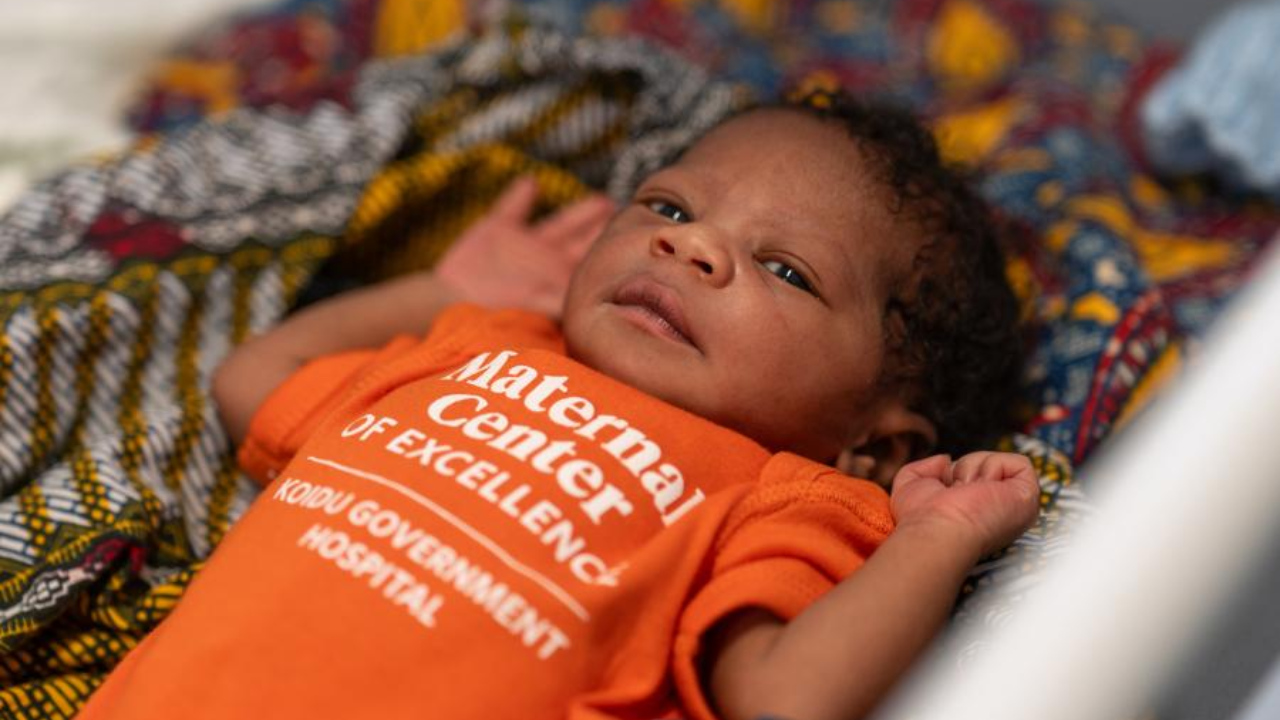
Darkness in rural Sierra Leone has a weight to it. It presses against the walls of tin-roofed homes, swallows the distant paths of red dirt, and carries the quiet, ever-present dread that every expectant mother knows in her bones. For generations, giving life in places like Koidu wasn’t just a medical event. It was a high-stakes crossing over a swollen river, where many simply didn't make it to the other side.
Then came a Tuesday that rewrote the arithmetic of survival.
Thirteen new lives arrived within the span of twenty-four hours. Not in a sprawling, well-endowed metropolis, but inside a brand-new maternity centre funded in part by an author whose novels have spent decades breaking the hearts of teenagers worldwide. John Green, alongside partners and local healthcare workers, helped turn a long-gestating dream into brick, mortar, and antiseptic-scented air.
Consider what happens when a community stops bracing for tragedy.
The Geography of Risk
Distance kills. In many parts of West Africa, the primary hazard of childbirth is not a rare complication or an untreatable pathology. It is geography. When a woman goes into obstructed labor hours away from a functional surgical suite, time becomes an adversary that cannot be negotiated with.
Statistics in global public health often read like cold geometry. Maternal mortality rates, infant mortality coefficients, ratios of skilled birth attendants per thousand residents. But behind every decimal point is a porch left empty. A grandmother holding a swaddled orphan. A village whispering about what might have been if the road had been paved, if the clinic had been closer, if the lights had stayed on.
Before this facility opened its doors, families faced impossible choices. Do you spend scarce savings hiring a motorbike to navigate cratered roads at midnight? Do you rely on traditional remedies that soothe the spirit but cannot stop a postpartum hemorrhage?
The new maternity centre changed those variables. It planted professional medical capability right in the middle of the vulnerability.
Writing a Different Ending
Authors spend their lives obsessing over narrative arcs. They worry about pacing, about the emotional resonance of a sentence, about whether a character's suffering feels earned and resolved. But real-world suffering lacks the neat boundaries of fiction. It does not wrap up in three hundred pages. It lingers. It repeats.
When John Green—best known for crafting stories about young people grappling with illness and mortality—lent his voice and resources to this project, he wasn't writing fiction. He was investing in a plot twist that actually matters.
Think of the first mother to walk through those doors as labor gripped her abdomen. She carried the collective anxiety of her ancestors. Every woman in her family tree had crossed this perilous threshold with fear as her primary companion. But inside the brightly lit wards, she found something radical.
Competence. Compassion. Clean sheets. Oxygen.
Within the first day, thirteen cries pierced the humid air. Thirteen tiny fists punched upward toward a ceiling built to withstand the rainy season. Thirteen mothers survived an ordeal that, just a year prior, might have claimed half of them to the unforgiving ledger of maternal mortality.
Beyond the Ribbon Cutting
It is easy to romanticize philanthropy. We love the imagery of the celebrity donor, the ribbon-cutting ceremony, the flash of cameras capturing a handshake against a backdrop of fresh paint. But the true test of any medical intervention begins long after the dignitaries leave.
What happens on month fourteen, when a power surge fries a sterilizer? What happens when a specific batch of medication runs low, or when the rainy season turns the approach roads into impassable soup?
Sustainable healthcare requires more than good intentions and authorial royalties. It requires embedding infrastructure into the cultural and logistical reality of the region. It means training local midwives, nurses, and administrators who view the clinic not as an NGO project, but as theirs.
This is where the Sierra Leonean medical staff take center stage. They are the true protagonists of this narrative. They are the ones who woke up before dawn, pulled on their scrubs, and monitored fetal heartbeats through the humid afternoon hours. They translated the donor's capital into human breath.
The Sound of the Future
Sound travels differently in a place built for healing.
In a traditional birth setting in a remote village, silence is often the most terrifying sound—the absence of a cry, the sudden hush that tells everyone in the compound that the worst has occurred.
At the new centre, the dominant sound is noise. The rustle of crisp paper on examination tables. The low hum of refrigerators preserving vaccines. The sharp, indignant wail of a newborn discovering the atmosphere for the very first time.
Thirteen babies took their first breaths in an environment designed to ensure they would take their second, and their ten-thousandth.
The author who made his living making readers cry over fictional tragedies helped write a true story where nobody had to die for the plot to move forward. And somewhere out there in the red dirt of Koidu, a thirteen-hour-old child is sleeping through the heavy African night, entirely unaware that the world paused just long enough to make sure she arrived safely.