Stand at the edge of the Lincoln Memorial Reflecting Pool at six in the morning, before the tour buses idle along Constitution Avenue and before the joggers claim the gravel paths, and the water looks like black glass.
Silence.
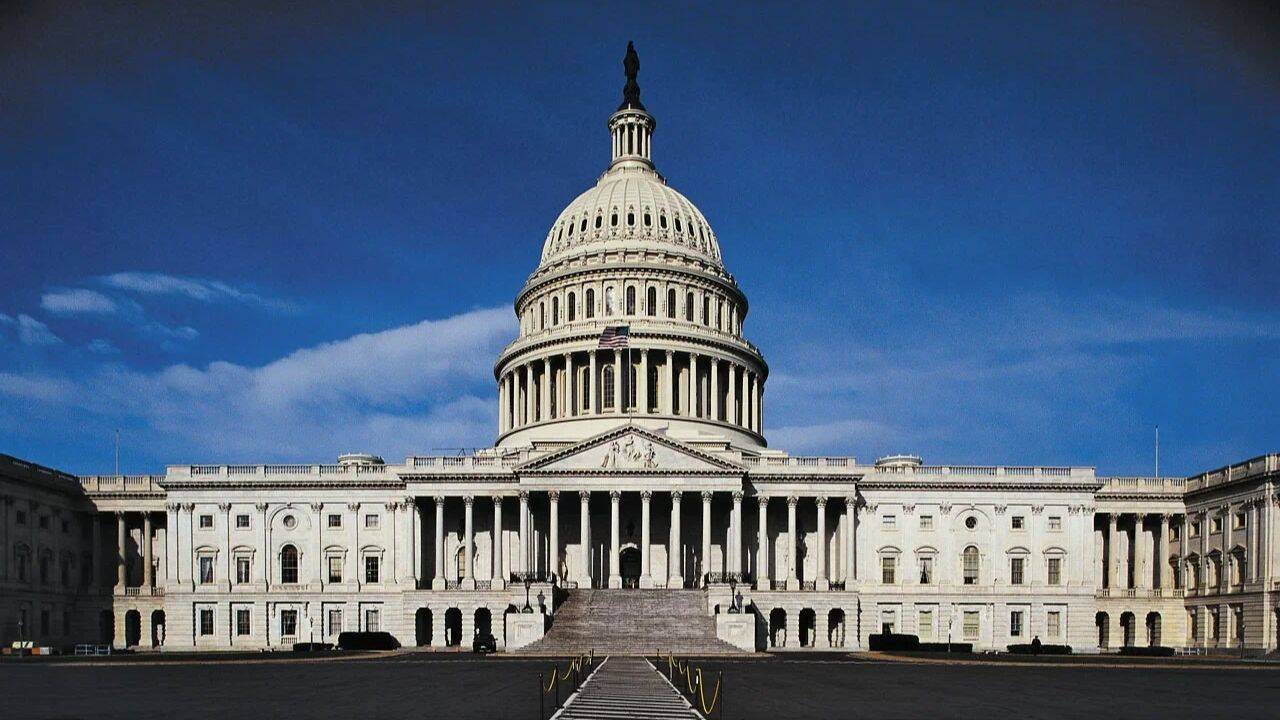
Then, slowly, the sky begins to bleed pale orange over the Capitol dome two miles to the east, and the Washington Monument drops a sharp, trembling needle of stone right down the center of the water. You look at it, and for a second, the noise of modern politics—the shouting matches on cable news, the budgetary brinkmanship, the endless churn of outrage—vanishes into the mist rising off the surface. You feel the weight of the place. You feel the quiet dignity of a republic trying to hold itself together.
At least, that is what you feel until you look at the receipt.
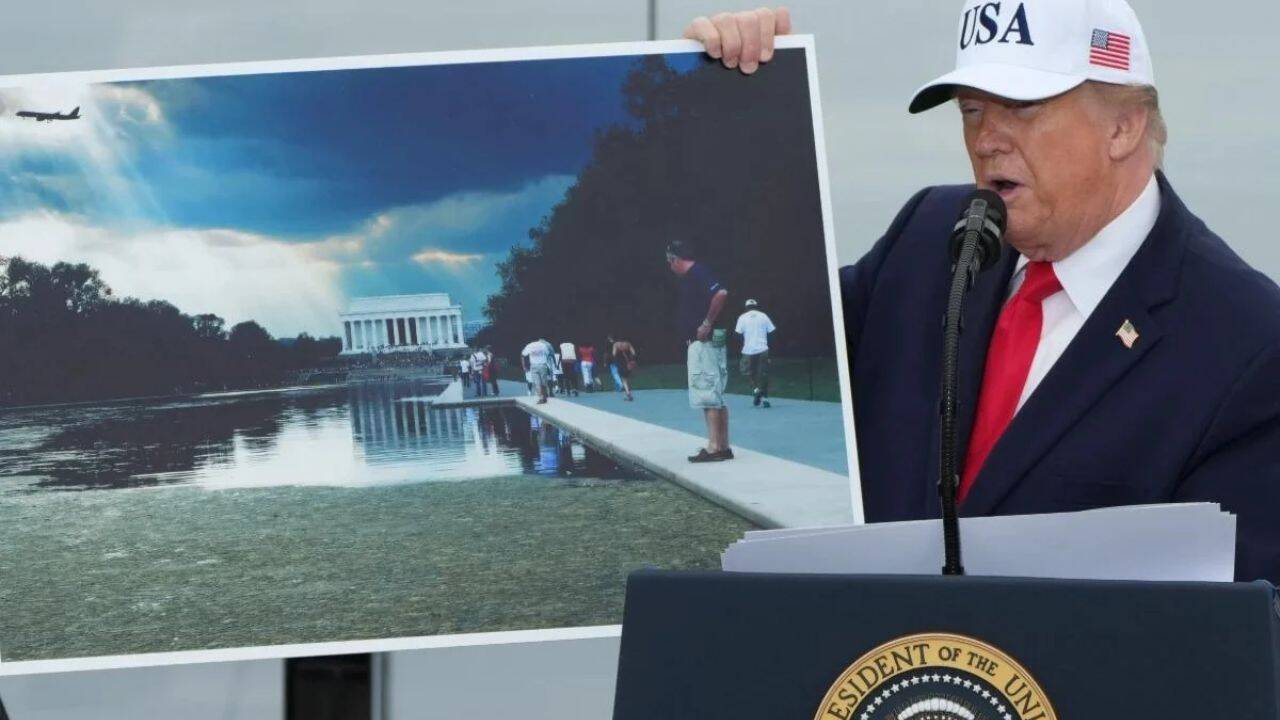
For months, visitors walking the length of that iconic basin were greeted not by shimmering water, but by chain-link fencing, plywood barriers, and the dry, cracked concrete bed of a drained monument. When President Donald Trump stepped out to unveil the newly repaired and refilled Reflecting Pool, the cameras clicked, the speeches rolled, and the water sparkled once more under the Washington sun. On paper, it was a straightforward civic restoration. A broken piece of national infrastructure had been fixed.
Yet buried beneath the press releases and the ceremonial ribbon-cutting sat a number that stops a taxpayer dead in their tracks. The project, initially projected to cost under $2 million, had ballooned to more than $14 million.
Seven times the original estimate.
To understand how a shallow rectangular basin of water—barely eighteen inches deep at the edges and thirty inches in the center—swallows fourteen million dollars, you have to look past the surface reflection. You have to look into the mud, the bureaucracy, and the uniquely American obsession with preserving sacred spaces at any price.
The Anatomy of a Drained Monument
Consider a hypothetical character to ground what those numbers actually mean in the real world. Let us call him Arthur, a retired high school history teacher from Ohio who saved for three years to bring his two grandchildren to Washington, D.C.
Arthur does not read Federal Register procurement notices. He reads plaques. When he stands at the base of the Lincoln Memorial steps, he tells his grandchildren about Marian Anderson singing on Easter Sunday in 1939 to a crowd of seventy-five thousand people, and about Martin Luther King Jr. standing at that exact podium in 1963, looking out over a sea of humanity framing the water. To Arthur, the pool is not a plumbing project. It is a sacred stage.
Now, picture Arthur standing beside a construction fence in the humid D.C. summer, squinting through wire mesh at a dry concrete trough while a backhoe beeps in reverse. Disappointment sits heavy in his chest. He understands repairs are necessary. Anyone who owns an old house knows that when you pull up a loose floorboard, you rarely find good news underneath.
That homeowner analogy is the simplest way to understand the engineering nightmare hiding beneath the National Mall.
The Lincoln Memorial Reflecting Pool, designed by Henry Bacon and completed in 1923, was never built on solid bedrock. It sits on reclaimed tidal marshland dredged from the Potomac River. Over a century, the soft, waterlogged soil beneath the Mall has shifted, settled, and breathed like a living sponge. When the National Park Service drained the pool in 2010 for a massive $34 million overhaul—a project meant to fix algae blooms, cracked concrete, and leaking water supply lines—engineers believed they had bought the landmark decades of peace.
They were wrong.
By the time the recent round of repairs became unavoidable, the problems had migrated beneath the skin of the basin. What started as a targeted fix—originally scoped at under $2 million to address structural leaks, failing joints, and deteriorating stone coping—quickly unraveled once crews broke through the surface. Beneath the granite and concrete lay compromised drainage lines, shifting sub-base materials, and water-proofing membranes that had surrendered to the relentless pressure of the Potomac water table.
When you dig into historic ground in Washington, you cannot simply pour cheap concrete and call it a day. Every stone must match the historic quarry specifications. Every underground pipe weaves through a subterranean spaghetti of century-old utilities, security conduits, and protected tree roots. What looks like a glorified swimming pool is, in reality, a fragile, historic vessel floating on unstable mud.
Where the Millions Go
Still, knowing that old infrastructure is tricky does not erase the visceral shock of seeing a price tag jump from under $2 million to north of $14 million. For a family watching grocery bills climb or a small business owner counting every dollar of overhead, a 600 percent cost overrun feels less like an engineering challenge and more like a punchline.
I remember the first time I walked past a major federal renovation on the Mall years ago, staring at a posted project sign listing millions of dollars for what looked like a single block of sidewalk and a stone retaining wall. My immediate reaction was cynicism. You look at the figures and assume someone is lining their pockets, or that nobody in charge cares how much money burns because the checkbook belongs to thirty-three million households rather than a single owner.
That skepticism is healthy. In fact, it is necessary.
Federal construction operates inside a labyrinth of regulations, historic preservation mandates, environmental compliance reviews, and security protocols that inflate costs before a single shovel hits the dirt. Add in post-pandemic supply chain inflation, specialized masonry labor shortages, and the discovery of unforeseen subsurface damage once the water was pumped out, and a modest repair bill mutates into an eight-figure ledger.
Consider what happens next when a political leader steps into that frame.
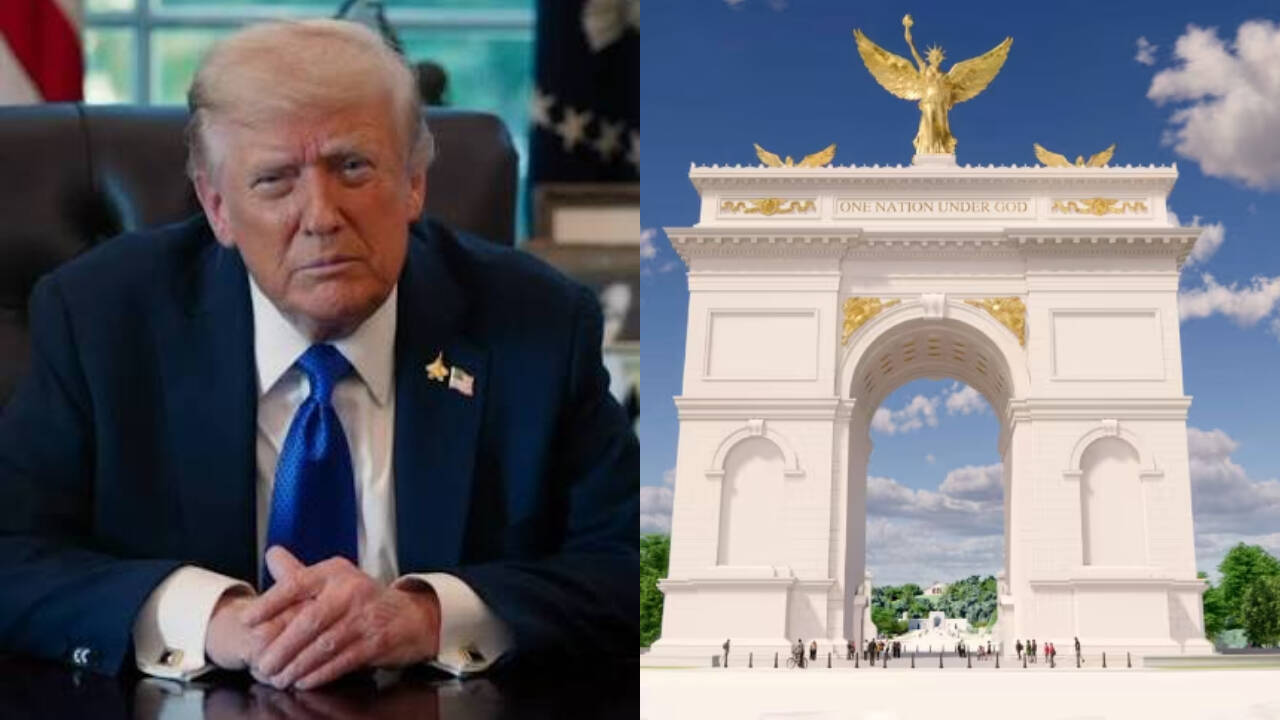
When Trump unveiled the restored pool, the optics were unmistakable. Throughout his public life, from Manhattan skyscrapers to federal monuments, Trump has framed himself as a builder—a man who obsesses over marble, gold leaf, curb appeal, and the physical grandeur of American landmarks. Standing beside the newly filled basin, the narrative is about restoration, pride, and returning a tarnished national jewel to its proper shine.
Yet the political irony is sharp enough to cut glass. A leader who frequently rails against government waste, bloated federal contracts, and out-of-control spending stood before a project whose cost exploded sevenfold under the weight of the very federal machinery he criticizes.
The Invisible Stakes of Public Beauty
Why does any of this matter beyond a fleeting headline about government overruns?
Because the National Mall is one of the last physical places in America where citizens of every political tribe still stand shoulder to shoulder in silence.
Think about how rare that has become. Our media diets are fractured. Our neighborhoods are sorted. Our digital town squares are engineered to reward anger. Yet every single day, millions of people—roughly eight million visitors annually at the Lincoln Memorial alone—walk along the edge of that 2,029-foot-long pool. They do not ask the stranger standing next to them who they voted for. They look at the water. They look at Lincoln sitting in his marble chair. They take a photo of their kids squinting into the sun.
When that pool sits dry, cracked, and wrapped in orange plastic netting for months on end, the damage is subtle, but real. Decay in public spaces sends a quiet message that we no longer take care of the things we share. Broken windows theory applies just as much to national monuments as it does to neighborhood storefronts. If the front yard of American democracy looks neglected, cynicism creeps in a little deeper.
On the flip side, when public stewards treat taxpayer money like Monopoly cash—estimating a job at under $2 million and casually letting it drift past $14 million without transparent, painful accountability—it breeds a different kind of cynicism. It tells citizens like Arthur, the retired teacher from Ohio, that the people running the show have lost all sense of scale.
To be honest, there is no comfortable middle ground here, and pretending otherwise would be dishonest. We want our monuments to look eternal, pristine, and worthy of the history they commemorate. At the same time, we are drowning in national debt, and every million dollars swallowed by a leaky concrete basin is a million dollars not spent on crumbling rural bridges, underfunded classrooms, or veterans waiting in clinic hallways.
The Surface and the Depths
When the valves were finally opened and millions of gallons of water rushed back into the basin, the transformation was instantaneous.
The scars of the construction vanished beneath the surface. The concrete seams disappeared. The granite coping gleamed cleanly in the daylight, framing the water like a freshly polished picture frame. Ducks returned within hours, paddling lazily across the eastern end near the World War II Memorial, leaving gentle V-shaped wakes that rippled outward until they dissolved against the stone edges.
Tourists crowded the walkways again, leaning over the low ledges to capture the reflection of the obelisk stretching across the water. To the naked eye, the fourteen million dollars had vanished completely. That is the strange nature of infrastructure work: when it is done right, you cannot see what you paid for. You only see the stillness on top.
Perhaps that is the truest metaphor for the entire saga.
America has always been a country obsessed with the reflection—the grand gesture, the sweeping unveiling, the pristine image shining back at us in the morning light. We love the ribbon-cutting. We love the speech. We love the feeling that our house is in order and our monuments are immortal.
What we hate looking at is the mud underneath. We hate the slow, unglamorous work of honest budgeting, routine maintenance, and admitting when a system is broken before it becomes an emergency. It is always easier to wait until the basin cracks, throw fourteen million dollars into the hole, refill the water, and admire the view.
Late in the afternoon, as the sun drops behind the marble columns of the Lincoln Memorial, the long shadow of the temple stretches out across the water, cooling the surface and turning the bright blue mirror into deep indigo. A breeze skims across the basin, blurring the sharp edges of the monument's reflection into shimmering, uncertain ripples. For a moment, the stone looks fluid, almost fragile, held together only by the stillness of the water beneath it.