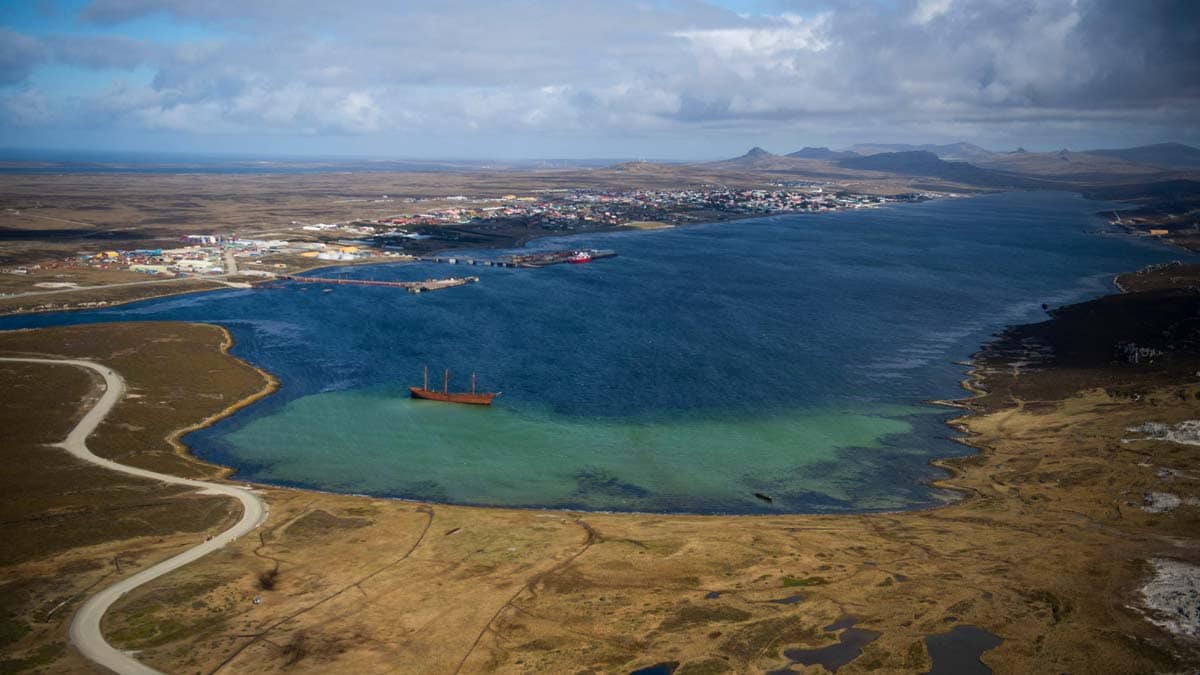
Geographic control over the South Atlantic archipelago known as the Falkland Islands or Las Malvinas depends on three interacting variables: great power alignment, domestic economic extraction rights, and the security guarantees underpinning de facto administration. When United States President Donald Trump declined to guarantee automatic diplomatic or military backing for British sovereignty over the islands—explicitly tying the position to broader transatlantic defense burdens and past alliance friction regarding operations in the Middle East—the baseline assumptions governing the region shifted. Argentine President Javier Milei seized this diplomatic opening to alter the cost function for London, moving from rhetorical posturing to targeted economic disruption of offshore assets. Analyzing this escalation requires breaking down the strategic levers, resource incentives, and legal realities that dictate the conflict.
The Mechanics of the Transatlantic Fracture
For decades, United States foreign policy maintained a predictable stance of administrative neutrality on Falklands sovereignty while recognizing British control. This neutrality served as a structural stabilizer. It insulated Washington from regional friction in South America while reassuring London of a baseline security umbrella within the Western alliance. If you enjoyed this article, you might want to check out: this related article.
The calculus changed when the White House linked great power protection directly to allied burden-sharing and transactional reciprocity. By signaling that every diplomatic position remains subject to continuous review—specifically referencing London's reticence to commit naval assets during operations near the Strait of Hormuz—the United States introduced conditional alignment into a bilateral relationship that London assumed was permanent.
This creates a severe vulnerability for British defense strategy. The United Kingdom maintains absolute de facto sovereignty through military deterrence and the explicit self-determination rights of the local population. However, maintaining power projection capabilities thousands of miles from the British mainland depends heavily on intelligence sharing, logistical support, and diplomatic cover from Washington. If the United States treats sovereignty neutrality as an adjustable diplomatic penalty box to coerce higher defense spending or policy alignment from London, the defensive cost function for the United Kingdom multiplies significantly. For another look on this story, see the latest coverage from The Guardian.
The Economic Vector and Offshore Resource Extraction
President Milei's tactical response focuses less on immediate military confrontation and more on judicial and economic harassment of the hydrocarbon sector surrounding the archipelago. The primary target of this strategy is the Sea Lion oil field, located approximately 220 kilometers north of the islands, which is managed by a partnership between British firm Rockhopper Exploration and Israel's Navitas Petroleum.
Argentina has systematically moved to penalize companies operating under licenses granted by the Falkland Islands government, which Buenos Aires views as illegal under domestic and international maritime law. The structural objective is straightforward: increase the risk premium for institutional investors and energy conglomerates until project financing breaks down.
[Capital Investment] ---> [Geopolitical Risk Premium] ---> [Project Stagnation or Withdrawal]
         ^                                                              |
         |----------------< [Regulatory Sanctions] <--------------------|
Energy exploration in sub-polar environments requires immense upfront capital expenditure and long-term regulatory stability. By weaponizing regulatory threats, denying port access within South America, and threatening domestic blacklists against participating firms, Argentina aims to make the extraction costs outweigh the projected yields. While commercial operators maintain that their operational timelines remain intact, sustained sovereign-level uncertainty directly impacts debt financing and equity valuations.
Domestic Political Utility and Economic Divergence
The escalation of territorial claims by Buenos Aires correlates directly with internal domestic pressures. President Milei faces persistent economic turbulence and declining approval ratings. In political science models, foreign policy crises offer a mechanism for national consolidation. The sovereignty claim over the islands remains one of the few unifying platforms across Argentina's polarized political ecosystem.
By framing the shifting posture of the United States as a historic window of opportunity, the administration attempts to redirect public attention away from domestic structural reforms and inflationary pressures. The rhetorical shift from viewing the UK through the lens of traditional diplomacy to diagnosing British domestic decay as an irreversible trend serves a dual purpose: it reassures domestic hardliners and signals to Washington that Argentina is a stable, aligned proxy in the Southern Hemisphere capable of projecting Western values.
The British Strategic Response and Legal Limits
London's counter-strategy relies entirely on constitutional immutability and international law. British officials emphasize that the population of the islands voted overwhelmingly in a 2013 referendum to remain an overseas territory, making self-determination a non-negotiable principle under international charters.
The structural limitation for London, however, is resource stretch. Facing severe domestic economic constraints and competing defense commitments in Europe and the Middle East, the British military apparatus cannot afford open-ended, multi-theater operational readiness without significant capability compromises. Relying on political rhetoric from ministers declaring commitments to be "absolute and unshakeable" does not alter the underlying logistics of defending a remote island chain without regional allies.
If Washington maintains its transactional ambivalence, Britain is forced to unilaterally underwrite the entire security architecture of the South Atlantic. This strains naval assets that are already optimized for European theater defense.
Strategic Forecast
The intersection of shifting American diplomatic ambivalence and Argentine regulatory aggression guarantees that the status quo in the South Atlantic is no longer static. Argentina will continue to deploy legal, financial, and diplomatic penalties against resource extraction corporations to choke off the economic self-sufficiency of the islands. Simultaneously, any future friction in transatlantic relations will immediately manifest as pressure points on British territorial claims.
The operational imperative for London is to decouple its economic and defensive reliance on Washington regarding South American affairs while fortifying the local deterrent posture of the garrison. For Buenos Aires, the window of utility depends entirely on maintaining alignment with a transactional United States administration. If American priorities pivot back to traditional alliance management, the diplomatic leverage currently enjoyed by Argentina will rapidly diminish, reverting the dispute back to a protracted diplomatic stalemate.


