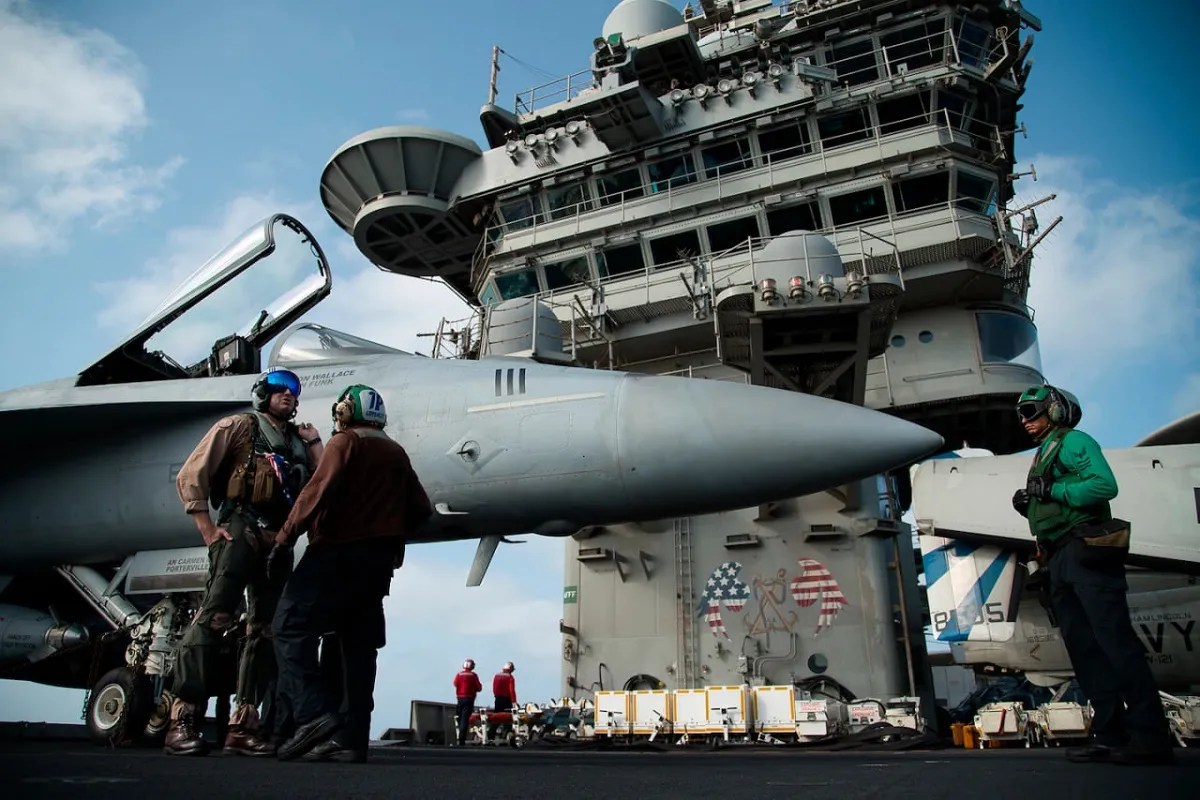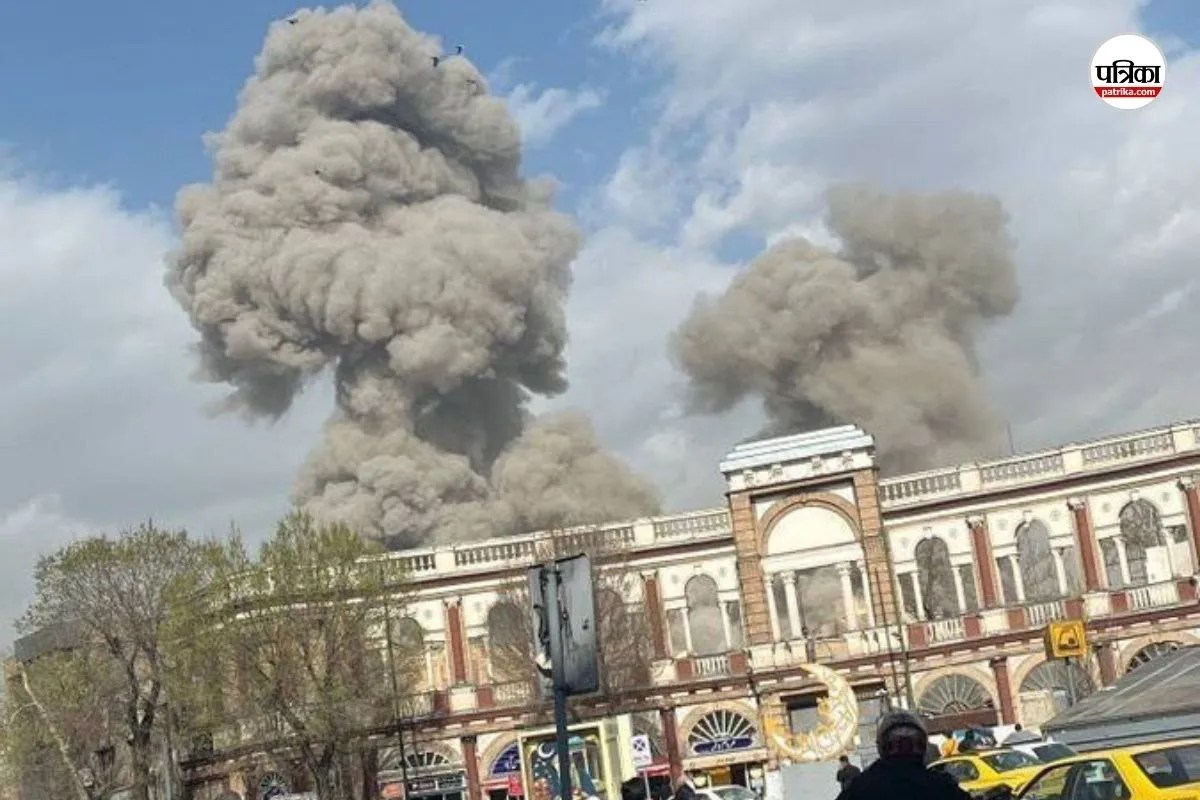
The escalation of direct kinetic exchanges between Israel and Iran, supported by United States logistical and intelligence frameworks, has transitioned from a "shadow war" to a quantifiable cycle of state-on-state attrition. To evaluate the global reaction to these strikes, one must move beyond the surface-level rhetoric of "concern" and instead map the responses onto a Tri-Heuristic Model: Tactical Validation, Strategic Hedging, and Systemic De-escalation. This framework reveals that international positioning is dictated not by moral alignment, but by a cold calculation of energy security, maritime stability, and the preservation of domestic political capital.
The Mechanics of Vertical Escalation
When assessing the strikes on Iranian military infrastructure, the primary variable is the "Escalation Ladder." Each kinetic action is designed to restore deterrence without triggering a total regional collapse. The global reaction follows this logic. Western allies generally provide tactical validation, viewing the strikes as a necessary recalibration of the regional power balance. This is not merely diplomatic support; it is a recognition of the Security Dilemma—where Iran’s advancement in unmanned aerial vehicle (UAV) technology and ballistic missile precision forces a kinetic response to maintain the status quo.
The second variable is the Threshold of Deniability. As the U.S. and Israel move toward more overt operations, the diplomatic "cover" previously afforded to neutral parties evaporates. This forces a binary choice upon regional actors: align with the U.S.-led security architecture or retreat into a defensive neutrality that risks alienating Washington.
The Three Pillars of Global Response
Global reactions are not monolithic; they are categorized by their proximity to the conflict’s economic and security "blast radius."
1. The Atlanticist Validation Pillar
The United States, United Kingdom, and key EU members operate within a framework of Defensive Realism. Their rhetoric emphasizes the "right to self-defense," which serves as a legalistic anchor to prevent the conflict from being classified as unprovoked aggression under international law. The underlying strategy here is the containment of Iranian "Power Projection." By validating precise strikes on missile production facilities, these actors aim to degrade Iran’s ability to export instability to the Levant and Eastern Europe via drone transfers.
2. The Energy-Dependent Hedging Pillar
States such as China, India, and Japan respond through the lens of Resource Vulnerability. For these nations, the primary threat is not the political identity of the Iranian regime, but the "Chokepoint Risk" associated with the Strait of Hormuz.
- China’s Calculus: Beijing’s calls for "restraint" are a function of its role as the largest buyer of Iranian "teapot" refinery oil. Any disruption to Iranian supply or a broader Gulf war spikes Brent Crude prices, creating an immediate contraction in Chinese manufacturing margins.
- The Gulf Cooperation Council (GCC) Stance: Countries like Saudi Arabia and the UAE occupy the most precarious position. They seek the degradation of Iranian proxy capabilities (Tactical Benefit) while fearing Iranian retaliatory strikes on their own desalination plants and oil terminals (Existential Risk). Their reactions are characterized by a "Strategic Silence" or generalized calls for regional stability.
3. The Revisionist Alignment Pillar
Russia and its immediate periphery view the strikes through the Zero-Sum Framework of the Great Power Competition. To Moscow, any degradation of Iranian military capacity is a direct hit to its own supply chain for the conflict in Ukraine. Their response is systematically designed to frame Western actions as "violating sovereignty," an attempt to consolidate support among the Global South by highlighting perceived Western double standards regarding international law.
The Cost Function of Regional Inaction
The failure of the international community to reach a consensus on Iran’s nuclear and regional trajectory has created a Security Vacuum. In the absence of a functional diplomatic "off-ramp," kinetic action becomes the only remaining tool for policy enforcement. This creates a feedback loop where:
- Kinetic Strike occurs to reset deterrence.
- Global Condemnation/Validation occurs along predictable geopolitical lines.
- The Target (Iran) perceives an existential threat and accelerates its "Hardening" (moving facilities underground, increasing enrichment).
- Deterrence Erodes, requiring a larger, more destructive strike in the next cycle.
The global reaction is often a lagging indicator of this cycle. While diplomats debate the "proportionality" of a strike, military planners are already calculating the "Reconstitution Time"—the period it takes for Iran to repair the damaged infrastructure. If the global reaction does not include a credible secondary sanction or diplomatic pressure, the kinetic strike only buys time; it does not solve the underlying structural friction.
Maritime Stability and the Logistics of Neutrality
A critical oversight in standard reporting is the impact of these strikes on the Global Commons, specifically maritime trade routes. The Red Sea and the Persian Gulf are the carotid arteries of global trade. When Israel or the U.S. strikes Iranian assets, the immediate reaction in the insurance markets (Lloyd’s of London) is often more telling than the statements from the UN Security Council.
The "Risk Premium" on shipping increases instantaneously. This is where the reaction of the "Neutral Middle" (countries like Brazil, South Africa, and Indonesia) becomes significant. They do not view the conflict through a security lens but through an inflationary one. Their diplomatic pushback is a direct response to the threat of "Imported Inflation" caused by rising energy and shipping costs.
Technical Asymmetry in Response Logic
The shift toward using high-precision, low-yield munitions in these strikes allows the U.S. and Israel to claim a "Surgical Standard." This is a deliberate attempt to limit the "Political Cost" for allies. If a strike causes massive collateral damage, the Atlanticist Validation Pillar collapses under domestic pressure. However, by maintaining a clinical, intelligence-led targeting profile, the aggressors allow their allies to maintain the "Proportionality Defense."
This technical precision creates a "Data Gap" in the global reaction. Because the full extent of the damage is often hidden by Iranian state censorship, and the technical specifics of the weapons used are classified, the international debate happens in a vacuum of hard evidence. This allows both sides to claim victory: Iran claims the strikes were "weak and ineffective," while Israel/the U.S. claim "strategic objectives were met."
The Strategic Play for Regional Hegemony
The endgame of these kinetic exchanges, and the subsequent global reactions, is the definition of a New Regional Order. The Abraham Accords introduced a variable that Iran’s "Axis of Resistance" has yet to neutralize: the possibility of a formalized Arab-Israeli security pact.
The global reaction to strikes on Iran serves as a litmus test for this pact. If Arab capitals remain quiet or issue only perfunctory condemnations, it signals to Tehran that its regional isolation is deepening. This "Quietude" is more damaging to Iranian strategy than the physical bombs, as it indicates a shift in the "Regional Center of Gravity" toward a U.S.-aligned security architecture.
The limitation of this strategy lies in its Dependency on U.S. Political Will. If Washington’s appetite for Middle Eastern entanglement wanes, the entire structure of "Extended Deterrence" that justifies these strikes will fail. The global reaction is, in many ways, a constant monitoring of the pulse of American isolationism versus interventionism.
Structural Forecasting of the Kinetic Cycle
Based on the current trajectory of multilateral responses, the conflict will likely follow a pattern of "Controlled Volatility." No major power—including the U.S., China, or Russia—desires a "Total War" that would decouple the global energy market. Therefore, the "Global Reaction" will continue to function as a pressure valve, using rhetoric to prevent a full-scale regional conflagration while allowing for limited, high-intensity kinetic "corrections."
The immediate strategic priority for international actors is the "Containment of Contagion." This involves:
- Establishing "Red Lines" that, if crossed by Iran (e.g., 90% enrichment or closing the Strait), would trigger a pre-validated global response.
- Decoupling local proxy conflicts (Hezbollah, Houthis) from the direct Iran-Israel kinetic exchange to prevent a "Multi-Front Cascade."
- Leveraging "Backchannel Diplomacy" (often through Oman or Qatar) to ensure that each side understands the "Exit Ramp" for each specific escalation.
The effectiveness of these strikes is not measured in buildings destroyed, but in the "Psychological Attrition" of the adversary's leadership. The global response is the environment in which that attrition takes place. If the world remains divided, Iran finds the "Strategic Depth" to continue its current path. If the reaction trends toward a unified "Economic Isolation" model, the kinetic cycle may finally reach a point of diminishing returns for the Islamic Republic, forcing a structural pivot in their regional policy.
Monitor the "Spread" between Brent Crude and WTI; if the gap narrows despite regional tension, it indicates the market has "Priced In" the kinetic cycle, signaling that the global community no longer views these strikes as a systemic threat to the global economy, but rather as the new, violent baseline of regional diplomacy.
Next Step: If you want to analyze the specific impact on the "Axis of Resistance" supply chains, I can deconstruct the logistics of the IRGC's "Land Bridge" and how current strikes are impacting their "Time-to-Combat" metrics for proxy forces. Would you like me to map the logistics of the Iranian land bridge across Iraq and Syria?