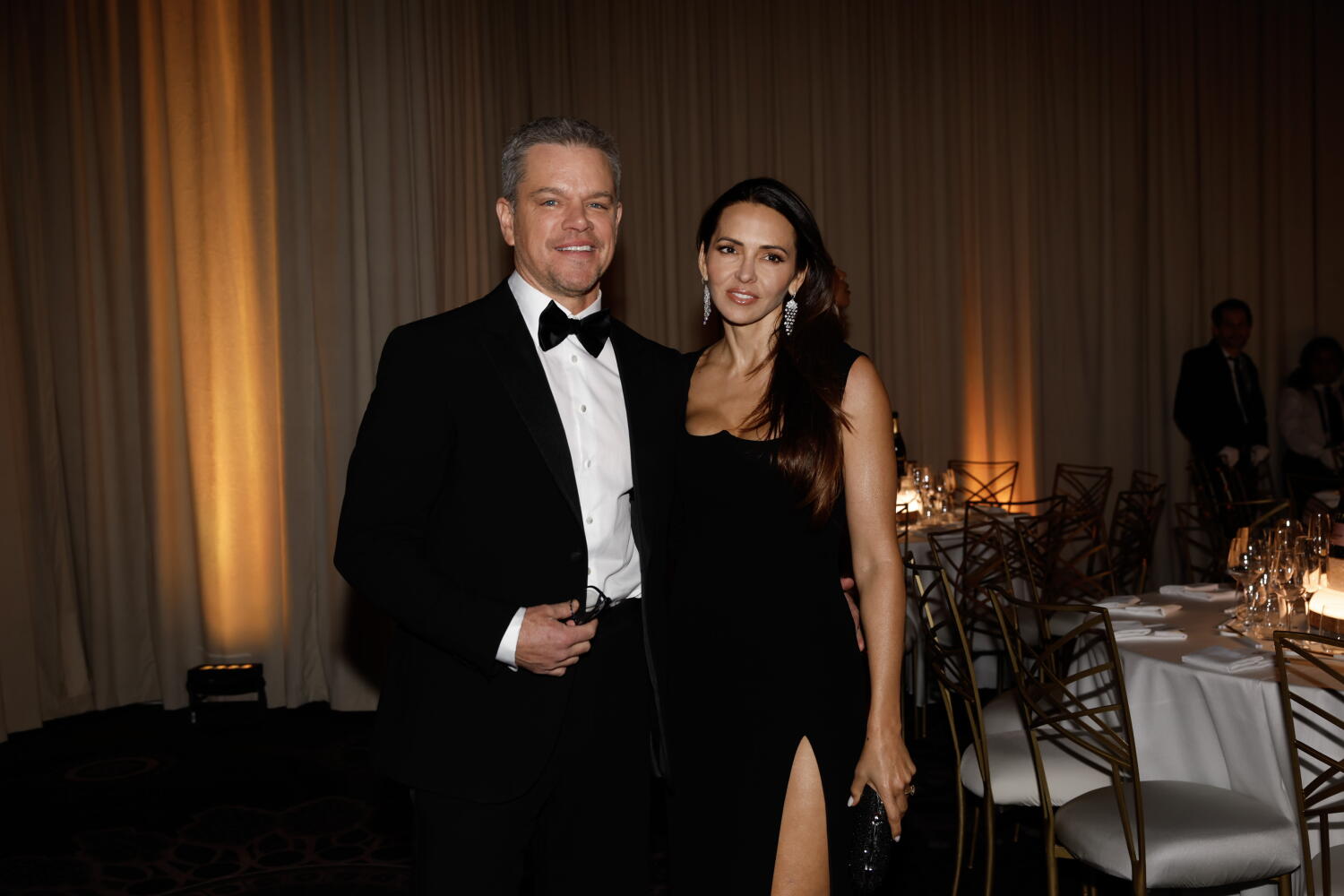
Matt Damon recently revealed that his wife, Luciana Barroso, attended a high-profile Oscars party while still actively recovering from brain surgery—a decision she made entirely to support him during a major career moment. On the surface, the entertainment press framed this revelation as a heartwarming testament to marital devotion in an industry notorious for fragile relationships. Look closer at the mechanics of Hollywood awards season, and a much more complicated picture emerges about invisible labor, medical risk, and the relentless expectations placed on celebrity spouses.
The Anatomy of an Unspoken Hollywood Requirement
To understand why a woman recovering from neurological trauma would force herself into formal wear, harsh camera flashes, and a deafeningly loud room, you first have to understand how awards season actually operates. It is not a celebration. It is a multi-month corporate lobbying campaign disguised as a party.
For A-list actors like Damon, who has spent nearly three decades navigating the upper echelons of studio filmmaking since Good Will Hunting, showing up to the Vanity Fair Oscar Party or similar post-ceremony gatherings is rarely optional. Even when an actor is not personally nominated, their presence functions as social currency. Studios expect their top talent to work the room, validate projects, shake hands with financiers, and maintain visibility.
In that ecosystem, arriving solo triggers an immediate, predictable cycle of tabloid speculation. The entertainment press operates on visual heuristics. An absent spouse equals marital trouble. A missing partner becomes a blind item by Monday morning, which in turn distracts from the film campaign or corporate narrative the actor is there to promote.
Barroso, who met Damon in 2003 while working as a bartender in Miami, has spent more than twenty years deliberately avoiding the spotlight. She does not seek red carpets. She does not maintain public social media profiles to monetize her proximity to fame. Yet, because she married into the top tier of the entertainment industry, her physical presence at marquee events became an unwritten part of the job description. When Damon needed to be there, she felt the weight of ensuring his night went smoothly without the distraction of questions about her whereabouts.
What Brain Surgery Recovery Actually Demands
The medical reality of recovering from brain surgery stands in stark contrast to the sensory overload of an Academy Awards after-party. While Damon has kept the specific medical details of Barroso's procedure private—a boundary entirely consistent with how the couple operates—any intracranial surgery carries a demanding, non-linear recovery protocol.
Neurosurgeons routinely warn patients that the brain does not heal on a predictable schedule. Following a craniotomy or similar neurological intervention, the primary enemy of recovery is overstimulation.
- Sensory Processing Overload: A healing brain struggles to filter background noise and visual clutter. An Oscars after-party is essentially a stress test for the central nervous system, combining strobing camera flashes, competing audio frequencies, and crowded spatial navigation.
- Fatigue and Cognitive Drain: Post-operative fatigue is not ordinary tiredness. It is a profound neurological exhaustion where basic social interaction—making small talk, maintaining posture, tracking conversations—depletes energy reserves within minutes.
- Physical Vulnerability: Crowd dynamics at Hollywood parties are chaotic. Being bumped in a tight corridor or forced to stand for extended periods introduces genuine physical hazards for someone whose equilibrium and stamina are compromised.
By stepping onto that carpet, Barroso was overriding her body's baseline need for quiet, dark, controlled environments. She was absorbing significant physical discomfort so that her husband could fulfill his professional obligations without friction.
The Myth of the Effortless Red Carpet
Hollywood sells an illusion of effortless glamour, and the media apparatus eagerly buys into it. When Damon shared the anecdote, the dominant narrative quickly coalesced around romance. It was packaged as proof that their twenty-plus-year marriage is the gold standard of Tinseltown stability.
That framing misses the structural imbalance inherent in celebrity partnerships.
When a high-profile actor accomplishes something difficult—gaining or losing extreme weight for a role, enduring brutal location shoots, or pushing through an injury on set—the industry rewards them with press tours, critical praise, and box office bonuses. Their physical sacrifice is documented, publicized, and monetized.
When a non-famous spouse makes a physical sacrifice to uphold the public image of that same career, it happens entirely off-camera. There is no press release for the hours spent managing post-surgical headaches in the back of a black SUV. There is no stylist credit for hiding exhaustion under heavy makeup and structured tailoring.
Barroso's decision was undeniably an act of deep personal loyalty. Married couples make quiet sacrifices for one another every day across every profession. What makes the Hollywood version distinct is the public performance required to pull it off. You cannot simply sit quietly in the back of an auditorium when your spouse is Matt Damon. You have to smile on cue, project vitality, and absorb the scrutiny of hundreds of lenses trained directly on your face.
Why Celebrities Normalize Extreme Endurance
Damon's casual delivery of the story also highlights a deeply ingrained cultural norm within the entertainment business: the glorification of pushing through physical limits. From actors bragging about working with broken bones to directors pulling consecutive twenty-hour days, Hollywood treats physical self-neglect as proof of dedication.
This ethos inevitably bleeds into the personal lives of everyone connected to the business. Because the stakes of a major film release or awards campaign involve tens of millions of dollars, personal health crises are frequently treated as inconvenient interruptions rather than absolute stop signs.
Consider the timing pressures of the industry calendar. The Oscars happen once a year. A major career milestone, a tribute, or a crucial networking window cannot be rescheduled to accommodate a six-week neurological recovery window. Faced with a binary choice—stay home and miss a moment that cannot be recreated, or medicate, dress up, and endure a few hours of misery—many people inside that orbit choose endurance.
Damon clearly recognized the magnitude of what his wife did for him, which is why he brought it up years later as evidence of her character. His gratitude is genuine. Still, the fact that such an extreme measure felt necessary underscores how unforgiving the public machinery of fame truly is.
The Double Standard of Privacy and Scrutiny
There is a sharp irony in how the public consumes stories like this. Audiences demand authenticity from celebrities, yet the moment a public figure shows genuine vulnerability—looking tired, appearing unpolished, or skipping an event without a sanitized PR explanation—the internet dissects them mercilessly.
Had Barroso attended that party looking visibly unwell, moving slowly, or declining to smile for photographers, the resulting coverage would not have been sympathetic. Without knowing her private medical history, internet commentators would have instantly speculated about illness, substance abuse, cosmetic procedures, or marital unhappiness.
To protect her privacy and avoid becoming a tabloid headline, she had to perform total wellness while recovering from brain surgery. Think about the sheer cognitive load required to pull that off. She had to manage her post-operative symptoms in real time while simultaneously performing the role of the radiant, unbothered Hollywood wife.
This is the hidden tax of fame that falls hardest on the partners who never asked for the spotlight. Damon chose a public life when he pursued acting in his teens and twenties. Barroso fell in love with a man who happened to be famous, and over two decades, she has had to build an invisible armor to survive the collateral damage of his career.
Evaluating the Real Cost of Support
Looking at the broader picture, Damon’s anecdote is less a romantic fairy tale and more a revealing case study in how high-stakes careers extract a toll on families. True partnership often involves showing up when it is inconvenient, uncomfortable, or downright painful. In that sense, Barroso demonstrated a level of commitment that few people could match.
At the same time, treating her post-surgical appearance as purely aspirational ignores the unhealthy pressures that forced the choice in the first place. An industry that requires a recovering neurosurgery patient to navigate a red carpet just to keep the rumor mill quiet is an industry with broken priorities.
Damon knows he owes his stability to a woman who consistently puts his professional needs ahead of her own comfort, even when the physical cost is staggering. The next time a celebrity couple glides down a red carpet looking untouchable under the flashes, remember that the calmest face in the room might be fighting through pain no camera will ever capture.