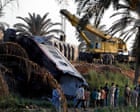
Everyone talks about oil prices when missiles fly in the Gulf, yet the real shock of the Saudi Aramco tower strike in Riyadh had nothing to do with crude barrels. It was about geography and nerve. For years, analysts assumed Saudi Arabia's capital sat comfortably outside the most intense cross-border drone and missile exchanges. That assumption died the moment debris and fire hit high-profile energy infrastructure in the heart of the Kingdom.
You can't separate this strike from the long, grinding war in Yemen that began in 2015. When Yemen's Houthi movement launched long-range attacks reaching Riyadh, they weren't just aiming at concrete and glass. They were sending a message straight to global investors, foreign contractors, and Vision 2030 planners sitting in glass offices across the capital.
Why Targeting Riyadh Changed the Strategic Math
Most people assume energy attacks only matter when they hit refineries or export terminals like Abqaiq or Ras Tanura. They're wrong. Striking an Aramco facility or administrative tower in Riyadh hits the psychological center of Saudi power rather than just a pipeline valve.
Think about how defense planners look at a map. Border towns like Jizan and Najran absorbed thousands of cross-border projectiles over the years, and international markets barely blinked. Riyadh is different. It's the political headquarters, the diplomatic hub, and the showcase city where Saudi leadership wants multinational corporations to set up regional headquarters.
When air defenses intercept ballistic missiles or drones over a major capital, the interception itself creates danger. Falling debris shatters windows, sparks fires on rooftops, and forces executives to reconsider security protocols. Even when Patriot batteries knock incoming threats out of the sky, the visual of smoke rising near an Aramco tower does the work the attackers wanted.
Honestly, the tactical damage to a single office tower rarely halts oil exports. Aramco's upstream production happens hundreds of miles away in the Eastern Province, while Red Sea terminals handle western shipments. The real disruption happens in boardrooms, insurance underwriting offices, and risk assessment briefings from London to Singapore.
How Houthi Long-Range Capabilities Evolved
If you followed the Yemen conflict from the early days, the transformation in Houthi weaponry looks almost unrecognizable. Back in 2015, the group relied largely on legacy Scud stockpiles seized from Yemeni military depots. Those missiles were loud, inaccurate, and relatively easy for modern air defense networks to track.
By the late 2010s and early 2020s, the arsenal shifted dramatically toward winged cruise missiles, extended-range ballistic systems, and low-flying loitering munitions. Analysts at the Center for Strategic and International Studies (CSIS) and United Nations panels documented how modular drone components and guidance systems allowed launches from northern Yemen to travel over 500 miles straight into central Saudi Arabia.
Drones changed the economics of the fight completely. A single Samad-3 or Qasef-style unmanned aerial vehicle costs a tiny fraction of the multi-million-dollar interceptor missiles fired to stop it. Even when Saudi air defenses achieve a high interception rate, attackers win the cost-exchange ratio every single time.
Here's what makes low-altitude drones particularly tricky for urban defense networks:
- Radar horizons get cluttered by skyscrapers, terrain, and commercial air traffic around a sprawling metropolis like Riyadh.
- Swarm tactics force air defense operators to prioritize multiple targets within seconds, increasing the odds that one projectile or heavy debris fragment gets through.
- Psychological pressure builds with every air raid siren, whether a warhead lands intact or breaks apart mid-air.
I've watched regional security briefings where analysts spent hours debating warhead payloads while missing the obvious point. You don't need to flatten a skyscraper to disrupt a financial district. You just need to prove you can reach its airspace repeatedly.
What Most Coverage Misses About Aramco's Infrastructure
When headlines scream about an attack on a Saudi Aramco tower, casual readers picture giant oil derricks bursting into flames in the middle of the desert. That's a basic misunderstanding of how the company operates.
Saudi Aramco maintains administrative offices, research centers, and corporate towers across the Kingdom, including major facilities in Riyadh alongside its massive headquarters complex in Dhahran. An attack hitting or damaging an Aramco building in Riyadh affects administrative operations, corporate security, and public perception rather than immediate crude extraction capacity.
Compare that to the September 2019 strikes on Abqaiq and Khurais. Those attacks temporarily knocked out roughly 5.7 million barrels per day of crude processing capacity—about five percent of global daily oil supply at the time. Brent crude spiked nearly 20 percent in a single trading session before repairs restored output faster than skeptics expected.
A Riyadh tower incident plays out differently in the markets. Oil traders check two things immediately:
- Are export terminals at Ras Tanura or Yanbu intact?
- Is the Strait of Hormuz or the Bab el-Mandeb chokepoint blocked?
If the answer to both is yes, crude futures usually give back their initial knee-jerk gains within a day or two. Meanwhile, war-risk insurance premiums for regional shipping and commercial property quietly climb in the background.
The Geopolitical Ripples Across the Gulf
You can't analyze Houthi strikes on Riyadh without looking at the wider regional chessboard. Throughout the conflict, Saudi officials, U.S. intelligence assessments, and UN monitors pointed to Iranian technical support, smuggling networks, and component transfers as key enablers of Houthi missile and drone programs. Tehran consistently denied direct operational command, framing the Houthis as independent allies acting in their own defense.
Regardless of how you apportion responsibility between Sanaa and Tehran, the strategic squeeze on Riyadh was undeniable. Saudi Arabia found itself fighting a costly air campaign in Yemen while absorbing retaliatory strikes against its own cities and energy infrastructure.
That pressure eventually reshaped Saudi foreign policy. Rather than escalating endlessly, Riyadh gradually pivoted toward de-escalation—engaging in backchannel talks with Houthi representatives, pursuing a UN-brokered truce in 2022, and restoring diplomatic ties with Iran through a Chinese-brokered agreement in March 2023.
Some commentators called that pivot a retreat. Looking closely at the defense math, it was pure pragmatism. You can't build a trillion-dollar tourism, tech, and logistics hub under constant ballistic missile alerts. Vision 2030 required quiet skies far more than it required military victories in Yemen's mountains.
Security Lessons for Global Energy and Corporate Hubs
If you work in corporate risk, energy trading, or infrastructure security, the Riyadh strikes offer blunt lessons that still apply across the Middle East and beyond.
First, geographic distance no longer guarantees insulation from asymmetric warfare. Long-range one-way attack drones have democratized precision strike capabilities for non-state actors worldwide. Any critical facility within 1,000 kilometers of an active conflict zone sits inside a realistic threat envelope.
Second, air defense interception isn't a magic shield that makes threats vanish into thin air. When an interceptor destroys an incoming missile over a populated city, tons of metal and unburned fuel still obey gravity. Urban emergency planning has to account for falling debris, shattered facade glass, and secondary fires on high-rise rooftops.
Third, corporate continuity plans need clear separation between physical headquarters and operational control centers. Aramco weathered repeated security incidents across the Kingdom because its engineering redundancy, spare parts stockpiles, and decentralized field operations were built to absorb shocks without halting exports.
How to Read Future Headlines About Gulf Energy Strikes
Next time breaking news alerts flash about drones or missiles targeting Saudi infrastructure, don't react to the first dramatic social media clip. Run through a quick verification checklist before drawing conclusions about markets or regional stability:
- Check the exact target type. Separate administrative buildings and fuel depots from primary upstream processing plants and export terminals.
- Verify interception versus direct impact. Official defense statements, satellite imagery from commercial providers, and local fire department reports tell very different stories than early rumor mills.
- Watch shipping and insurance rates, not just spot oil prices. Marine war-risk premiums in the Red Sea and Persian Gulf reveal how commercial operators actually price ongoing danger.
- Track diplomatic channels alongside military alerts. Statements from Muscat, Riyadh, or UN envoys often signal whether a strike is an isolated spoiler attack or part of a broader breakdown in ceasefire talks.
The smoke over Riyadh proved that modern conflict doesn't respect neat boundaries between frontlines and capitals. Understanding that shift keeps you ahead of the headlines every time tensions flare in the Gulf.