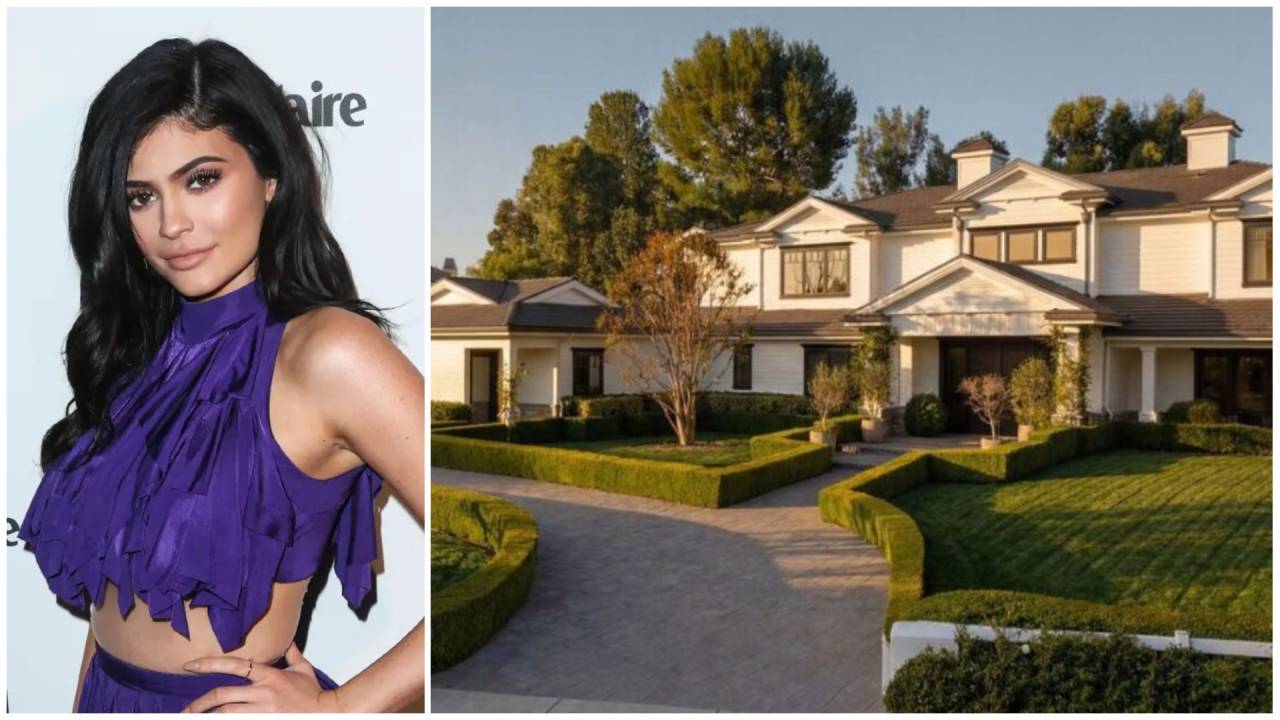
Luxury real estate operates on smoke, mirrors, and aggressive valuation metrics. When Kylie Jenner finally unloaded her sprawling Hidden Hills mansion for $15.3 million, the real story was buried beneath the gloss of celebrity tabloids celebrating a sale. She had initially tested the market at a staggering $20.25 million. That is a nearly $5 million price chop, a massive haircut that exposes the widening chasm between what ultra-high-net-worth individuals wish their properties are worth and what the market is actually willing to absorb.
To understand why a nine-figure-net-worth beauty mogul had to aggressively slash her asking price over several months, we have to look past the gated perimeter of Hidden Hills, California. The transaction reveals hard truths about ultra-luxury housing liquidity, shifting buyer psychology, and the absolute myth of infinite appreciation in celebrity enclaves. For another look, read: this related article.
The Mathematics of Overpricing in the Ultra-Tier
Real estate agents love to praise a high initial listing as "testing the ceiling." In reality, it is often a desperate gamble driven by ego and bad comps. Back in late 2016, a 19-year-old Jenner purchased the 13,200-square-foot compound for $12.05 million. It was a trophy asset for a rising star, customized to the hyper-specific aesthetic tastes of mid-2010s influencer culture.
Fast forward nearly a decade. When a property hits the market at $20.25 million, sellers are banking on name recognition to command a massive premium over historical baseline costs. But high-end buyers with twenty million dollars to spend do not care about who previously owned the pool house. They care about square-foot utility, contemporary architectural relevance, and capitalization rates. Similar reporting regarding this has been published by Business Insider.
A $5 million discrepancy is not a minor adjustment. It is a neon sign indicating that the asset was fundamentally mispriced from day one. Buyers in the upper echelons are hyper-literate market analysts. They saw an aging build, factoring in the millions required to strip away custom aesthetics and modernize the footprint to current ultra-luxury standards.
The Liquidity Trap of Celebrity Customization
There is a profound disconnect between hyper-personalized celebrity interior design and resale marketability. When celebrities build or heavily renovate estates, they design for an audience of one. Glam rooms, specialized display shelving, sprawling black-and-white monochromatic palettes, and ultra-specific security infrastructure serve the immediate lifestyle of a pop-culture icon, but they alienate traditional luxury buyers.
When that asset hits the open market, the pool of potential purchasers shrinks dramatically. The buyer who has $15 million in liquid capital wants a blank canvas or timeless architecture. They do not want to inherit a house dripping with signature aesthetic choices that scream yesterday's trends. To move the property, Jenner had to face market reality: customization depreciates.
Macroeconomic Pressures on the Trophy Market
Even the ultra-wealthy feel the gravity of shifting economic cycles. Elevated borrowing costs, tightening credit conditions for jumbo loans, and macroeconomic uncertainty have trickled up into the luxury tier. While billionaires do not rely on standard mortgages, the broader cost of capital alters how family offices and high-net-worth individuals deploy cash.
Real estate is no longer acting as an indiscriminate vacuum for excess cash. Buyers are demanding yield, long-term value retention, and structural integrity. Properties that sit on the market for months accumulate a psychological stain. In real estate, time on market is toxic. Once a house becomes known as a lingering listing, prospective buyers assume desperation on the part of the seller, leading to lowball offers and aggressive negotiations.
The New Era of Discretionary Wealth
The Hidden Hills transaction serves as a cautionary tale for the broader influencer-industrial complex. The era of buying a sprawling compound, living in it for a few years, and flipping it for an astronomical profit simply because a famous name is attached to the deed is running out of road.
The market has corrected its course. It demands substance, precise valuation, and architectural versatility. Jenner got her liquidity, walking away with a solid return on her initial 2016 investment, but the $5 million discount stands as a monument to the limits of celebrity real estate gravity.
A Look Inside Kylie Jenner's Sold Hidden Hills Mansion
This video provides an on-the-ground look at the specific Hidden Hills property and details the extensive price cuts required to finalize the multi-million dollar sale.