In October 2026, British YouTuber Craig Hamilton-Parker—often dubbed the "Prophet of Doom" in tabloid headlines—claimed in a forecast video that he foresaw a security threat involving "radioactive dust" and the presidential aircraft while on the ground in the United States, alongside wider claims about crises and emergency powers. Viral claims about radioactive dust and Air Force One spread quickly because they fuse two high-anxiety ideas: low-cost drone or contamination scares and attacks on a symbol of presidential power. Treating a dream or YouTube prediction as intelligence is a mistake. Still, the fear it taps into points to real security pressures facing executive protection today.
I have covered national security beats, intelligence reporting, and counter-terrorism procurement for decades. Most viral "prophecies" fail on basic mechanics long before anyone checks a calendar. They borrow vague imagery from current headlines—geopolitical tension, drone proliferation, radiological scares—and stitch them together into a dramatic story that costs nothing to make and rewards clicks. Recently making waves in related news: What Went Wrong During the Old Town Maine Bridge Collapse.
Why Radioactive Dust Scares Gain Traction Online
Tabloid coverage thrives on eerie phrases. "Radioactive dust" sounds cinematic, immediate, and hard to verify at a glance.
In reality, dispersing radiological material in a way that causes acute radiation sickness across a wide area is far harder than pop culture suggests. A crude radiological dispersal device—commonly called a dirty bomb—uses conventional explosives or another dispersal method to scatter radioactive isotopes rather than trigger a nuclear chain reaction. Even when such a device is discussed in defense planning, the primary immediate danger is often panic, airport or tarmac shutdowns, and expensive decontamination rather than mass acute radiation lethality, depending heavily on the isotope, quantity, and weather. Additional information into this topic are covered by The Washington Post.
That distinction matters when looking at claims about a ground incident near a presidential jet. If someone claims to see "radioactive dust" in a morning vision and wonders aloud whether it was launched by a drone or smuggled in, they are not offering actionable intelligence. They are speculating across multiple incompatible scenarios at once.
- Vague sourcing: A waking vision or dream cannot be audited, cross-checked against signals intelligence, or tested for bias.
- Moving targets: Shifting from something "launched" toward a plane to something "smuggled in" or tied to a "drone" covers almost every conceivable security angle at once.
- Algorithmic rewards: Fear-driven headlines about nuclear or radiological contamination consistently outperform sober explanations of protective perimeters and detection protocols.
How Presidential Aircraft Security Actually Works on the Ground
A parked presidential aircraft is never left in an ordinary commercial apron environment. Long before the president arrives at an airfield, advance teams, Secret Service personnel, military police, explosive ordnance specialists, and aviation security coordinate layered controls around the aircraft and its approach corridors.
Small unmanned aircraft systems—commonly called drones—have changed the threat math for every high-profile event and movement. Commercial and hobbyist quadcopters are cheap, quiet, and agile enough to probe airspace or carry light payloads if defenses are poorly integrated. That is why counter-unmanned aircraft systems (C-UAS) have become a major focus for defense and protective agencies, combining radar, radio-frequency sensors, optical tracking, and mitigation tools.
Yet no defense layer is magic. Protecting a large airfield or temporary landing zone against low, slow, small drones involves trade-offs between sensor range, false positives from birds or legitimate aircraft, and radio-frequency interference near active aviation and communications gear. Defense analysts routinely note that layered detection and response reduce risk substantially without creating an impenetrable dome.
| Security Layer | Primary Role | Practical Limitation |
|---|---|---|
| Perimeter & Access Control | Restricts vehicles, personnel, and ground support equipment near the aircraft | Requires strict vetting and continuous coordination across host and visiting teams |
| Counter-UAS Sensors | Detects unauthorized drones via radar, RF, or electro-optical tracking | Can face clutter, line-of-sight limits, or contested spectrum in busy airspaces |
| Hazard & Radiological Screening | Identifies suspicious materials, explosives, or radiation signatures | Screening takes time and equipment calibration under operational pressure |
| Airspace & Escort Coordination | Enforces temporary flight restrictions and rapid response | Relies on real-time data sharing between civilian and military authorities |
Separating Speculative Prophecies from Real Risk
Online commentators often point to past hits to argue that a forecaster deserves serious attention. In forecasting and media analysis, selective memory is a classic trap. When someone makes dozens of broad predictions every year—covering elections, conflicts, cyber outages, natural disasters, and political crises—some overlap with real-world events is statistically almost guaranteed.
Look closely at how those claims are framed. Predicting tension involving Iran, cyber disruptions, or political battles over executive authority does not require clairvoyance when those subjects already sit at the center of global news. A reader who wants to judge risk accurately should look at three concrete indicators instead of viral forecasts:
- Official threat assessments and advisories: Agencies such as the FBI, Department of Homeland Security, and FAA publish concrete warnings when credible intelligence points to specific tactics or infrastructure risks.
- Procurement and policy shifts: Watch where governments actually spend money—such as counter-drone sensors, radiation detection, or airport security rules—rather than who shouts loudest on video.
- Constitutional and statutory guardrails: Claims that a crisis will simply sweep aside the Twenty-Second Amendment or presidential term limits ignore clear constitutional text, even when debates over statutory emergency powers are real and contentious.
The Constitutional Reality Behind Emergency Powers Talk
Talk of emergency powers tends to spike whenever geopolitical friction or domestic polarization rises. In U.S. law, declaring a national emergency can unlock specific statutory authorities under laws like the National Emergencies Act, which legal scholars have debated for years because Congress delegates broad tools that can be difficult to terminate.
Unlocking statutory powers is not the same as rewriting the Constitution. The Twenty-Second Amendment sets an explicit constitutional limit on being elected president more than twice, and courts and Congress remain central actors in any dispute over executive authority.
A Hypothetical Scenario to Test the Claim
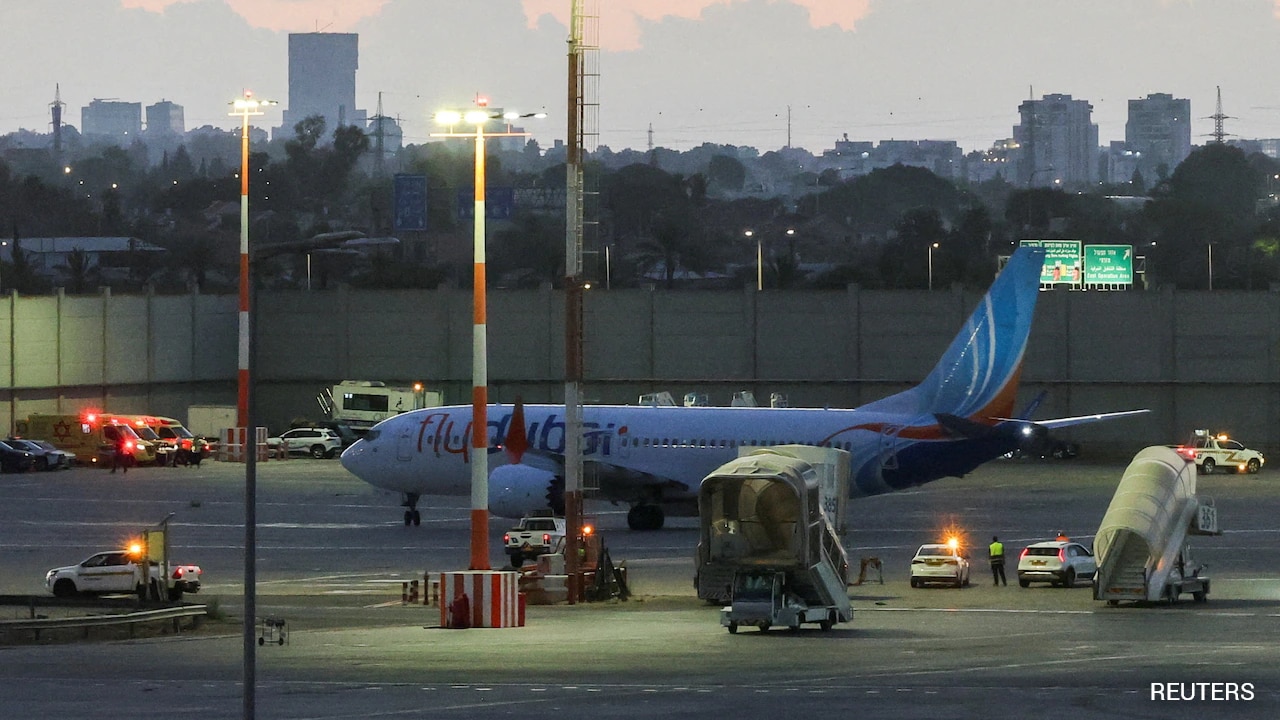
Suppose, purely as a hypothetical example, a suspicious package or unauthorized drone were reported near a parked VIP aircraft at a domestic airport. First responders and federal security teams would treat it as a containment and screening event: establishing a cordon, halting nearby movements, deploying detection gear, and investigating whether any hazardous material was actually present. A scare or an unverified report is not the same thing as a confirmed radiological attack, and treating rumor as confirmation only multiplies confusion.
What Smart Readers Do Next
Sensational predictions are easy to share and hard to disprove in the moment, which is why they keep cycling through social feeds every autumn and winter. A healthier habit is to treat apocalyptic forecasts as entertainment at best and noise at worst, while keeping tabs on verifiable security developments like counter-drone rules, aviation safety, and actual intelligence disclosures.
Before sharing the next viral warning about radioactive dust or a plot against Air Force One, check whether it cites a single verifiable fact—or just sells another dose of dread.