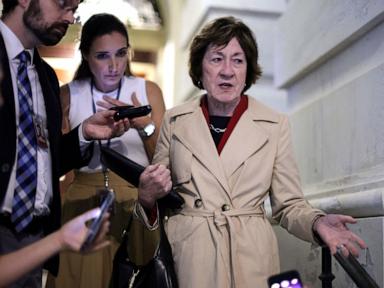
Elections in Washington rarely turn on clean moral binaries. They turn on gray areas, convenient amnesia, and the quiet machinery of influence. When investigative reporting brought to light that federal law enforcement had previously examined campaign finance trails linking Senator Susan Collins to a convicted defense contractor, the political shockwave was immediate. Collins dismissed the findings as an outrageous political hit job, pointing directly to the checkered record of the primary source.
Yet the friction point goes far deeper than a single heated news cycle. It touches the nerve of how federal dollars flow, how contractors buy proximity, and why the systems meant to police political corruption often stall out before reaching the finish line. If you liked this post, you should read: this related article.
The Mechanics of the Pipeline
To understand the controversy, one has to look at the circulatory system of modern federal appropriations. Defense contractors do not simply build hardware; they build political safety nets.
Consider a hypothetical mechanism of influence common in Capitol Hill corridors. A mid-tier contractor secures millions in federal R&D grants. Much of that money cycles back into lobbying campaigns, subcontractor networks, and political action committees. When the principal executive of that firm decides to skirt campaign finance laws by funneling prohibited donations through shell entities, they are banking on a simple calculation. They assume that proximity to power acts as an effective shield. For another angle on this event, refer to the recent update from The New York Times.
In this case, the contractor, Martin Kao, admitted to running illegal contribution schemes before his eventual conviction. Court records and investigative disclosures showed that Kao cooperated extensively with federal authorities, attempting to trade details of his interactions with lawmakers for leniency. While federal agents pursued preliminary lines of inquiry regarding whether lawmakers understood the illicit origin of the funds, those inquiries ultimately closed without producing criminal charges against any elected officials.
The Burden of Quid Pro Quo
Proving a corrupt exchange in American politics is notoriously difficult. The legal standard requires explicit proof of a quid pro quo arrangement—an explicit trade of official acts for personal or campaign enrichment.
Over successive rulings, federal courts have narrowed the legal definition of political corruption. General access, warm phone calls, and routine advocacy for regional employers rarely cross the threshold into criminality under current statutes. Lawmakers argue that advocating for local jobs and military manufacturing contracts is simply doing the job constituents elected them to do. Critics counter that when those advocacy efforts align too neatly with illicit financial pipelines, the line between representation and transaction blurs beyond recognition.
The challenge for voters lies in parsing the distinction between active complicity and willful blindness. Did senior campaign staff know that checks were arriving via straw donors? Or did an entrenched political machine simply accept support without asking uncomfortable questions about its provenance?
The Political Fallout
For a veteran incumbent navigating a fiercely competitive political landscape, the timing of such disclosures is lethal. Challengers seize upon the vocabulary of corruption not because it offers an easy legislative solution, but because it strikes a chord with an electorate deeply cynical about the permanent political class.
When defenses rely entirely on attacking the character of a cooperating felon—pointing out that the source is a convicted liar and fraudster—they may be factually accurate, yet they sidestep the core structural vulnerability. Pointing out that a witness is compromised does not automatically erase the paper trail of suspicious meetings, internal emails, or aggressive lobbying pushes.
The episode lays bare the fundamental structural flaw in modern campaign finance oversight. Enforcement agencies move slowly, political actors insulate themselves with layers of professional intermediaries, and by the time the public learns about backroom machinations, the electoral clock has already run out.
Accountability in these environments remains an elusive target, leaving voters to weigh unproven allegations against decades of established political footprint. The machinery of Washington rolls forward, insulated by complex legal thresholds, leaving the underlying vulnerabilities entirely intact.
Inside the 'A smear job': Sen. Collins responds to ProPublica report about alleged corruption
This video provides direct coverage and commentary regarding the public statements made by Senator Susan Collins in response to the investigative corruption reports.