Ireland has a massive aluminum problem. Not in its kitchens or its recycling bins, though those matter too. It's sitting right on the banks of the Shannon Estuary in County Limerick, and European lawmakers are starting to lose their patience.
If you've followed the news around European sanctions against Moscow, you probably assume all major industrial trade between the EU and Russia dried up years ago. That assumption is wrong. Through a legal loophole carved out by powerful lobbying and fear of industrial collapse, Ireland continues to send millions of tons of alumina—the essential white powder refined from bauxite ore—straight to Russian smelters. And that metal doesn't just make soda cans. It builds fighter jets, missile casings, armored vehicles, and military drones currently deployed in Ukraine.
So why is a neutral European nation with strong vocal support for Kyiv still supplying the raw backbone of the Russian war machine? Let's break down the economics, the ownership structures, and the intense diplomatic pressure mounting on Dublin right now.
The Aughinish Alumina Reality Check
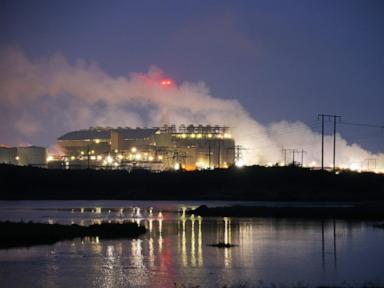
To understand the controversy, you have to look at Aughinish Alumina. Located near Askeaton in County Limerick, it's the largest alumina refinery in Europe.
This facility produces roughly 1.9 million metric tons of alumina every single year. To put that in perspective, that accounts for about 30% of Europe's entire production capacity. Without Aughinish, European automakers, aerospace manufacturers, and construction firms would face an immediate, crippling supply shock.
Here's the catch. Aughinish Alumina isn't owned by an Irish conglomerate or a Western European state fund. It's owned by Rusal, the Russian aluminum giant founded by oligarch Oleg Deripaska.
When Russia launched its full-scale invasion of Ukraine in February 2022, Western governments slapped sanctions on Russian banks, energy exports, and hundreds of wealthy Kremlin insiders. Deripaska himself was sanctioned by the UK, the US, and the EU. Yet Rusal—the company—managed to dodge direct EU trade bans.
Why? Because Brussels panicked. Back in 2018, when the US Treasury briefly sanctioned Rusal, global aluminum prices spiked by over 30% within days. European manufacturers screamed that their factories would grind to a halt if Russian aluminum disappeared from the market. When 2022 rolled around, EU policymakers remembered that chaos and deliberately left Russian aluminum and alumina off the blacklist.
How Irish Refined Alumina Fuels the Russian Military
You might be wondering if the alumina leaving Limerick actually ends up in Russian weapons, or if that's just political rhetoric from advocacy groups. Let's look at how the supply chain works.
Alumina is the critical intermediate step between raw bauxite rock and finished aluminum metal. You cannot make primary aluminum without it. Once Aughinish processes imported bauxite—mostly shipped from Guinea and Brazil—into high-grade alumina, huge bulk carriers haul that white powder away from the Shannon Estuary.
A massive portion of that output goes directly to Rusal's massive smelters in Siberia, such as the Bratsk and Krasnoyarsk plants. Those facilities run on cheap hydroelectric power and turn Irish-refined alumina into primary aluminum ingots and alloys.
From there, the trail leads straight to Russia's defense sector. Investigative reports from organizations like the Royal United Services Institute (RUSI) and Ukrainian economic think tanks have repeatedly documented how Rusal supplies aerospace-grade aluminum alloys to Russian state defense conglomerates, including Rostec and the United Aircraft Corporation.
- Sukhoi fighter jets rely on high-strength aluminum-lithium alloys for their airframes.
- Kalibr cruise missiles and Iskander ballistic missiles require precision-milled aluminum housings.
- Military transport vehicles and naval vessels use vast quantities of corrosion-resistant aluminum plate.
While Aughinish management insists its output goes purely to civilian markets, aluminum is a fungible commodity. Even if every gram of Irish alumina went into Russian window frames, it frees up domestic Russian alumina capacity to feed military smelters. You can't separate the civilian and military pools inside an integrated war economy.
Why Dublin Has Been Caught Between a Rock and a Hard Place
Critics love to paint the Irish government as hypocritical—condemning Russian aggression at the United Nations while waving cargo ships full of strategic minerals out of Limerick. Honestly, the situation on the ground in Ireland is way messier than a simple moral failing.
First, there's the local economic hostage situation. Aughinish Alumina directly employs around 450 to 500 workers in rural County Limerick, alongside hundreds of local contractors. These aren't minimum-wage retail jobs. They are high-paying industrial roles in a region that doesn't have dozens of alternative heavy-industry employers waiting in the wings.
If Ireland unilaterally banned exports to Russia or seized the plant, Rusal would likely pull the plug on operations overnight. Shutting down a continuous-process chemical refinery isn't like turning off a light switch. If the molten and liquid processes cool and solidify inside the pipes, the plant could be permanently destroyed, costing hundreds of millions of euros to restart and leaving behind an environmental nightmare—specifically, massive lagoons of toxic "red mud" bauxite residue that require constant management.
Second, EU trade policy is decided in Brussels, not Dublin. Under European Union law, individual member states cannot just invent their own unilateral trade sanctions against third countries without violating the rules of the single market. Ireland has consistently argued that any ban on Rusal or alumina shipments must come as part of a unified EU sanctions package.
The Mounting Diplomatic Pressure from Baltic States and Kyiv
That defense worked in 2022 and 2023. It's wearing thin now.
Over the past year, a coalition of hawkish EU members—led by Poland, Lithuania, Latvia, and Estonia—has aggressively pushed Brussels to close the aluminum loophole once and for all. Ukrainian officials, including President Volodymyr Zelenskyy and his sanctions advisors, have publicly called out the ongoing alumina trade as a glaring contradiction in Europe's support for Kyiv.
Their argument is straightforward and hard to refute. Europe has already weaned itself off Russian pipeline gas, Russian seaborne crude oil, and Russian coal. Those transitions hurt, and energy prices spiked, yet the European economy adapted. Continuing to protect Rusal while Ukrainian cities are bombed with missiles built from Russian aluminum looks indefensible to Eastern European leaders.
Furthermore, the market dynamics have shifted. Global aluminum supply chains have had over four years since 2022 to adjust. The United States and the United Kingdom have already moved much further than the EU, banning imports of Russian-origin aluminum and restricting Russian metals from trading on the London Metal Exchange (LME) and the Chicago Mercantile Exchange (CME).
Because the US and UK shut their doors, Rusal became even more reliant on European buyers and European infrastructure like Aughinish to keep its global operations running. That gives Brussels—and by extension Dublin—enormous leverage they didn't have in the early days of the war.
What Happens If the EU Finally Bans Russian Alumina Trade
Let's be realistic about what a full EU ban on Rusal and Russian-linked alumina actually looks like in practice. It won't be painless, and anyone claiming otherwise isn't paying attention to industrial supply chains.
If the European Council approves a comprehensive ban on Rusal's operations or prohibits EU-based subsidiaries from shipping alumina to Russia, three things happen almost immediately:
- Rusal's Ownership Becomes Untenable: Rusal cannot run Aughinish Alumina at a profit if it's legally barred from shipping the product to its own smelters in Siberia, especially if European banks refuse to process transactions for the plant.
- State Intervention or Forced Sale: The Irish government would almost certainly have to step in with temporary trusteeship or emergency legislation—similar to how Germany took control of Rosneft's local refineries in 2022—to keep the plant running while forcing a sale to a Western or non-sanctioned buyer.
- European Manufacturers Pay More: In the short term, European carmakers and packaging companies will face tighter alumina supplies and slightly higher premiums as supply routes shift toward Australia, Brazil, and the Middle East.
The European Aluminium association, which represents downstream manufacturers across the continent, has historically lobbied against outright bans due to fears of price spikes. Yet even within the industry, sentiment has fractured. Major producers like Norsk Hydro and Alcoa have repeatedly argued that Europe shouldn't subsidize Russian industry by keeping the door open for Rusal, pointing out that alternative global capacity exists if buyers are willing to sign long-term contracts.
What You Should Watch For Next
If you're tracking European sanctions policy, energy-intensive industries, or geopolitical risk in commodity markets, don't look at press releases from Dublin—watch the regulatory mechanisms in Brussels and Washington.
Keep an eye on the EU's upcoming sanctions packages and the specific annexes targeting Russian metals. Look closely at whether Brussels targets finished aluminum ingots only, or if it explicitly restricts alumina exports and corporate ownership by sanctioned entities. A ban on ingots alone leaves Aughinish untouched; a ban on corporate control forces an immediate ownership crisis in Limerick.
Also watch UK and US secondary sanctions. Washington has increasingly used secondary sanctions threats to force European banks and logistics firms to drop Russian clients even when Brussels hesitates. If major shipping insurers or international banks decide that touching cargo from Aughinish carries too much compliance risk under US Treasury rules, the plant's trade with Russia will freeze regardless of what EU politicians decide.
If you manage supply chains or investments exposed to European industrial metals, start stress-testing your sourcing for non-Russian origin certifications right now. The political cover protecting Aughinish Alumina is disappearing fast, and when Brussels finally pulls the trigger, the transition won't wait for slow procurement cycles.