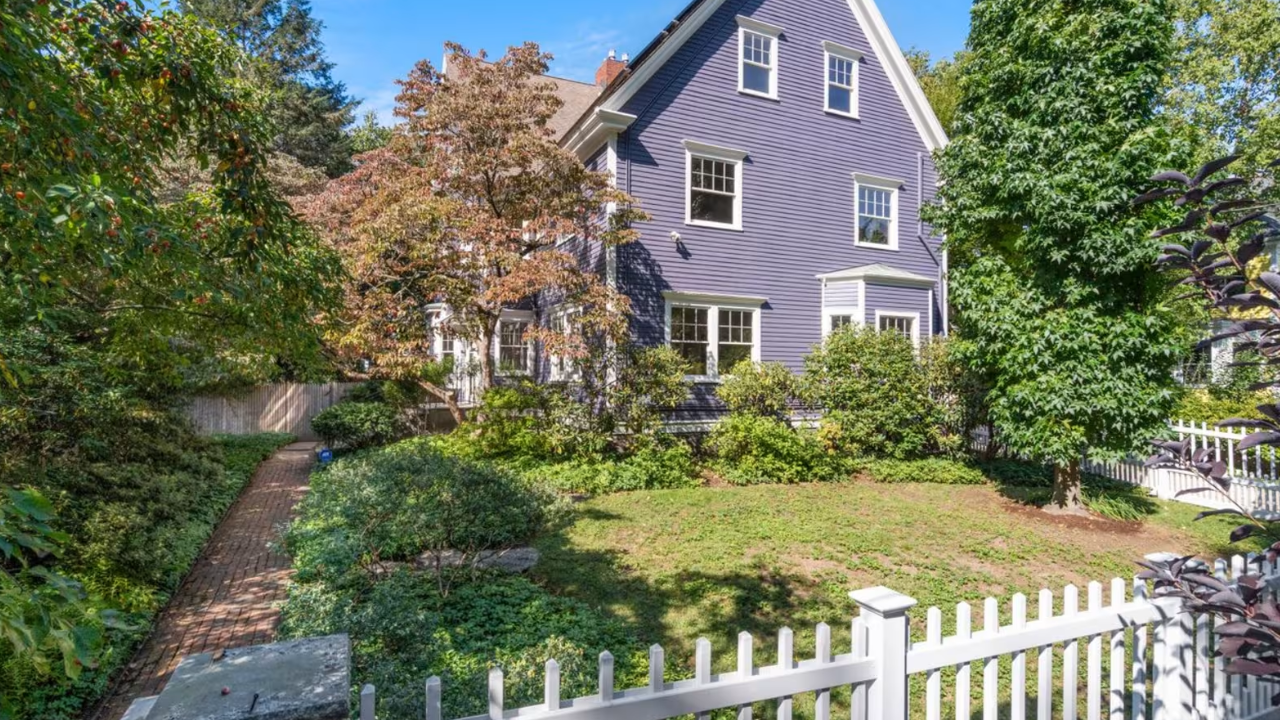
Six and a half million dollars buys you a lot of house in Cambridge, Massachusetts, especially when Julia Child used to whip egg whites in the kitchen.
Her former Irving Street residence officially changed hands for $6.525 million. That price tag made plenty of headlines, mostly because people assume the buyer walked away with the exact workspace where The French Chef filmed her earliest television episodes. They didn't. Not even close.
If you want to stand in front of the actual stove where Julia Child dropped a potato pancake or wrestled a giant turkey, you don't need a multi-million-dollar mortgage in New England. You just need a free ticket to the Smithsonian's National Museum of American History in Washington, D.C.
The Cambridge House Sale Reality Check
Real estate listings love a good celebrity backstory, and 103 Irving Street has one of the best in culinary history. Built in 1888, this three-story shingle-style home sits in the quiet, leafy Mid-Cambridge neighborhood just a short walk from Harvard Square. Julia and her husband, Paul Child, bought the property in 1961 after returning from their years living in France and Norway. They lived there for four decades.
When the house hit the market and eventually closed at $6.525 million, buyers were paying for location, historic architecture, and pedigree. Cambridge real estate is notoriously expensive on a good day, and properties near Harvard routinely command staggering sums.
Here's what the buyer actually got:
- Roughly 4,700 square feet of living space across three floors.
- Six bedrooms and multiple updated bathrooms.
- A completely renovated modern kitchen that bears almost zero resemblance to the 1960s workspace fans recognize from black-and-white PBS reruns.
- A private, landscaped yard tucked behind mature trees.
People often assume historic homes sit frozen in amber. They don't. Over the decades since Child moved out in 2001, subsequent owners modernized the plumbing, updated the layout, and turned the space into a sleek, contemporary luxury home. You're buying the address and the spirit of the place, not a museum exhibit.
Why the Real Kitchen Ended Up at the Smithsonian
Before Julia Child left Cambridge for a retirement community in Santa Barbara, California, she made a decision that changed how museums treat everyday domestic spaces. She donated her entire kitchen to the Smithsonian Institution.
Think about how unusual that was back in 2001. Museums collected presidential desks, military uniforms, and fine art. They didn't typically dismantle a suburban kitchen down to the pegboard and haul it down the East Coast in moving trucks.
Paul Child had custom-designed that kitchen specifically for Julia's six-foot-two frame. Standard countertops sit at 36 inches high, which gave Julia terrible back pain when she leaned over to chop vegetables or knead dough. Paul raised the counters to 38 inches. He also covered the walls in simple perforated pegboard, painting outlines around every pot, pan, whisk, and slotted spoon so they always went back in the exact right spot.
When the Smithsonian team arrived in Cambridge to pack it up, they didn't just grab the Garland commercial stove and the KitchenAid mixer. They cataloged over 1,000 individual items. They took the cabinets, the butcher-block island, the knives, the copper bowls, and even the linoleum flooring. Everything was measured, photographed, and reassembled in Washington, D.C., down to the exact placement of the spice jars.
What Most Fans Get Wrong About the TV Set
There's a persistent myth that The French Chef was filmed entirely inside the Irving Street house. It wasn't.
When the show launched on WGBH in Boston in 1963, the studio set was actually built in a local utility company's demonstration kitchen, and later moved to a dedicated WGBH studio. The television set copied the layout and pegboard aesthetic of the Cambridge home so Julia would feel comfortable and know where her tools were without looking.
However, the Irving Street kitchen did become a real television studio later in her career. In the 1990s, when Julia was in her eighties and didn't want to commute to a studio anymore, television crews brought the lights and cameras directly into 103 Irving Street. Shows like Cooking with Master Chefs, In Julia's Kitchen with Master Chefs, and Julia and Jacques Cooking at Home (with Jacques Pépin) were filmed right there in that custom-built space.
So when you look at the Smithsonian exhibit today, you're seeing the exact room where she and Jacques Pépin argued affectionately over butter and garlic on public television.
How the Irving Street House Shaped American Food Culture
It's easy to look at a $6.525 million real estate transaction as just another wealthy buyer snapping up a trophy property. That misses why people still care about this specific house more than twenty years after Child's death in 2004.
Before Julia Child moved into 103 Irving Street, American home cooking was dominated by canned soups, gelatin molds, and frozen TV dinners. Convenience was king, and French cuisine was locked behind intimidating restaurant doors with snooty waiters and French-only menus.
Inside that Cambridge house, Child tested thousands of recipes for Mastering the Art of French Cooking and its sequel. She hosted endless dinner parties for neighbors, Harvard professors, food writers, and visiting chefs. She turned her home into a working laboratory where failure wasn't embarrassing—it was just data. If a soufflé collapsed or a sauce broke, she figured out why, wrote down the fix, and taught millions of regular people how to avoid the same mistake.
The house wasn't a sterile showroom. Friends who visited remembered piles of mail, cookbooks stacked on every flat surface, and the constant smell of roasting meat or simmering stock. It was a working writer's and cook's headquarters.
Visiting the Kitchen Today Without Spending Millions
You can't walk into 103 Irving Street—it's a private residence, and the new owners understandably want their privacy. If you're in Cambridge, you can stroll down Irving Street and admire the exterior from the public sidewalk, appreciating the quiet neighborhood where she walked to local butcher shops and markets.
If you actually want to experience the space where she worked, head to the National Museum of American History on the National Mall in Washington, D.C. The exhibit, titled Bon Appétit! Julia Child's Kitchen, sits inside the museum's FOOD: Transforming the American Table gallery.
Admission to the Smithsonian is completely free. You can stand inches away from the glass, inspect the hand-drawn outlines on the pegboard, check out the height of those famous 38-inch counters, and see the exact pots she used to introduce French cooking to America. Go early in the morning right when the museum opens at 10:00 AM if you want to look closely without fighting through school tour crowds.