The prosecution of French nationals affiliated with the Islamic State (IS) inside Iraqi courtrooms represents an operational outsourcing of counterterrorism jurisprudence. Rather than repatriating citizens captured in the collapse of the Syrian-Iraqi territorial caliphate, France has relied on a tacit burden-sharing mechanism with Baghdad. Under this framework, the Iraqi judiciary absorbs the political, logistical, and evidentiary costs of trying foreign fighters, applying domestic anti-terrorism statutes that carry mandatory capital punishment or life imprisonment, while Paris maintains a posture of formal non-interference paired with diplomatic opposition to the death penalty.
Understanding these trials requires separating the media narrative of individual villainy from the structural realities of post-conflict legal processing. When French logistics operatives—often termed petites mains or low-level facilitators—stand alongside senior ideological and military figures in Baghdad's Central Criminal Court, the proceedings expose the friction between European human rights standards and Iraqi wartime emergency law.
The Structural Taxonomy of Foreign Defendants
Standard reporting frequently flattens the hierarchy of foreign terrorist fighters into a monolithic threat. In practice, the French contingent transferred from Syrian Democratic Forces (SDF) custody to Iraqi jurisdiction falls into distinct operational tiers, each presenting unique evidentiary challenges.
- Strategic Architects and Operational Commanders: This tier includes veteran recruiters, external operations planners, and high-ranking administrators within IS ministries (diwans). Their culpability is often documented through intercepted communications, coalition intelligence dossiers, and cross-corroborated testimonies from captured subordinates. For intelligence services, these individuals represent high-value repositories of network topology.
- Tactical Combatants and Enforcers: Mid-level fighters who participated in kinetic operations, territorial defense, or internal policing (Hisbah). Evidence against this group relies heavily on biometric matches found on recovered hard drives, payroll ledgers seized in Mosul or Raqqa, and battlefield capture locations.
- Logistical Facilitators (Petites Mains): Individuals responsible for financial transfers, accommodation networks, propaganda translation, or basic administrative maintenance. While their direct kinetic impact may be limited, counterterrorism doctrine classifies them as essential nodes that sustain organizational velocity.
Under French criminal law—specifically the charge of association de malfaiteurs en relation avec une entreprise terroriste (AMT)—membership in a terrorist organization is criminalized prior to the commission of a violent act, allowing judges to calibrate sentences based on the specific functional role of the defendant. Iraqi judicial mechanisms operate without this granular calibration.
The Mechanics of Iraqi Anti-Terrorism Jurisprudence
The legal engine driving these prosecutions is Iraqi Anti-Terrorism Law No. 13 of 2005. Enacted during the height of the post-invasion insurgency, the statute was designed for rapid neutralization of domestic militants rather than nuanced forensic adjudication of transnational networks.
Article 4 of Law 13 mandates the death penalty for anyone who commits, incites, plans, finances, or enables a terrorist act. Crucially, the statute treats structural affiliation with a proscribed group as functionally equivalent to direct participation in violence. Consequently, the distinction between a senior external-operations planner and a low-level logistical clerk collapses at the sentencing phase. Both face the binary outcome of execution by hanging or life imprisonment (defined under Iraqi penal code as twenty years, though often extended or served under severe conditions).
The procedural velocity of the Baghdad courts stems from specific institutional features:
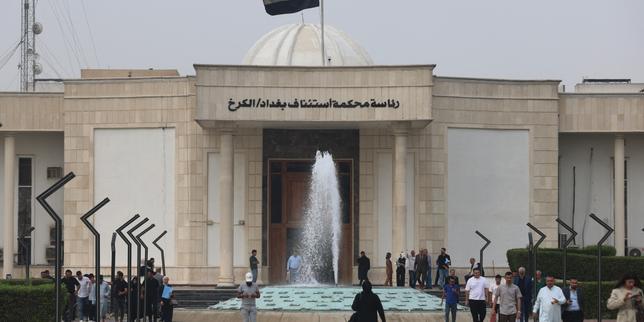
- Inquisitorial Dominance of Investigative Judges: The primary fact-finding occurs prior to the public trial. An investigative judge compiles a dossier based on interrogations conducted by Iraqi intelligence agencies. By the time a defendant appears before the three-judge panel at the Rusafa or Karkh courthouses, the evidentiary record is effectively closed.
- Reliance on Confessions: In the absence of intact crime scenes or chain-of-custody forensic evidence from collapsed conflict zones in Syria, Iraqi courts rely overwhelmingly on signed confessions. Human rights monitors and defense attorneys consistently document that these confessions are frequently obtained during pre-trial detention without legal representation, raising severe questions regarding coercion.
- Compressed Trial Windows: Hearings for foreign nationals routinely last less than an hour. Translation between French, English, and Arabic is often minimal or imprecise, preventing defendants from effectively contesting the specific administrative records attributed to them.
The Transfer Pipeline and Jurisdictional Friction
A critical legal anomaly underpins these trials: the majority of the French defendants were not captured on Iraqi soil. They were detained in northeastern Syria by the Kurdish-led Syrian Democratic Forces (SDF) following the territorial defeat of IS in Baghouz in 2019.
Because the SDF is a non-state actor lacking recognized sovereign judicial capacity, and because European governments refused to repatriate adult male citizens due to domestic security concerns and political backlash, an informal transfer pipeline emerged. The SDF transferred select high-profile and mid-level foreign detainees across the border into Iraqi custody.
This cross-border transfer creates a fundamental jurisdictional tension. Under standard international legal principles, Iraq claims jurisdiction over crimes committed on its territory or affecting its national security. While many defendants moved fluidly across the erased border between Syria and Iraq during the height of the caliphate, proving that a specific French logistics operative committed acts within Iraqi borders—rather than exclusively in Raqqa or Deir ez-Zor—is rarely subjected to rigorous adversarial testing in Baghdad.
For the French state, this arrangement resolves an acute domestic dilemma. Prosecuting returnees in Paris requires transforming raw military intelligence collected by coalition forces into admissible judicial evidence—a process known as "battlefield evidence" conversion. If intelligence cannot be declassified without compromising sources and methods, French prosecutors face the risk of acquittals or short sentences, resulting in the release of radicalized individuals onto French soil within a few years. Outsourcing the trial to Iraq eliminates this risk entirely.
The Diplomatic Paradox of Capital Punishment
France’s official posture rests on a structural contradiction. Paris maintains a strict, constitutionally enshrined opposition to the death penalty globally, codified in Protocol No. 13 to the European Convention on Human Rights. Simultaneously, French officials affirm the sovereignty of the Iraqi judicial system to try crimes committed within its territory.
When Iraqi courts hand down death sentences to French citizens, the French Ministry for Europe and Foreign Affairs systematically issues diplomatic demarches requesting the commutation of the sentences to life imprisonment. However, this intervention occurs strictly after the judicial process has concluded, leaving the underlying transfer and intelligence-sharing architecture intact.
This creates a bifurcated reality:
- At the Operational Level: French intelligence and counterterrorism services benefit from the permanent incapacitation of threats and occasionally gain access to interrogation outputs generated by Iraqi authorities.
- At the Diplomatic Level: Paris preserves its normative commitment to abolitionism by lobbying against the execution of the sentence, knowing that the Iraqi judiciary frequently delays actual executions of Western nationals due to diplomatic pressure, leaving prisoners in indefinite legal limbo on death row.
The limitation of this strategy is its fragility. Relying on a foreign judiciary whose due process standards fall well below European norms exposes France to sustained legal challenges before the European Court of Human Rights (ECtHR) and domestic administrative courts. Furthermore, placing foreign nationals into overcrowded Iraqi detention facilities alongside hardened local insurgents creates an environment conducive to further radicalization and network consolidation, rather than containment.
Strategic Recalibration for Counterterrorism Governance
Continuing to rely on ad-hoc jurisdictional outsourcing to Baghdad is a diminishing-returns strategy. As the legal vulnerabilities of cross-border transfers mount and diplomatic friction with Iraq increases over the financial and security burden of housing foreign prisoners, European states must transition from reactive containment to structured legal repatriation.
- Institutionalize Battlefield Evidence Protocols: Counterterrorism agencies must standardize the declassification and authentication of coalition-seized biometric and digital records so they withstand adversarial scrutiny in domestic courts, eliminating the operational excuse for outsourcing trials.
- Establish Bilateral Commutation Frameworks Prior to Transfer: Where Iraqi jurisdiction is genuinely triggered by crimes committed on Iraqi soil, diplomatic agreements must secure binding, pre-trial guarantees against capital punishment as a strict precondition for any intelligence sharing or consular cooperation.
- Execute Targeted Repatriation of Non-Kinetic Operatives: Low-level facilitators and administrative actors (petites mains) whose offenses lack clear nexus to Iraqi territory should be systematically repatriated and prosecuted under specialized domestic conspiracy statutes, reserving high-security detention capacity in the region strictly for validated kinetic actors.