Silence.
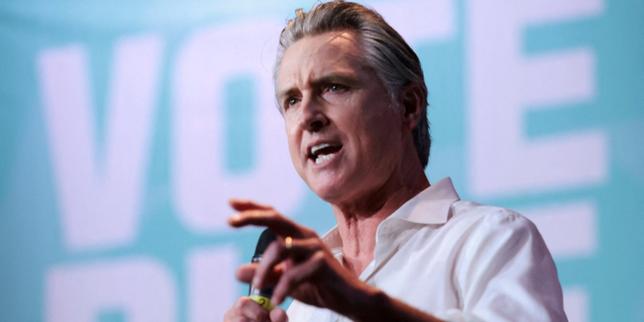
That is the first thing you notice when you step inside a maximum-security housing unit in California—not the shouting you see in movies, not the metallic clang of bars slamming shut, but a heavy, suffocating quiet that settles into your bones and refuses to leave. For decades, that silence has been the defining soundtrack for hundreds of men and women living under a sentence of death in the Golden State, suspended in a bureaucratic purgatory where the state promised an execution it had long ago forgotten how to carry out. Then, with the stroke of a pen, Democratic Governor Gavin Newsom commuted the sentences of 548 condemned inmates, dismantling the largest death row in the Western Hemisphere and forcing a deeply divided nation to confront what justice actually looks like when the machinery of death is switched off.
To understand the weight of that number—548 human lives—you have to strip away the sterile vocabulary of legal briefs and political press releases. You have to look at the fluorescent-lit corridors of San Quentin and Chowchilla, where time does not move forward so much as it pools and stagnates.
The Architecture of Waiting
Consider a hypothetical inmate, let us call him Marcus, who arrived on California’s death row in the late 1990s. When Marcus first stepped into his cell, the internet was a novelty, flip phones were cutting-edge technology, and the state still maintained a functioning execution chamber. Over the next twenty-five years, Marcus watched the world outside evolve through the glass of a television screen while his own existence shrank to the dimensions of a parking space. He aged. His parents died. His hair turned silver. Every morning, he woke up knowing that the State of California had legally declared his life forfeit, yet year after year, nothing happened.
This is the central paradox of California’s capital punishment system that most casual observers miss. While the state housed the largest condemned population in the United States, it had not actually executed a single person since 2006.
For twenty years, the death penalty in California functioned less as an instrument of execution and more as an extraordinarily expensive system of permanent solitary confinement. Legal challenges over lethal injection protocols, endless appeals, and a 2019 moratorium ordered by Newsom himself had already halted executions. Yet the sentences remained on the books, keeping hundreds of people in specialized, high-security isolation and locking the state into a cycle of costly, decades-long litigation.
When Newsom announced the mass commutation of 548 death sentences—converting them to life imprisonment without the possibility of parole—he was not opening the prison gates. Not a single person walked free because of this decision. Instead, he was formally ending a legal fiction that had cost California taxpayers billions of dollars while delivering neither swift justice to victims' families nor actual executions.
What Life Without Parole Actually Means
Public reaction to news like this often splits along predictable, visceral fault lines, largely because the phrase "commuted sentence" sounds to many ears like mercy, or worse, erasure of the crime. If you have ever sat in a courtroom watching a grieving mother hold a framed photograph of her murdered child, you know how hollow legal distinctions can sound when measured against permanent loss.
Let us be completely candid about the tension here. Many of the 548 individuals whose sentences were commuted committed horrific, unforgivable acts of violence. Their victims did not get a second chance, did not get to grow old, and did not get to have their fates reconsidered by a governor's office. For families who spent decades waiting for the state to keep its promise of ultimate retribution, Newsom's decision felt like a profound betrayal—a unilateral rewriting of a verdict delivered by a jury of their peers.
But look closely at what replaces the death sentence. Life without the possibility of parole is not a slap on the wrist; it is simply a different, slower method of dying in state custody.
Under the terms of the commutations, those 548 individuals are transferred from death row into the general maximum-security prison population. They lose the single-cell isolation that defined death row, entering yards where the rules are harder and the protections fewer, all while carrying the certainty that they will never breathe free air again. For the state, the shift removes the automatic, state-funded appellate process reserved strictly for capital cases—a legal labyrinth that routinely dragged on for thirty or forty years at immense public expense.
The Math of a Broken Promise
Why did a Democratic governor take such a sweeping, politically combustible step? Follow the money, and then follow the morality.
In 2011, a landmark study by a federal judge and a law professor revealed that California had spent more than $4 billion on its death penalty system since 1978, resulting in just thirteen executions. That worked out to roughly $308 million per execution. By the time Newsom took office, that cumulative price tag had climbed past $5 billion. Every capital case required specialized defense teams, exhaustive psychiatric evaluations, endless state and federal habeas corpus petitions, and dedicated housing units staffed around the clock.
Think of California’s capital punishment system like an aging, rusted freight train sitting on tracks that lead nowhere. Every year, the state poured hundreds of millions of dollars into fueling the engine, polishing the brass, and paying a full crew to sit in the cab, even though the bridge ahead had washed out decades ago. Everyone knew the train was never going to reach its destination. Yet politicians were terrified of being the ones to shut off the engine, fearing the backlash from voters who wanted to believe the train was still running.
Newsom had already begun dismantling the tracks years earlier. In 2019, he declared a moratorium on executions, called the death penalty a failure that discriminated against defendants who were poor or people of color, and ordered the dismantling of the lethal injection chamber at San Quentin. Later, he began transferring condemned inmates out of San Quentin’s notorious East Block and transforming the facility into a rehabilitation-focused campus modeled after Scandinavian prisons.
Commuting the sentences of all 548 remaining condemned prisoners was the final, irreversible step. A future governor could theoretically lift a moratorium and restart executions if the legal hurdles were cleared. A future governor cannot undo a commutation. Once a death sentence is commuted to life without parole, that legal door is welded shut forever.
The Uncomfortable Truth About Innocence and Bias
Beyond the staggering financial waste, there is a quieter, more unsettling reality that haunts every conversation about capital punishment in America: the certainty of human error.
Since 1973, nearly two hundred people who were sentenced to death in the United States have been exonerated after evidence proved they were wrongfully convicted. Think about what that statistic means in practice. It means that if the machinery of execution actually worked as efficiently as its proponents wished, the state would inevitably, mathematically, execute innocent human beings.
I have spent years reading trial transcripts and post-conviction filings, and the most terrifying thing you discover is how ordinary the path to a wrongful conviction can be. It rarely requires a grand, cinematic conspiracy. All it takes is an overworked public defender with too many cases, a mistaken eyewitness trying their best to help police, a jailhouse informant looking to shave years off their own sentence, and a prosecutor under intense public pressure to close a high-profile murder file. Once those gears lock together, the system is designed to defend its own verdict rather than question it.
In California, racial and geographic disparities compounded that risk. Studies consistently showed that whether a defendant received a death sentence depended heavily on the county where the crime occurred and the race of the victim. A murder in one county might result in a life sentence, while an identical crime fifty miles away across a county line ended on death row. Justice, which is supposed to be blind, was reading zip codes.
The Ripple Effect Beyond California
California does not exist in a vacuum. For decades, the state accounted for roughly a quarter of the entire death row population in the United States. By erasing 548 death sentences in a single stroke, Newsom single-handedly reduced the national death row population by nearly a quarter overnight.
The political reverberations were immediate and fierce. Critics accused the governor of overstepping his executive authority, subverting the will of California voters—who had narrowly rejected ballot measures to repeal the death penalty in 2012 and 2016—and prioritizing the comfort of convicted killers over the trauma of victims' families. Supporters, including civil rights organizations, religious leaders, and legal scholars, hailed the move as an act of moral courage that finally aligned California's laws with its actual practices.
Both arguments reveal a deep, unresolved tension in American democracy. Twice in a decade, California voters went to the ballot box and said they wanted to keep the death penalty on the books. Yet those same voters were never asked to pay the taxes required to actually fund the endless appeals, nor could any ballot measure force pharmaceutical companies to sell lethal injection drugs to state prisons. Voters wanted the symbol of ultimate justice, while the reality of administering it had collapsed under its own weight.
Newsom stepped into that gap between public sentiment and operational reality, absorbing the political heat to end a system that was functionally dead anyway.
What Remains in the Quiet
Walk past the old cellblocks of San Quentin today, and the physical space itself is changing. The execution chamber is gone. The specialized death row housing units, where men spent decades staring at concrete walls for twenty-three hours a day, are being repurposed.
For the 548 men and women whose sentences were commuted, the change is both profound and strangely subtle. They are still prisoners. They will still wake up to counts, eat prison food, wear state-issued clothing, and die behind razor wire. Nobody handed them a key to the front gate.
What changed is the relationship between the state and the human beings in its custody. California stepped out of the business of deciding who deserves to die, relinquishing a power that had proven too expensive, too biased, and too fallible to wield cleanly.
In the end, a justice system is a mirror held up to the society that builds it. For nearly half a century, California’s mirror reflected a state trapped in a costly illusion—promising death, delivering delay, and spending billions to maintain the theater of retribution. By signing those 548 commutations, Gavin Newsom shattered that mirror, leaving behind only concrete, steel, and the quiet, unvarnished reality of a life sentence.