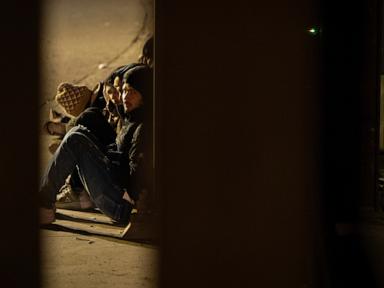
The gravel underfoot in Tijuana always sounds louder than it should. It is a dry, scraping noise, the sound of thousands of pairs of shoes shifting in place, waiting for a number to be called.
For a long time, that sound was the rhythm of "metering."
To a policy analyst in Washington, metering is a logistical tool, a valve to control the flow of human beings at the southern border by limiting how many asylum applications can be processed each day. To a family huddled in a makeshift plastic tent just yards from American soil, it is an agonizing lottery.
The highest court in the United States just handed the administration the power to spin that wheel again.
In a 6-3 decision, the Supreme Court overturned a lower court order that had blocked the practice. The ruling essentially means the government can legally turn people away at the gates, telling them to wait in a line that stretches back into some of the most dangerous territory on earth.
The legal debate turned on a metaphor. Writing for the conservative majority, Justice Samuel Alito argued a simple premise. A guest does not arrive in a house when he knocks on the front door. Therefore, the administration argued, people stopped by authorities at the threshold have not officially arrived in the country, and immigration agents are under no obligation to hear their pleas.
But human lives do not fit neatly into real estate analogies.
Consider a hypothetical family, though their circumstances are mirrored in thousands of real stories along the border right now. Let us call the mother Elena. She is not knocking on a door to attend a dinner party. She ran. She ran because the alternative was a coffin. When she stands at a port of entry, looking at a uniform, the American flag on the shoulder is not an invitation; it is a shield she is trying to crawl behind.
Under federal law, anyone who arrives on American soil has the right to ask for asylum and receive a screening for fear of persecution. It is a system built on a heavy historical promise, forged in the wake of twentieth-century atrocities. We promised we would look people in the eye before we sent them back to the fire.
The Supreme Court just changed the geography of that promise. By shifting the legal boundary line by a matter of inches—from the threshold of the port to the formal processing desk inside—the court effectively legalized the queue.
Justice Sonia Sotomayor dissented with an unusual, raw fury from the bench. She said the decision regrettably and tragically extinguishes the light of the torch of the Statue of Liberty.
It is easy to get lost in the grand rhetoric of the high court. But the consequences of this ruling will not be felt in marble hallways. They will be felt in the dirt.
When metering was expanded heavily during the administration's first term, the result was an immediate, sprawling humanitarian crisis. Despair has a specific smell. It smells like burning plastic trash used for warmth, cheap corn tortillas, and damp blankets that never quite dry out. The lines grew thousands of people long. Extortionists and cartels preyed on the waiting.
The administration has long argued that these measures are common-sense solutions to an overwhelmed system. Frontline officers are tired. Resources are strained. The government maintains that metering is a critical, bipartisan tool used by multiple administrations to maintain order. They say the door isn't locked; it is just metered. They argue that people who are turned away can simply come back later.
Later.
It is a word that sounds very different depending on who is saying it. To a bureaucrat, later means the next fiscal quarter. To someone fleeing a cartel, later can mean never.
The border is not the only place where the ground shifted today. In a parallel blow to migrant advocates, the high court also cleared the way for the administration to end temporary legal protections for hundreds of thousands of migrants from nations like Haiti and Syria, who had been allowed to live and work legally in the country due to war and catastrophic instability back home.
The safety net is being pulled back, strand by strand.
We often treat immigration as an abstract debate about sovereignty and rule of law, a math problem involving quotas, dates, and legal classifications. But the true weight of these policies is measured in the quiet moments between the headlines. It is found in the anxiety of a father who has built a life over a decade, suddenly realizing his legal permission to exist here expired with a stroke of a pen in Washington.
The law is an blunt instrument. It can redefine a word—like "arrival"—and change the destiny of a generation overnight.
As the sun sets over the border tonight, the lines will begin to form again in the shadow of the wall. People will pack their lives into small bags. They will hold their children tight against the evening chill. They will walk up to the line, and they will wait for a gatekeeper to tell them if today is the day they are allowed to officially exist in the eyes of American law.
They will knock.
And for the foreseeable future, the American government has the absolute legal right to look through the peephole, turn the deadbolt, and walk away.