Frost settles deep in the timber north of the forty-ninth parallel long before the politicians finish their coffee. On maps drawn in London and Washington, the longest undefended border in human history looks like a neat, thin pencil stroke—a polite mathematical agreement cutting through granite, pine, and peat. To anyone who has stood on the banks of the St. Croix River or looked out over the endless sweep of the Yukon scrub in January, that line is something else entirely. It is a breathing contract.
For generations, people on both sides of that invisible fence have lived with an unspoken confidence. A neighbor does not eye the neighbor's orchard with a rusty iron blade. Yet, every so often, the static hiss of cable news and the frantic typing of pundits manage to drag ghosts into the room.
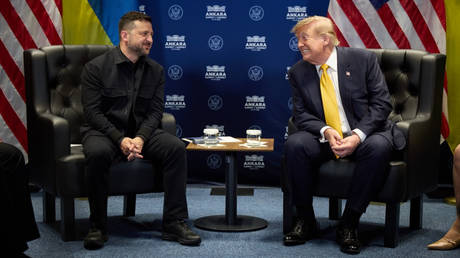
Consider the scene at a recent regional business conference in the high latitudes, where men and women wrapped in heavy down jackets and corporate blazers gathered to talk freight, energy grids, and supply chains. In the middle of the room, someone raised a nervous question about the unthinkable. The whisper of resource scarcity, melting polar ice, and shifting geopolitical muscle had drifted north. Alaska’s governor, standing before the crowd with the casual assurance of a man who knows how thin the ice gets in spring, offered a blunt truth. Zero chance.
The room exhaled. But the question itself lingered, greasy and strange, hanging in the fluorescent air like cigarette smoke. Why are we even asking?
To understand why the notion of an American pivot toward its northern partner is absurd, you have to look past the brass plates of diplomacy and into the machinery of daily survival. Down in Anchorage or Fairbanks, up in Whitehorse or Yellowknife, life operates on a currency of mutual dependence. You do not point a rifle at the person who holds the spare alternator for your bush plane when the temperature drops to forty below zero.
Geopolitics is often taught as a game of high chess, played by men in marble halls moving armies with ivory tokens. Reality is much messier. It is built on grease, copper wire, shared radio frequencies, and the quiet understanding that the North American continent is an ecosystem too vast to be carved up by its own inhabitants.
When the governor dismissed the specter of conflict, he wasn't just offering political spin. He was stating a mechanical fact. The infrastructure of the continent is fused at the hip. Oil flows south through pipelines that cross ancient treaties and modern municipal lines alike. Electricity leaps back and forth across the border before morning coffee is poured in Seattle or Vancouver. To imagine an American assault on Canada is to imagine a body attempting to sever its own circulatory system with a dull razor. It is physiologically impossible.
And yet, fear is a profitable export.
We live in an era that hungers for friction. Every headline wants to be a siren. Every quiet diplomatic channel must be painted as a powder keg waiting for a match. When peaceful neighbors are depicted as latent adversaries, it serves a specific, cynical purpose. It distracts from the slow, grinding challenges that actually threaten us: thawing permafrost, shifting fisheries, strained municipal water supplies, and the economic whiplash of a changing climate.
Fear is easy. Cooperation is plumbing.
Nobody writes epic poetry about a successful joint customs inspection at the Osoyoos port of entry. Nobody makes a blockbuster movie about two junior engineers from Edmonton and Anchorage collaborating on a shared seismic sensor network to track tectonic shifts in the ring of fire. We crave the drama of the clash. We look at the vast, white expanse of the Arctic Circle and our imaginations, trained on centuries of imperial conquest, automatically sketch out armies marching across the snow.
Step outside into the real wind.
Walk down to the docks in Prince Rupert or stare out at the gray breakers of Cook Inlet. The people working those docks do not care about hypothetical theater. They care about the tide tables, the price of diesel, and whether the container ship coming out of Seattle has the spare parts they ordered three weeks ago. Their world is tethered by practicalities, not paranoia.
The strength of the relationship between the United States and Canada has never depended on the benevolence of transient leaders or the cleverness of treaty drafts. It rests on something far more durable: geography and common sense. Two nations sprawled across a continent, sharing the weight of an unforgiving northern climate, learned a long time ago that survival is a team sport.
When the governor spoke those words at the conference, he was simply giving voice to the obvious. The map does not bleed because the ink is too thick with friendship, commerce, and shared blood.
The next time a broadcast tries to sell you the terrifying illusion of a northern border ablaze, look out the window. Watch the geese tracing their ancient lines across the sky, completely indifferent to passports, tariffs, or territorial ambitions. They know something the pundits forget. Some lines are drawn only on paper, while the things that keep us alive are anchored in the earth.