Cold.
That is the first thing you notice about November in Central Europe. It isn't the brisk, invigorating chill of a mountain morning, nor the romantic, snow-dusted freeze of a December postcard. It is a damp, grey, bone-deep cold that settles into the cobblestones of historic squares around four in the afternoon and refuses to leave until April.
For decades, if you were part of the South Asian diaspora living in cities like Warsaw, Prague, Vienna, or Bratislava, November carried a very specific kind of ache. Back home—whether in Mumbai, Lahore, Delhi, or Kathmandu—this was the season of warmth. Not meteorological warmth, though the evenings were mild, but the radiant, overwhelming heat of millions of clay lamps flickering against the dark. It was the smell of roasting cardamom, the sharp pop of firecrackers echoing down narrow lanes, and the vibrant, unapologetic explosion of marigold orange and magenta silk.
In Europe, you celebrated behind closed doors. You taped fairy lights to the inside of double-glazed windows, careful not to let the glare bother the neighbors across the courtyard. You cooked gulab jamun in tiny apartment kitchens, opening the window to let the sweet, heavy scent of fried dough and rosewater escape into the indifferent autumn air. You kept your joy quiet. You kept it contained.
Until now.
When news broke that a European presidential palace—an institution built on centuries of rigid statecraft, gilded Baroque symmetry, and Christian-European heritage—would host its first-ever official Diwali celebration, the standard press releases treated it like a routine diplomatic milestone. They listed the guest counts. They noted the participation of local ambassadors, business leaders, and cultural associations. They mentioned the lighting of the ceremonial lamp.
They missed the point entirely.
To understand what actually happens when an oil lamp is lit inside the marble halls of a European head of state, you have to look past the diplomatic protocol. You have to look at the invisible geography of belonging.
The Architecture of Distance
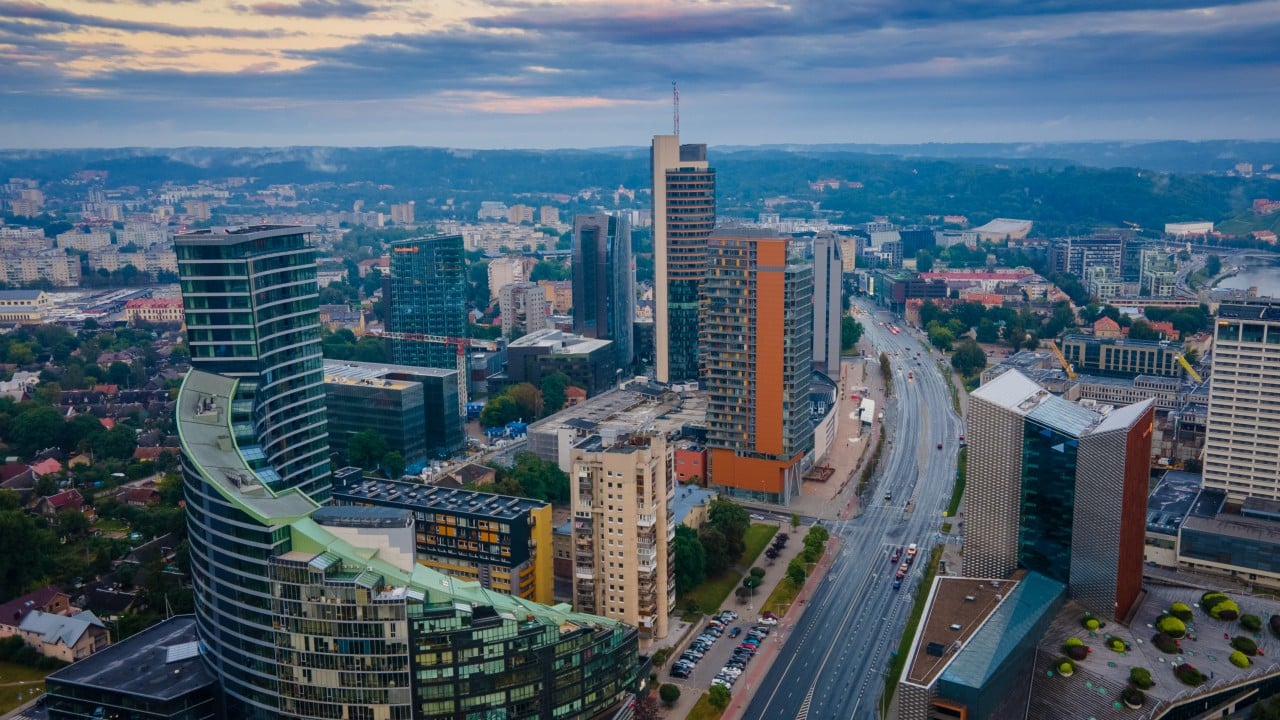
Walk through the gates of almost any European presidential residence—whether it is the Belweder in Warsaw, the Hofburg in Vienna, or the Grassalkovich Palace in Bratislava—and the architecture immediately tells you who the building was made for.
High ceilings painted with frescoes of classical mythology. Heavy oak doors that require two uniformed guards to pull open. Portraits of stern-faced monarchs and statesmen staring down from gilt frames. These spaces are physical manifestations of continuity. Their entire purpose is to project permanence, history, and an unbroken lineage of national identity.
For generations, immigrants and their children have walked past the wrought-iron fences of these palaces with a quiet, unspoken understanding: We live here, we pay taxes here, we build businesses and staff hospitals here, but the soul of this house belongs to someone else.
Consider a hypothetical scenario, grounded in the daily reality of thousands of families across the continent. Imagine Aarav, a software architect who moved from Bengaluru to Central Europe eight years ago. He speaks the local language with a slight, charming cadence. His daughter, Maya, was born in a local maternity ward; she cheers for the national football team and complains about the winter wind just like her classmates.
Yet, every October or November, Maya faces a quiet split in her identity. At school, the corridors are already preparing for Saint Martin’s Day lanterns and the long, glittering march toward Advent. Diwali is something that happens in their living room on a Tuesday night after homework, rushed between dinner and bedtime. To Maya, her heritage feels small—a private hobby practiced in the margins of a much larger, louder culture.
Now, picture Aarav and Maya receiving an invitation stamped with the gold crest of the presidency.
When a head of state opens the front doors of the nation's highest symbolic residence for Diwali, the psychological furniture of the country rearranges itself overnight. The message is no longer you are tolerated guests in our house. The message becomes your light is part of our light.
Why Now and Why Here
Skeptics, of course, will point to geopolitics. And they aren't entirely wrong.
Europe’s demographic and economic reality has shifted dramatically over the past fifteen years. Across the European Union, the Indian and broader South Asian diaspora has grown from a scattered collection of diplomats, restaurateurs, and medical students into a powerhouse of engineers, researchers, entrepreneurs, and essential healthcare workers.
Trade corridors between Brussels, New Delhi, and Central European capitals have expanded rapidly, driven by supply chain diversification, green energy partnerships, and technology transfers. Politicians rarely light ceremonial lamps out of pure poetry; they light them because the people holding the matches are vital to the nation's future.
But reducing a palace Diwali to mere trade diplomacy is like reducing a wedding to a tax merger. It ignores the human physics of what happens in the room.
Think of cultural integration like a river meeting the sea. For a long time, the prevailing European model assumed that the river simply disappears—that newcomers dissolve into the dominant current, leaving their distinct colors and currents behind in exchange for citizenship and stability.
That model is broken. It breeds quiet resentment on one side and defensive nostalgia on the other.
What we are witnessing at the presidential palace is a different model altogether. It is the realization that a modern European nation doesn't weaken its heritage by making room at the table; it proves its confidence. Only an insecure culture fears a clay lamp. A confident culture hands over the matches.
Inside the Gilded Hall
I remember the first time I attended a major state-sponsored cultural reception as an outsider in a Western capital. My palms were sweating before I even cleared the metal detectors. You spend the first twenty minutes hyper-aware of your clothes, your accent, the volume of your laugh, worried that at any moment someone will tap you on the shoulder and ask if you wandered into the wrong wing of the building.
That anxiety—the low-grade, constant static of wondering whether you truly belong—is exhausting. Most people who have never lived outside their native culture don't even know it exists.
Now imagine walking into that same marble hall and seeing rangoli—intricate, geometric patterns made of crushed colored powders and fresh flower petals—laid out across the parquet floor beneath a crystal chandelier.
The sensory collision is breathtaking.
On one hand, you have the austere, centuries-old elegance of European statecraft: the faint smell of beeswax floor polish, the velvet ropes, the hushed acoustics of stone archways. On the other, you have the vibrant, unapologetic warmth of South Asia: the rich weave of Banarasi silk saris brushing against tailored wool suits, the bright tilak marks on foreheads, the sweet, spiced aroma of saffron and pistachio drifting toward ceilings painted with cherubs.
When the president steps forward to light the diya—the traditional brass oil lamp—the room goes completely silent.
It is a fragile moment. A single cotton wick dipped in clarified butter, trembling slightly in the draft of a massive historic room. In Hindu, Jain, and Sikh traditions, lighting the lamp isn't just decorative; it is an invocation. Tamaso ma jyotirgamaya. Lead us from darkness to light. From ignorance to knowledge. From fear to fearlessness.
When that flame catches, the applause that follows isn't the polite, measured clapping of a routine diplomatic briefing. It is a release of breath that some people in that room have been holding for thirty years.
The Invisible Stakes
Why does a single evening of music, sweets, and speeches matter when the world is grappling with inflation, border tensions, and political polarization?
Because culture is upstream from politics.
Before laws are passed, before budgets are voted on, before neighbors decide whether to trust or fear the new family moving in down the street, a society decides who is visible and who is invisible.
For decades, South Asians in Europe were the ultimate "model minority"—quiet, hardworking, law-abiding, and largely invisible in the public imagination. They were the doctors who stitched up your broken wrist at 3:00 AM, the IT specialists keeping the banking servers running, the owners of the corner grocery store who always stayed open an hour past closing. They were appreciated for their utility, rarely celebrated for their humanity.
Hosting Diwali at a presidential palace shatters that invisibility.
Tomorrow morning, millions of citizens who have never tasted a samosa or heard of the Ramayana will open their phones, read the news, and see their president standing beside community leaders in front of a glowing brass lamp. They will see the colors. They will read about the festival of lights. And subconsciously, the mental map of their own country will expand by a few inches.
For the young European-born generation, the impact is even deeper.
We often talk about the "second-generation dilemma"—the feeling of being too foreign for the country you live in, yet too European for the country your parents left behind. You become a cultural translator, constantly code-switching between two worlds that never seem to touch.
Watching those two worlds collide in the most prestigious building in the land heals a fracture that words alone cannot fix. It tells a teenager in Warsaw or Prague or Vienna that they do not have to amputate half of their soul to be a full citizen. They don't have to choose between Beethoven and Bollywood, between pierogi and paneer, between the winter frost outside and the warm glow of the lamp within.
The Courage of the Threshold
Of course, opening the palace doors is not without friction. Change never is.
In every European capital right now, quiet debates are simmering beneath the surface about identity, tradition, and how fast a nation can evolve without losing its center of gravity. Some traditionalists look at events like a state Diwali with skepticism, worrying that historic institutions are becoming mere stages for multicultural theater. On the flip side, some cynical activists dismiss symbolic gestures as empty optics that fail to solve bureaucratic hurdles like visa backlogs or housing discrimination.
Both reactions miss the quiet power of ritual.
Human beings are not purely rational creatures who live by spreadsheets and policy briefs. We live by symbols. We live by thresholds crossed and tables shared. When a leader chooses to honor a minority tradition inside the nation's symbolic home, it sets a standard of dignity that ripples downward into municipal offices, corporate boardrooms, and neighborhood schools.
It doesn't solve every systemic problem overnight. It won't instantly speed up a residency permit or warm up a freezing November evening.
What it does is infinitely harder to legislate: it replaces suspicion with curiosity.
Think back to Aarav and his daughter Maya leaving the palace gates at the end of the night. The autumn air outside is still damp and cold. The cobblestones are still slick with mist. Nothing about the weather has changed.
Yet, as they walk toward the tram stop, Maya isn't hiding her gold-embroidered lehenga beneath a heavy winter coat anymore. She lets the bright crimson silk catch the streetlights, walking tall through the center of the historic square, carrying the warmth of a thousand palace lamps straight into the European night.