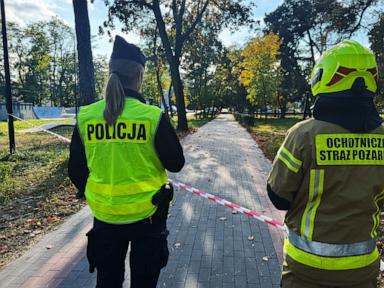
In late 2024, a wave of synchronized bomb threats swept across Poland, forcing authorities to detain dozens of suspects and inspect tens of thousands of schools. This unprecedented disruption exposed a grim structural vulnerability. Modern infrastructure is uniquely susceptible to mass panic orchestrated through digital vectors. When invisible actors weaponize fear, physical security measures matter very little. The real breakdown occurs within public psychology and institutional response protocols.
Decades of reporting on security crises show a recurring pattern. Systems built for physical protection struggle to cope with purely informational warfare. A threat does not need to be physically realized to achieve its objective. It only needs to be believed by enough people to paralyze normal functions.
The Anatomy of a Systemic Scare
Mass hoaxes thrive on operational anxiety. When authorities receive thousands of simultaneous threats targeting schools across multiple administrative districts, standard triage protocols instantly fail. Every single alert demands a physical verification checklist. Police and emergency services cannot simply ignore an email or a digital message mentioning explosive devices. They are legally and ethically bound to investigate.
This creates an asymmetric advantage for malicious actors. Launching a digital threat requires minimal capital and zero physical risk. Countering that threat requires massive resource mobilization, deployment of bomb squads, evacuation protocols, and large-scale administrative disruption.
[Digital Threat Vector] ---> [Institutional Triage Overload] ---> [Massive Resource Mobilization] ---> [Widespread Social Disruption]
The scale of the Polish operation tells the story. Inspecting fifty thousand educational facilities is a logistical nightmare. It drains police reserves, exhausts first responders, and introduces acute psychological trauma into classrooms. Children learn that their learning environments are fragile sanctuaries easily breached by anonymous keystrokes.
The Digital Architecture of Panic
Modern communication networks act as force multipliers for panic. In previous decades, bomb threats targeting institutions remained localized incidents reported via evening news broadcasts or local newspapers. Today, encrypted messaging applications, social media algorithms, and automated posting scripts amplify every single threat in real time.
When a parent receives a forwarded warning on a messaging app regarding a specific school, context evaporates. Nuance is lost. The message transforms from an unverified rumor into an imminent existential hazard. Algorithms that reward high engagement inadvertently prioritize alarming content over sober institutional reassurances.
Authorities find themselves fighting a two-front war. They must secure physical buildings while simultaneously attempting to calm an uncontrolled digital information ecosystem. Traditional press releases and official statements move far too slowly to outrun viral anxiety. By the time a ministry issues a denial, the panic has already mutated and spread across dozens of digital channels.
Operational Failures and Institutional Blind Spots
State security apparatuses across Europe and North America have been slow to adapt to this hybrid threat model. For years, counter-terrorism frameworks focused heavily on physical interdiction, surveillance of known extremist cells, and hardening physical perimeters. They built fortresses while leaving the digital communication layers wide open.
Anonymous threat actors exploit jurisdictional boundaries. Digital infrastructure allows perpetrators to route messages through multiple proxy servers, making attribution extraordinarily difficult. Even when law enforcement successfully identifies and detains suspects—as seen in the aftermath of the Polish alerts—the underlying vulnerability remains unaddressed. Arresting a few individuals does nothing to secure the broader communications infrastructure that made the mass panic possible in the first place.
Furthermore, public institutions suffer from a credibility deficit. When citizens harbor underlying distrust toward government communication channels, official denials carry less weight. If a ministry insists that a threat is a hoax without providing transparent, verifiable proof immediately, skepticism fills the vacuum. Panic feeds on uncertainty.
The Psychological Toll on Society
Beyond the immediate economic costs and operational strain on emergency services, these coordinated panics exact a heavy toll on social cohesion. Constant exposure to manufactured emergencies degrades baseline public resilience.
When every backpack left unattended in a hallway triggers a localized evacuation, or every email warning brings a district to a standstill, society enters a state of chronic hyper-vigilance. Over time, this exhaustion breeds apathy or dangerous cynicism. People begin to normalize threats, potentially ignoring genuine warnings because they have become desensitized to frequent false alarms.
This is the ultimate objective of hybrid threat campaigns. They aim not necessarily to cause physical destruction, but to erode trust in institutions. If the public loses faith in the state's ability to maintain basic safety and order, the fabric of civil society begins to fray from within.
Toward a Resilient Response Strategy
Mitigating future waves of mass disruption requires a fundamental shift in doctrine. Simply adding more police officers or conducting more manual searches is an unsustainable strategy. It plays directly into the hands of disruptors by multiplying the economic and social friction of their attacks.
Intelligence agencies must pivot toward preemptive digital disruption, targeting the networks and forums where these coordinated hoaxes are planned and shared. Simultaneously, educational institutions and civil authorities need robust digital literacy initiatives that teach students, teachers, and parents how to evaluate information during a crisis.
Resilience is not merely about having better bomb-sniffing dogs or faster evacuation routes. It is about building an informed public that refuses to surrender its collective sanity to an anonymous message on a screen. Until institutional frameworks catch up with the realities of modern information warfare, the threat of the digital phantom will continue to cast a very long shadow over daily life.