On August 1, a new pipeline of intelligence will open between the White House and Wall Street. It will not flow through traditional press briefings or official government channels. Instead, it will travel through a high-speed data stream sold directly to institutional investors.
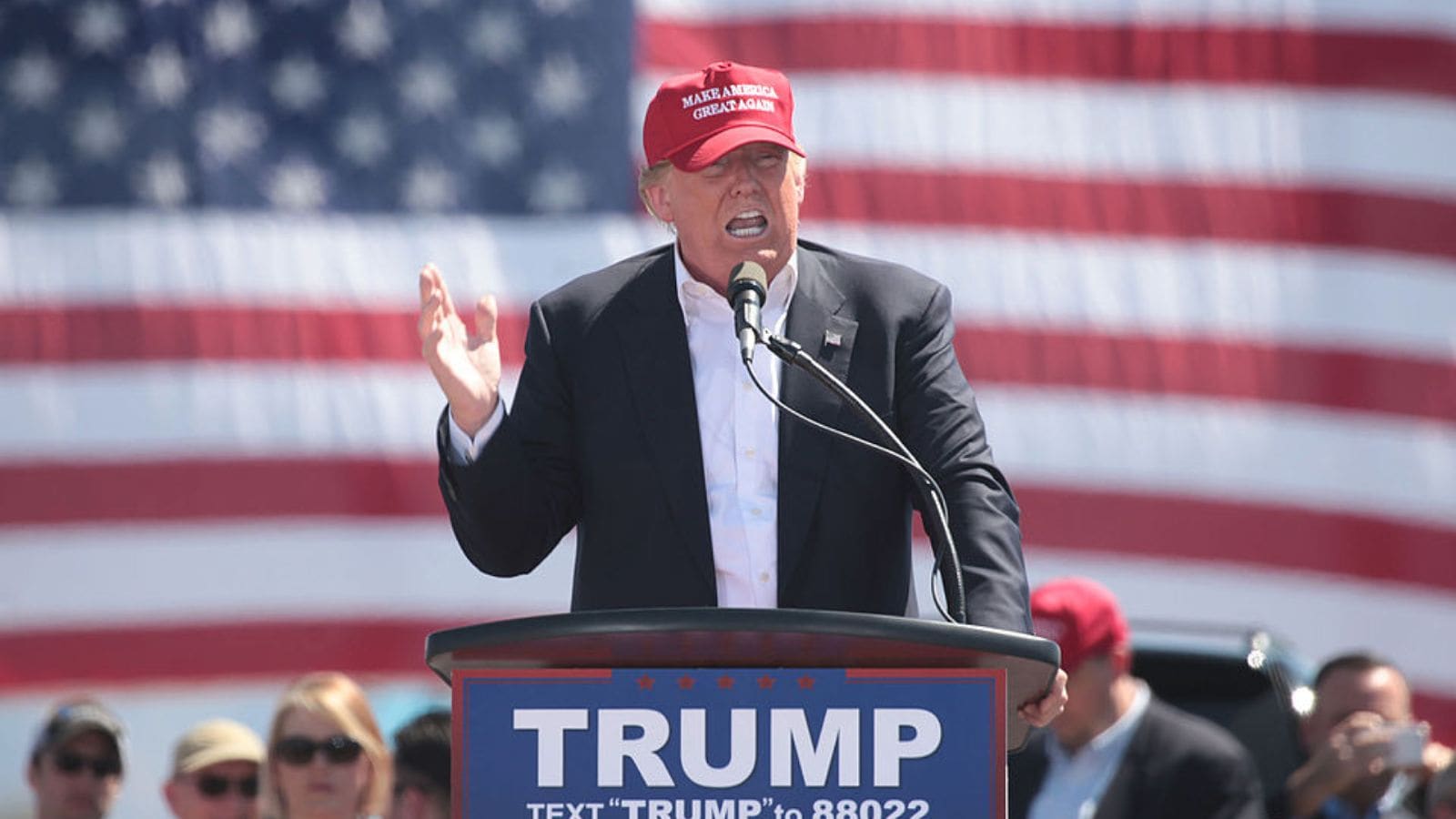
Trump Media & Technology Group, the publicly traded parent company of Truth Social, has officially announced the launch of Truth API. The service is designed specifically for high-frequency trading firms, hedge funds, and major banks. For a premium fee, these institutions will receive a direct, licensed feed of posts from the platform's most influential accounts in milliseconds. Crucially, this feed includes the private musings, policy threats, and geopolitical declarations of President Donald Trump. Expanding on this topic, you can find more in: The Midnight Glow of the Ten Rupee Dream.
By selling immediate access to presidential communications, a sitting president is directly financializing his public office. Investors who pay for the stream can trade on policy decisions before the general public even knows they have been made.
Milliseconds and Millions
Modern financial markets do not move because of human decisions. They move because of mathematical models. Algorithmic execution engines, operating in data centers clustered around New York and Chicago, ingest massive feeds of unstructured text, parse them for keywords, and execute trades in fractions of a second. Experts at Harvard Business Review have shared their thoughts on this trend.
When a president posts about tariffs, military actions, or Federal Reserve policy, billions of dollars of value can vanish or appear in the blink of an eye. In March, an oil market trade totaling half a billion dollars was executed roughly fifteen minutes before the president posted about productive talks with Iran. Once the post went live, oil prices fell sharply. The traders who got in early made a fortune.
Under the new system, manual monitoring of a social media feed is obsolete. Subscribers to the data feed will receive raw text packets directly from the source code. It is an optimized highway designed to feed the algorithms directly.
Trading firms have long paid for premium feeds from other social media platforms like X or Reddit. Those platforms do not have a sitting president as their chief content creator and principal shareholder. That is where the traditional corporate comparison falls apart. The commodity being sold here is not just social data. It is the first look at the official decisions of the executive branch of the United States government.
The Loophole in the Law
For decades, the standard procedure for a modern president was to step away from personal business. Presidents routinely sold their individual stock holdings, divested from private enterprises, or placed their assets into blind trusts. The goal was simple. A president should not know how their official actions affect their personal bank account.
Trump has rejected this precedent entirely. He remains the majority shareholder of Trump Media & Technology Group. This means every subscription sold to a Wall Street firm to access his words faster directly increases the value of his personal holdings.
From a legal standpoint, the structure is technically permissible. Under federal conflict of interest statutes, the president and vice president are specifically exempt from provisions that bar other government employees from profiting off their official duties. The law was drafted with the assumption that the presidency is too broad and complex to be managed under standard conflict rules. It was never intended to serve as a shield for selling expedited access to policy decisions.
Legal scholars view this development as an unprecedented shift. Kathleen Clark, a government ethics expert at Washington University School of Law, has noted that this arrangement represents an exploitation of government power for personal enrichment. By placing a tollbooth on presidential speech, the company is charging Wall Street for the right to front-run the American public.
Corporate Survival and Financial Pressure
The launch of the new feed is not merely an opportunistic cash grab. It is a vital corporate lifeline. Trump Media & Technology Group has faced severe financial headwinds since the president took office.
The company's stock has plunged more than 70 percent over the past year. This decline has wiped out billions of dollars in paper wealth for the Trump family and retail investors alike. In the first quarter of this year, the company reported a net loss of $405 million, compared to a loss of just $31 million during the same period in the prior year.
To offset these losses, the company has cycled through a series of desperate pivots. It has attempted to move into cryptocurrency, streaming television, and even nuclear fusion. None of these ventures have yielded the reliable, high-margin cash flow needed to stabilize the balance sheet.
Data licensing represents the ultimate corporate fix. The infrastructure is already built. The overhead is minimal. The demand is practically guaranteed because Wall Street cannot afford to be left behind. If one major trading firm buys the feed, its competitors must buy it as well, simply to remain competitive.
Kevin McGurn, the interim chief executive officer who recently replaced former Congressman Devin Nunes, has made no secret of this strategy. He has described the move as a clear monetization of proprietary assets. The company plans to crack down on unauthorized data scraping, forcing financial firms to pay for official access.
The Tiered Information Economy
This development points toward a highly stratified future for public information. If the most critical policy announcements of the United States government are gated behind paid APIs, the concept of a level playing field in the public markets disappears.
The top accounts included in the initial rollout of the feed are not random users. Alongside the president, the feed includes accounts for the White House, FBI Director Kash Patel, and Health and Human Services Secretary Robert F. Kennedy Jr. These are the individuals who control the regulatory apparatus of the world's largest economy.
A regulatory shift, an interest rate comment, or a sudden tariff announcement will hit the servers of high-frequency trading firms first. The general public, relying on standard push notifications or news reports, will receive the information seconds, or even minutes, later. In the world of modern finance, a delay of that length is an eternity. By the time the average retail investor reads the news, the market will have already adjusted, leaving them to buy at the top or sell at the bottom.
The administration has repeatedly positioned itself as a champion of the common citizen against elite financial institutions. Yet, this pricing model does exactly the opposite. It grants institutional giants a structural, government-facilitated advantage over the retail traders who backed the company in its early days.
The commercialization of presidential speech is no longer a theoretical risk. It is a live product with an August launch date. Wall Street firms are already signing up, calculating that the cost of the subscription is a small price to pay for a direct wire into the mind of the commander-in-chief.