The coffee in Budapest always tastes like history, but on this particular morning, it carries the sharp, metallic tang of adrenaline.
Walk through the Eighth District, past the crumbling Habsburg-era facades and the gleaming new tech hubs, and you will see it. People are leaning a little closer together over their espresso. They are checking their phones not with the usual bored flick of a thumb, but with a frantic, wide-eyed intensity. For over a decade, the political air in Hungary has been heavy, predictable, and still. Now, for the first time in a generation, the wind has shifted. For a different view, check out: this related article.
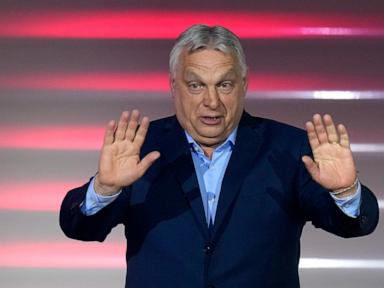
Viktor Orbán, the man who fashioned himself as the permanent architect of the Hungarian soul, has hit a wall. It wasn't a soft landing. It was a landslide loss that nobody—least of all the man in the Prime Minister’s office—saw coming with such devastating clarity.
The Cracks in the Concrete
To understand why this matters, you have to understand the House that Viktor Built. It wasn't just a political party; it was an environment. Imagine living in a room where the walls are painted a very specific shade of orange, the music is always set to the same folk tune, and the windows are bolted shut "for your own protection." Further reporting on this matter has been published by The Washington Post.
For years, the message was simple: I am the shield. I protect you from the Brussels bureaucrats, from the migrants, from the fading of our traditions.
But shields are heavy. Eventually, the arm that holds them begins to shake.
The recent election results didn't just tip the scales; they smashed them. Fidesz, the ruling party, watched as strongholds they considered ancestral lands crumbled. This wasn't a narrow defeat in a few urban pockets. This was a nationwide exhale. The "national side," as Orbán calls his movement, found itself looking into a mirror and seeing a stranger.
Consider a hypothetical citizen—let’s call her Ilona. Ilona lives in a small town near the Austrian border. She isn't a radical. She doesn't spend her time on Twitter debating geopolitical nuances. She cares about the price of milk, the quality of the local school, and whether her grandson will have to move to Berlin to find a job that pays a living wage. For twelve years, Ilona voted for the orange banners because they promised stability.
But stability that costs your children’s presence is a high price to pay. When Ilona went to the polls this time, she didn't see a shield. She saw a system that had grown fat and deaf. She saw a leadership that talked about "the nation" while the local hospital ran out of basic supplies.
Ilona is why the fortress faltered.
The Language of the Retreat
When a strongman loses, he rarely says "I was wrong." Instead, he rebrands.
Orbán’s response to the defeat was a masterclass in rhetorical gymnastics. He didn't announce a resignation. He announced a "stepping back" to "rebuild the national side." It is a linguistic trick designed to turn a retreat into a tactical maneuver.
"We must return to our roots," he told the cameras, his face a mask of practiced stoicism.
But what does that actually mean? In the world of high-stakes power, "returning to your roots" is often code for "purging the ranks." It’s a way of saying that the message was perfect, but the messengers were flawed. It shifts the blame from the king to the court.
The stakes here are invisible but massive. This isn't just about who sits in a leather chair in a parliament building. It’s about the soul of Central Europe. Hungary has long been the laboratory for a specific kind of "illiberal democracy"—a model that leaders across the globe have studied and mimicked.
If the lab explodes, the shockwaves travel far beyond the Danube.
The Ghost of the Opposition
For years, the opposition in Hungary was a fractured mess of egos and conflicting ideologies. They were like a group of people trying to stop a tidal wave with a collection of mismatched spoons.
Then came the change.
It wasn't a single policy that united them. It was an exhaustion. A deep, bone-weary fatigue with the drama of constant conflict. The new wave of challengers realized something the old guard missed: you don't beat a storyteller by correcting his facts. You beat him by telling a better story.
They stopped talking about abstract democratic norms and started talking about the dinner table. They traded the high-minded lectures for a simple, devastating question: Are you actually happy?
The answer, it turns out, was a resounding "No."
The Cost of the Illusion
Maintaining a "national side" requires an endless supply of enemies. You need a villain to justify the hero's existence. For a decade, the villains were everywhere. They were in Washington, they were in the Soros foundations, they were in the hallways of the EU.
But enemies are exhausting. Eventually, the public grows tired of the fight. They want to live in a country, not a campaign ad.
The landslide loss revealed the hidden cost of this constant mobilization. When you treat every election like a holy war, you eventually run out of believers. The rhetoric stays at a fever pitch, but the ears of the audience have become deaf to the noise.
Orbán is now promising to "rebuild."
Picture a mason standing before a cathedral that has just suffered a structural collapse. He insists the blueprints are fine. He insists the stone is high quality. He blames the weather. He blames the apprentices. He begins to clear the rubble, promising a version that is even taller, even more fortified.
But the ground beneath the cathedral has shifted.
The soil is no longer holding. The demographic shift in Hungary—the young, the educated, and the frustrated—is a tectonic plate that Orbán cannot command to stop moving. You can rewrite the laws, you can buy the media outlets, and you can gerrymander the districts.
You cannot, however, force a person to feel a pride they no longer possess.
The Long Walk Home
What happens next isn't a clean break. History doesn't work in chapters; it works in tides.
Orbán is a political survivor. He has been in the wilderness before, and he knows how to live off the land. His "step back" is a period of hibernation. He is waiting for the new victors to stumble. He is waiting for the opposition to succumb to their own internal bickering. He is waiting for the world to get distracted by a new crisis.
But there is a different feeling in the air this time.
It’s the feeling of a spell being broken. In many ways, power is an act of collective imagination. As long as everyone believes the leader is invincible, he is. The moment a significant number of people realize he can be beaten, the invincibility vanishes instantly. It doesn't leak out. It evaporates.
The landslide wasn't just a loss of votes. It was a loss of the "Orbán Aura."
On the streets of Budapest tonight, the lights on the Parliament building reflect off the water of the Danube just as they always have. The statues of kings and poets remain unmoved on their pedestals.
But look at the faces of the people crossing the Chain Bridge.
There is a lightness in their step that wasn't there a month ago. They aren't shouting. They aren't celebrating in the streets with champagne. It’s something quieter. It’s the look of someone who has just woken up from a long, feverish dream and realized the sun is finally coming up.
The "national side" is being rebuilt, but the people are already building something else. They are building a life that doesn't require a permission slip from the state. They are rediscovering the fact that a country is not a party, and a leader is not a god.
The fortress hasn't fallen yet, but the front door is wide open, and the keys are missing.
History is a patient teacher. It reminds us that no matter how much concrete you pour, the grass eventually finds a way through the cracks. The orange banners are still flying, but they look a little faded in the morning light. The man who vowed to rebuild is discovering a hard truth: you can fix a wall, but you can’t fix a heart that has already decided to move on.


