In the dust-choked streets of Deir al-Balah and the shuttered commercial hubs of the West Bank, the act of casting a ballot is being framed as a resurrection of Palestinian sovereignty. After two decades of paralysis, the Palestinian Central Elections Commission has launched municipal polls in an attempt to prove that the national project is not yet dead. To the casual observer or the optimistic diplomat, these elections represent a "return to credibility."
The reality on the ground is far more cynical.
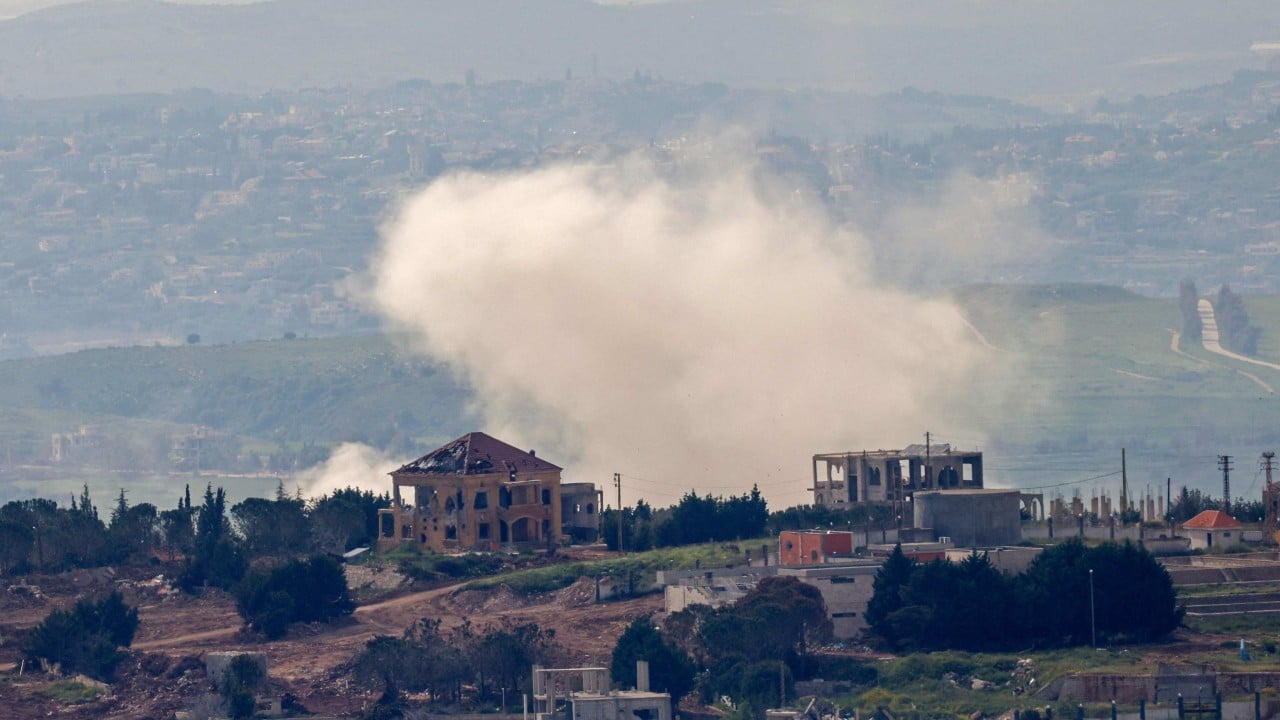
Behind the campaign posters and the purple-stained fingers lies a fractured political machine attempting to buy time. These are not the grand national elections the world has demanded since 2006; they are a fragmented, localized experiment conducted in a landscape where the Palestinian Authority (PA) is struggling to justify its own existence. While proponents argue that local voting restores the "democratic link" between the West Bank and Gaza, the exercise is taking place under the shadow of a Gaza Strip largely in ruins and a West Bank increasingly carved up by Israeli military gates and settler outposts.
The Illusion of a Single System
The central ambition of the 2026 municipal vote is to project an image of a unified Palestinian political system. For the first time since the 2007 civil war between Fatah and Hamas, the PA is attempting to hold a vote that includes a sliver of the Gaza Strip—specifically in Deir al-Balah, one of the few areas not entirely leveled by the recent war.
This is a high-stakes optics play. By holding a vote in both territories, the PA’s technocratic cabinet, led by Prime Minister Mohammad Mustafa, wants to signal to the international community that it is the only legitimate partner for "the day after." But the logistics reveal the depth of the dysfunction. The commission has been unable to send official ballot boxes, paper, or even indelible ink into Gaza. They are improvising with local materials, a metaphor for a government that has authority in name but lacks the basic tools of statehood.
Furthermore, the "unification" is a facade. Hamas, which still exerts significant influence on the ground in Gaza despite years of conflict, has not formally sanctioned the process. In the West Bank, the situation is equally grim. In major cities like Ramallah and Nablus, the very heart of the Palestinian political elite, elections were cancelled because not enough candidates or slates even bothered to register.
Why the Local Polls are a Distraction
Focusing on municipal councils is a strategic choice by an aging leadership to avoid the terrifying prospect of a national legislative vote. In a full national election, the Fatah-led PA would likely face a crushing defeat or a repeat of the 2006 deadlock that led to civil war. By keeping the stakes local—focusing on trash collection, water rights, and school maintenance—the leadership can claim a "democratic mandate" without actually risking their grip on the presidency.
For the average Palestinian, the skepticism is earned. Since 2009, Mahmoud Abbas has ruled by decree, his original four-year term now entering its eighteenth year. The Palestinian Legislative Council has been a ghost ship since 2007. In this vacuum, municipal councils have indeed become more important, but not because of a flourishing democracy. They have become the final line of defense for a population that has been economically suffocated and physically restricted.
When a businessman in Tulkarem says he will vote despite having "little hope for meaningful change," he is expressing the weary pragmatism of a man who knows his local council cannot stop an Israeli military raid or a settler land grab. He is voting for a garbage collector, not a president.
The Sovereignty Paradox
The argument that these elections provide "credibility to Palestinian sovereignty" ignores the fundamental lack of autonomy that defines the current era. Real sovereignty requires control over borders, security, and finances. Currently, the PA enjoys none of these.
- Financial Suffocation: Israel continues to withhold billions in tax revenues, the lifeblood of the Palestinian economy.
- Territorial Fragmentation: The West Bank is divided into Areas A, B, and C, with the PA’s "sovereignty" largely confined to the urban islands of Area A.
- Security Control: Israeli military operations occur nightly in PA-controlled cities, often without coordination, rendering the concept of "Palestinian security" an oxymoron.
International actors, including the United Nations and the European Union, often praise these small democratic steps because the alternative—admitting the two-state framework is on life support—is diplomatically unpalatable. They need a "reformed PA" to exist so they have someone to give money to. These elections provide the necessary paperwork for that fiction to continue.
The Jerusalem Elephant
No Palestinian election can ever be truly definitive without East Jerusalem. In 2021, Abbas used the Israeli refusal to allow voting in Jerusalem as the pretext to cancel national elections. In 2026, the issue remains a brick wall. Israel considers the city its undivided capital and views any Palestinian political activity there as a violation of its sovereignty.
By proceeding with local elections that exclude Jerusalem, the PA is inadvertently signaling a retreat. If you can hold an election without Jerusalem today, why not a national one tomorrow? The leadership is caught in a trap: hold the vote and concede on Jerusalem, or cancel the vote and lose the last shred of domestic legitimacy. They have chosen a middle path of "localism" that satisfies no one.
The Rise of the Independent Slates
One overlooked factor is the surge of independent, non-partisan candidates. These individuals are often young, professional, and deeply frustrated with the Fatah-Hamas duopoly. Their presence on the ballot is a quiet rebellion against the old guard.
However, even these candidates face a ceiling. The Palestinian banking system is under constant threat of being cut off from Israeli correspondent banks, and the "Board of Peace" oversight—a legacy of recent international mediation efforts—often prioritizes stability over genuine political upheaval.
The 2026 elections are not a breakthrough. They are a maintenance routine for a crumbling structure. While the act of voting remains a powerful symbol of Palestinian resilience, it is being used by the leadership as a shield against true accountability. To believe this provides a "pathway to statehood" requires ignoring the military gates, the empty treasuries, and the deep-seated anger of a generation that has never seen a ballot for a leader who actually has the power to change their lives.
True credibility isn't found in a local ballot box in Deir al-Balah. It is found in the courage to hold a national vote that risks the status quo. Until that happens, these elections are merely a performance for an international audience that is increasingly losing interest in the show.
The path to a sovereign Palestine does not run through a municipal council. It runs through a complete overhaul of a political system that has spent twenty years perfecting the art of survival while the dream of a state slips through its fingers.