The air in the Strait of Hormuz does not breathe; it clings. It is a thick, salt-heavy humidity that wraps around the throat at three in the morning, the kind of heat that makes steel hulls sweat. For decades, this narrow stretch of black water has been the world’s primary choke point, a place where a single miscalculation by a bored teenager on a patrol boat could trigger an economic heart attack five thousand miles away.
To the bureaucrats in Washington, the Strait is a line on a briefing map. To the shipping conglomerates in London, it is an insurance premium spike. But to someone standing on the coastline near Bandar Abbas, watching the silhouettes of supertankers blot out the stars, it is simply home—a home that has spent forty years waiting for the other shoe to drop.
Now, a leaked fourteen-point memorandum suggests the shoe might finally be stepping back from the ledge.
It is being called a framework, a roadmap, a diplomatic breakthrough. The dry tickers on financial news networks list the pillars: regional maritime security, the lifting of specific banking restrictions, and a staggering three hundred billion dollar infrastructure fund. But the ink on this document is not made of policy points. It is made of frozen assets, quieted engines, and the sudden, disorienting prospect of normalcy for eighty-five million people who have learned to view the future as a threat.
The Arithmetic of the Choke Point
Consider a supertanker. It is not a ship so much as a floating skyscraper laid on its side, carrying two million barrels of crude oil. When it passes through the Strait of Hormuz, it navigates a shipping lane only two miles wide. On either side lie jagged coastlines and the unpredictable naval doctrine of the Islamic Revolutionary Guard Corps.
For forty years, this has been the ultimate leverage. If Iran feels the noose of Western sanctions tightening too far, the threat is always the same: we can close the valve of the world.
The first three points of the new memorandum address this directly, proposing a joint maritime monitoring council. It sounds dry. It sounds like meetings that could have been emails. But the reality is an unprecedented hotline between the U.S. Fifth Fleet in Bahrain and Iranian naval commanders.
Imagine two trucks barreling down a single-lane mud road from opposite directions. For decades, their survival depended on reading the slight twitch of the other driver’s steering wheel through a dusty windshield. The memorandum, if implemented, is the installation of a two-way radio. It allows both sides to say, I am moving left because there is a pothole, not because I am trying to ram you.
The immediate human consequence of this is not found in the price of Brent crude, though that will drop. It is found in the merchant marines—the Filipinos, Ukrainians, and Indians who staff these tankers. They are men who routinely write goodbye letters to their families before entering the Gulf, fully aware that their civilian vessel is the cheapest pawn in a grand geopolitical chess match. For them, a joint monitoring council means the difference between a routine shift and a missile strike.
The Phantom Trillions
There is a specific kind of exhaustion that comes from living in a collapsing currency. It is not a sudden crash; it is a slow, daily evaporation. You go to the grocery store in Tehran on a Tuesday, and a kilogram of lamb costs a certain number of rials. By Friday, the number has grown legs. You begin to view paper money not as wealth, but as a melting ice cube. You must trade it for something solid—gold, real estate, a used Peugeot—before it disappears entirely.
The middle five points of the document tackle the financial architecture of the embargo. This is where the narrative usually gets lost in the weeds of SWIFT codes, secondary sanctions, and correspondent banking relationships.
Let us simplify it. Sanctions did not just stop Iran from selling oil; they cut the cables that connect Iranian banks to the global nervous system. If a hospital in Isfahan needs German medical equipment for cancer patients, they cannot simply wire the money. They must find a middleman in Dubai, who finds a shell company in Turkey, who routes the cash through a third-party bank in Malaysia, paying a five percent cut at every stop. By the time the machine arrives, it costs three times its value, and the delay has cost lives.
The memorandum does not dissolve the sanctions regime overnight—Washington is too cautious for that, and the political capital required would be too immense. Instead, it creates a designated financial corridor.
Think of it as a clean room in a contaminated laboratory. A select handful of Iranian state and private banks will be permitted to re-enter the international clearing system, strictly for the trade of humanitarian goods, agricultural products, and civil aviation parts.
To the critics, this is a concession, a lifeline thrown to a hostile government. But to the family waiting for a specific chemotherapy drug that has been stuck in a customs warehouse in Rotterdam for six months, it feels less like geopolitics and more like a breath of oxygen.
The Great Rebuild
The most startling figure in the leaked text is the three hundred billion dollars earmarked for an international reconstruction fund. It is a number so large it loses meaning. It sounds like a typo.
Where does that kind of money come from? It starts with the estimated one hundred billion dollars in Iranian oil revenues currently frozen in accounts across South Korea, Japan, and India—money legally earned but legally untouchable due to American secondary sanctions. The memorandum outlines a process where these funds are not returned directly to Tehran’s treasury, but are instead diverted into a third-party managed trust fund based in Oman.
From there, the money is paired with international development loans to fund specific, audited infrastructure projects.
Walk through the streets of Ahvaz in July. The temperature regularly hits fifty degrees Celsius. The air smells of sulfur from the nearby oil fields, yet the electricity cuts out for six hours every day because the turbines at the local power plant were installed during the Ford administration and there are no spark plugs left to fix them. The water from the tap is brackish, turning the skin dry and itchy, because the water treatment facilities lack modern filtration membranes.
The three hundred billion dollar fund is aimed squarely at these failures. It targets three sectors:
- The modernization of the electrical grid to prevent the rolling blackouts that spark protests every summer.
- The overhaul of the country’s aging domestic air fleet, which currently flies planes held together by cannibalized parts and sheer luck.
- The construction of massive desalination plants along the southern coast.
This is the core of the persuasion. The Western powers are betting that by tying the money to concrete, visible improvements in the daily lives of citizens, they create a domestic constituency for peace. If the lights stay on in Bandar Abbas because of an international agreement, it becomes much harder for hardliners to argue that the agreement is an act of treason.
The Doubt in the Room
It is easy to get swept up in the poetry of a breakthrough. It feels good to believe that old enmities can be dissolved by fourteen points on a piece of cream-colored paper.
But anyone who has watched this space for more than five minutes knows that optimism in the Middle East is usually a symptom of a lack of information.
The document is quiet on the most difficult questions. It does not mention the centrifuge cascades spinning in the deep bunkers of Fordow. It does not address the ballistic missile stockpiles or the regional proxies that operate from the Mediterranean to the Red Sea. It is a transactional deal, not a transformational one. It is an agreement to stop the bleeding, not an agreement to become friends.
The danger lies in the fragile architecture of the deal itself. It relies entirely on executive agreements and political will, meaning it is built on sand. A change of guard in Washington or a sudden escalation by a radical faction in Tehran could tear the memorandum to pieces before the first dollar leaves Oman.
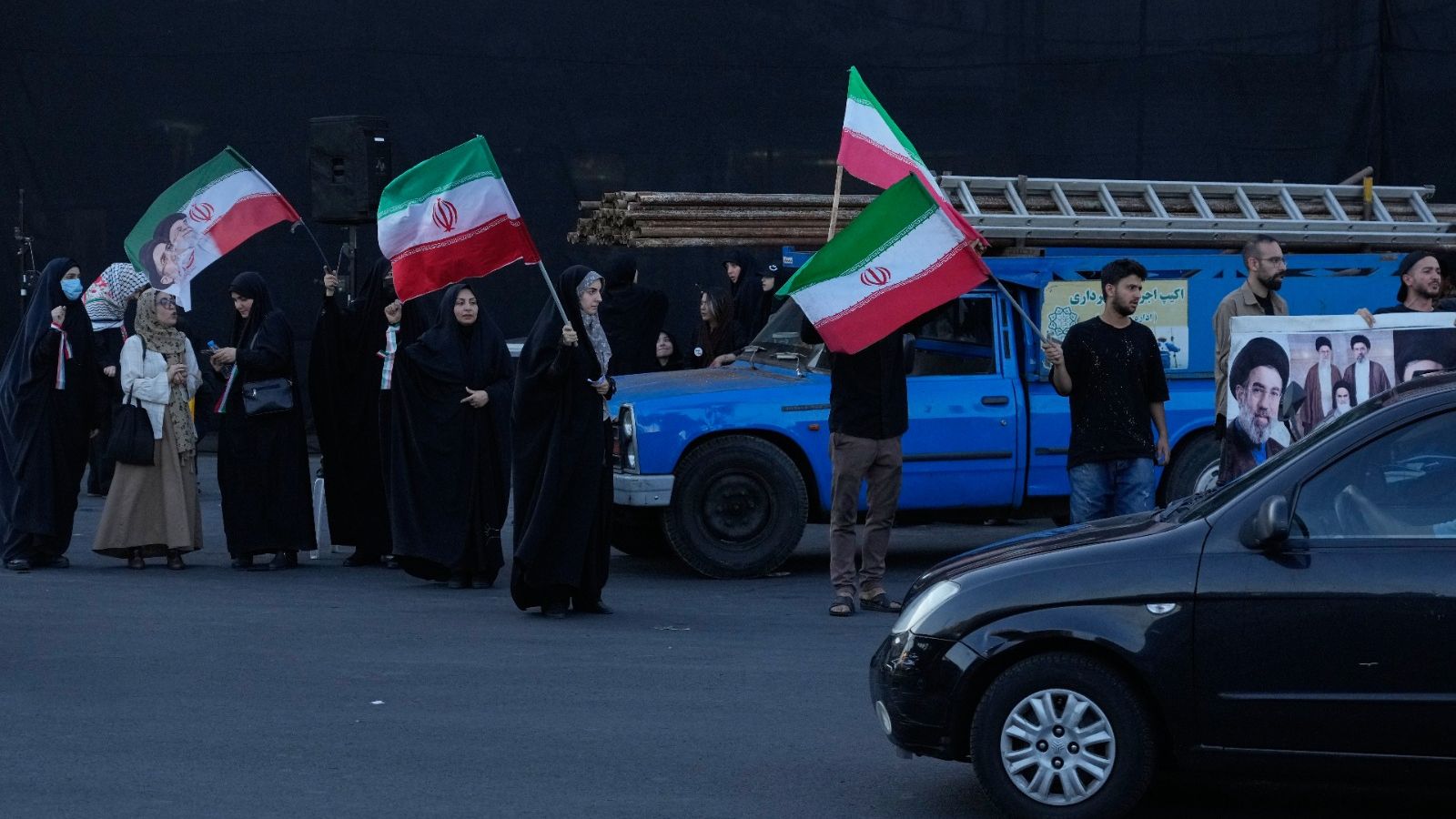
We have seen this movie before. In 2015, the streets of Tehran filled with people dancing, waving flags, believing the long isolation was over. Three years later, the hotels that had been full of European businessmen were empty again, the contracts torn up, the hope replaced by a deep, bitter cynicism.
The true test of this fourteen-point memorandum will not take place in the grand halls of Geneva or the secure briefing rooms of the Pentagon. It will take place in small, uncelebrated moments.
It will be tested when an Iranian air traffic controller watches a thirty-year-old Boeing 747 lift off from Imam Khomeini International Airport, knowing the new landing gear inside it was legally imported and certified. It will be tested when a fisherman in the Strait of Hormuz looks out at the horizon and sees two coast guard boats passing each other without their gun turrets turning.
Until then, the paper remains just paper. The heat in the Strait will continue to cling, the tankers will continue to slip through the dark, and millions of people will go to sleep wondering if tomorrow is the day the world finally changes, or if it is just another day of holding their breath.