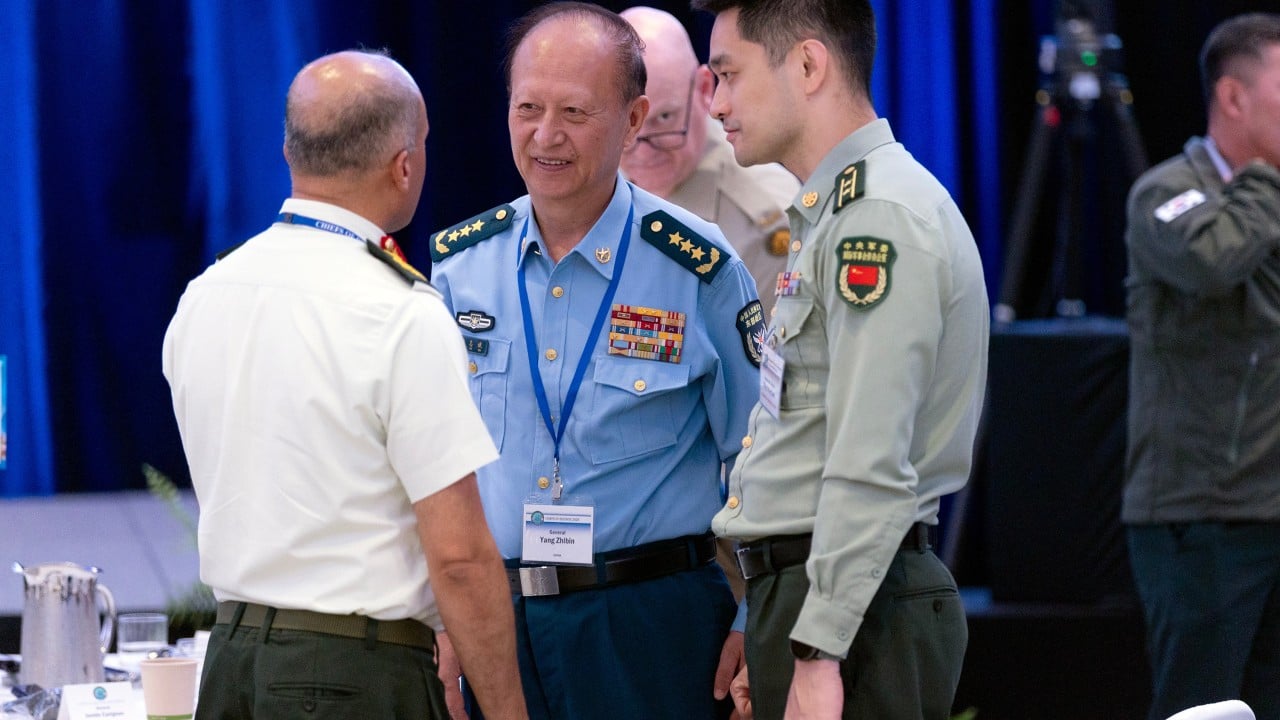
Geopolitical fractures rarely begin with a declaration of war. They start at the margins, where long-standing alliances fray under the weight of economic coercion and diplomatic exhaustion. When Canadian and Chinese military officials recently sat down across a conference table for the first time in nearly eight years, the event was largely treated by mainstream outlets as a routine procedural thaw. That assessment is dangerously naive. This unexpected resumption of military-to-military dialogue reflects a profound structural realignment driven directly by the aggressive tariff pressures and erratic rhetoric emanating from Washington under the revived Trump administration.
For decades, Ottawa treated its defense and foreign policy as an inseparable extension of the North American security perimeter. Sovereignty was quietly subordinated to continental integration, and relations with Beijing were handled strictly through the reactive lens of American strategic anxieties. But when economic warfare targets your own industrial base, old certainties dissolve overnight. Prime Minister Mark Carney’s administration did not pursue this quiet diplomatic and defense channel by accident. It is a calculated, defensive maneuver designed to diversify strategic risk at a time when the White House treats its northern neighbor not as an indispensable partner, but as an economic punching bag.
The Anatomy of a Frozen Relationship
To understand why this breakthrough matters, we have to look past the sanitized language of diplomatic communiques and examine the deep freeze that preceded it. Relations between Ottawa and Beijing plummeted into an abyss following the late 2018 arrest of Huawei executive Meng Wanzhou on a U.S. extradition warrant, which immediately triggered the retaliatory detention of Canadians Michael Spavor and Michael Kovrig. During that era, military and intelligence channels were hermetically sealed. Accusations of foreign interference in Canadian domestic elections compounded the toxicity, creating a political climate where even suggesting an open line of communication with the People's Liberation Army was treated as domestic treason.
For nearly a decade, the Department of National Defence operated under a strict operational posture toward China. Joint exercises were canceled, intelligence sharing regarding Pacific maritime security was ring-fenced to exclude Beijing, and Canadian warships transiting the Taiwan Strait became routine, highly visible symbols of solidarity with American containment strategy.
Then the political ground shifted beneath Ottawa's feet. The return of Donald Trump to the Oval Office in January 2025 introduced an era of unabashed economic nationalism. Sweeping tariffs on Canadian exports, relentless public badgering over border security, and open musings from American officials about sovereignty and trade imbalances transformed the bilateral dynamic into a protracted economic brawl. When a trade agreement collapsed in August 2026 amid insults from Washington cabinet members, the writing was on the wall. Canada needed options. And finding options meant talking to the very actors Washington spent years telling them to shun.
Beyond the Trade Headline
Most coverage of Canada's recent pivot toward China has hyper-fixated on commerce. Observers point to preliminary trade accommodations, electric vehicle import quotas, and energy cooperation as desperate measures by a middle power squeezed by American protectionism. But focusing solely on trade misses the military subtext. Modern statecraft dictates that economic re-engagement and military communication are two sides of the same coin. You cannot open ministerial talks on supply chains and clean energy while keeping the defense apparatus locked in a permanent posture of hostility without inviting catastrophic miscalculation.
The resumption of military talks addresses an acute operational necessity. Canadian frigates still operate in the contested waters of the Indo-Pacific. Chinese naval assets project power deeper into regions where Canadian and allied forces maintain a persistent presence. Operating in these crowded maritime corridors without baseline military de-confliction channels is a reckless game of naval chicken.
By re-establishing communication lines, Ottawa is engaging in basic risk mitigation. This is not about forming a defensive pact with Beijing to counter Washington. That notion is absurd on its face. Rather, it is about strategic autonomy. Canada is signaling to the global community—and quietly to Washington—that its foreign policy is no longer entirely captive to American strategic whims. If the United States is going to treat its closest allies as economic adversaries, those allies will diversify their diplomatic portfolios.
The Pentagon's Quiet Anxiety
Publicly, American military leadership plays down the friction. During regional defense conferences held in British Columbia, senior U.S. commanders dismissed scenarios of systemic continental drift with a mix of professional courtesy and bluster. Privately, however, defense planners in Washington are watching these developments with mounting unease.
The entire architecture of North American aerospace and maritime defense—formalized under NORAD and decades of integrated intelligence sharing—assumes a unified strategic front. If Canada begins carving out independent diplomatic and military communication channels with Beijing, it introduces friction into a system that has historically operated with absolute ideological alignment.
Consider the intelligence dimension. The Five Eyes intelligence alliance relies on absolute trust among its members. While Canada’s intelligence apparatus remains deeply intertwined with American, British, Australian, and New Zealand counterparts, any move toward normalizing military ties with a designated systemic rival introduces complex security management challenges. How much can Ottawa share with its traditional allies if those allies fear information leakage through newly thawed Beijing channels? These are the uncomfortable questions currently being whispered in the corridors of the Pentagon and the Department of Global Affairs.
The Price of Middle Power Realism
Middle powers do not shape global order; they survive it. For decades, Canadian foreign policy lived comfortably under the umbrella of Pax Americana, reaping the economic and security dividends of unipolar hegemony. That era is over. The return of great power competition, paired with the inward-looking volatility of American politics, has left middle powers exposed.
Carney’s government understands that absolute loyalty to an unpredictable hegemon is a recipe for economic stagnation and strategic irrelevance. Re-engaging with Beijing—however politically fraught and domestically controversial it may be—is an exercise in cold, unromantic realism. It acknowledges that the global economy is multipolar, and that freezing out the world's second-largest economy indefinitely serves no rational national interest, especially when the primary ally is actively dismantling cooperative trade frameworks.
The road ahead is paved with severe domestic political risks and fierce resistance from traditionalist factions within Ottawa's foreign service. Critics will argue that engaging the Chinese military normalizes aggressive regional behaviors and undermines democratic solidarity. They are not entirely wrong. Realism rarely offers clean moral victories. It offers trade-offs.
The eight-year silence between the Canadian and Chinese militaries has finally been broken. The conversations will be tense, incremental, and heavily scrutinized. But the silence itself was becoming a liability. As Washington continues its inward march of economic nationalism, the northern wedge has been driven. The structural dynamics of North American foreign policy have fundamentally shifted, and the ripple effects of this dialogue will alter the strategic calculus of the Pacific for years to come.


