Suburban sprawl usually kills local ecosystems. We pave over wetlands, plant sterile non-native turfgrass, and wonder why the songbirds and monarchs disappeared. Most adults just shrug and buy another bag of synthetic fertilizer.
Not in Johns Creek, Georgia. Building on this topic, you can find more in: Hormuz Chokepoint Economics: Why Tanker Strikes and Exit Rhetoric Diverge.
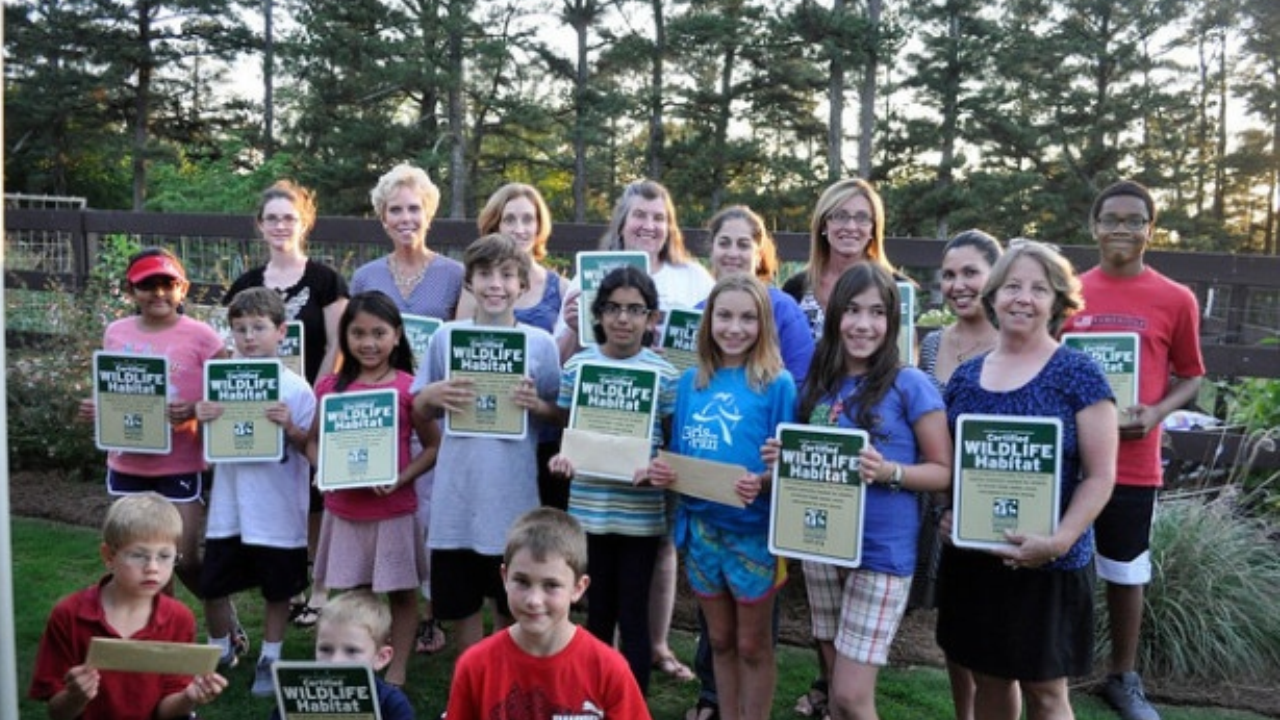
A local high school student looked at that exact suburban pattern and decided to reverse it. By organizing residents, schools, and local officials around the National Wildlife Federation's Community Wildlife Habitat program, this teen-led wildlife effort didn't just plant a few butterfly bushes. It transformed an entire metro-Atlanta suburb into an officially certified habitat model—and built an infrastructure that still endures today.
I've watched plenty of youth environmental projects fizzle out the second the student founder leaves for college. Usually, a teenager builds a single rain garden for an Eagle Scout badge or a college application, snaps a few photos, and moves on. Six months later, the weeds take over. What happened in Johns Creek is completely different because the strategy focused on permanent community-wide certification rather than a one-off volunteer afternoon. Experts at USA Today have shared their thoughts on this matter.
Why Suburban Wildlife Certification Actually Matters
Let's get real about suburban geography. Cities like Johns Creek—located about 25 miles northeast of downtown Atlanta—sit right in the path of rapid metropolitan expansion. When developers clear oak-hickory forests for subdivisions and strip malls, wildlife loses both food sources and migration corridors.
Here's the problem with traditional conservation. We tend to treat nature like a museum. We rope off a state park thirty miles away and assume the animals will figure out how to commute there. They won't. Pollinators, amphibians, and migratory birds need stepping stones right through the middle of our neighborhoods.
That's where the National Wildlife Federation (NWF) Community Wildlife Habitat program comes in. Unlike a single backyard certification, the community-level designation requires a city, town, or neighborhood to earn points across multiple sectors:
- Individual residential yards
- Public parks and municipal properties
- Local schools and places of worship
- Ongoing community education and outreach events
You can't fake your way through the NWF audit. A community has to prove that hundreds of distinct properties provide four non-negotiable elements: native food sources, clean water, protective cover, and places to raise young. Participants also have to commit to sustainable gardening practices, which means cutting back on chemical pesticides and managing stormwater runoff naturally.
When Johns Creek earned its certification through this teen-led push, it joined a select group of Georgia municipalities—alongside places like Roswell, Decatur, and Tybee Island—that treat residential backyards as functioning ecological infrastructure.
How a Student Mobilized an Entire Suburb
Getting a city certified takes serious political and social maneuvering. Honestly, most city councils don't jump at the chance to change landscaping habits unless residents demand it.
The student behind the Johns Creek initiative understood something most adult activists miss: people hate being lectured about what they're doing wrong in their own yards, but they love earning recognition for doing something right.
Instead of shaming neighbors over their manicured Bermuda grass lawns, the effort broke the barrier to entry down to bite-sized steps. Certifying a single yard through the NWF costs a small application fee and takes about fifteen minutes if you already have a few native plants and a birdbath. By framing certification as a badge of neighborhood pride, the project turned conservation into a friendly local movement.
Building Coalition Support Across Johns Creek
A single teenager can't certify hundreds of properties alone. To hit the NWF's strict point thresholds for a city of Johns Creek's population size—over 80,000 residents—the campaign had to scale fast.
The strategy relied on three practical pillars:
- Targeting high-visibility common areas first. Getting local schools, parks, and HOA entrances certified created immediate public examples. When parents saw an official NWF habitat sign outside an elementary school, they asked how to get one for their own front yard.
- Partnering with established local networks. Rather than reinventing the wheel, the effort tapped into existing garden clubs, scouting troops, and environmental science classes at local high schools like Johns Creek High and Chattahoochee High.
- Lowering the knowledge barrier. Most homeowners don't know a native purple coneflower from an invasive butterfly bush (Buddleja davidii). Educational workshops gave residents exact shopping lists tailored to Georgia's Piedmont region.
This wasn't just feel-good PR. Every certified yard represented measurable square footage converted from ecological dead zones into active pollinator corridors.
Why This Certification Endures Years Later
Walk through Johns Creek today and you'll still see the green-and-white Certified Wildlife Habitat signs bolted to fence posts and garden stakes. Why did this stick when so many other municipal green initiatives quietly die?
Institutional handoff.
The fatal flaw of almost every youth-led environmental campaign is founder dependency. When the student graduates, the institutional memory walks out the door with them. In Johns Creek, the certification wasn't tied to one student's personal social media account or a temporary school club. It was anchored into city sustainability frameworks, local HOA boards, and ongoing NWF annual recertification requirements.
To keep NWF Community Wildlife Habitat status active, a city can't just rest on its laurels. The community has to submit annual recertification reports showing continued outreach, new property registrations, and ongoing habitat maintenance. Because the framework was built into local civic groups and municipal park planning from day one, new volunteers and younger students stepped into leadership roles seamlessly as the original organizer moved on.
What Most People Get Wrong About Backyard Habitats
If you're thinking about replicating this model in your own town, you need to avoid the biggest trap in suburban conservation: thinking a wildlife habitat has to look like an overgrown, neglected lot.
That misconception kills more HOA approvals than anything else. Neighbors panic when they hear "rewilding" because they picture waist-high ragweed and snakes on the sidewalk.
In reality, a certified suburban habitat looks intentional. We call it "cues to care." You keep a crisp mowed border along the sidewalk, group native perennials in deliberate drifts, add a clean stone birdbath, and post the certification sign so neighbors know the native milkweed is a choice, not laziness.
In Georgia's Piedmont region, that means swapping out sterile English ivy and Bradford pears for native heavyweights that actually feed local wildlife:
- Oak trees (Quercus species): A single native oak supports over 500 species of caterpillars, which are the primary protein source for baby songbirds.
- Eastern redbud and flowering dogwood: Native understory trees that provide early spring nectar and fall berries.
- Swamp milkweed (Asclepias incarnata) and butterfly weed (Asclepias tuberosa): Essential host plants for monarch butterflies without the aggressive spread of common milkweed.
- Purple coneflower (Echinacea purpurea) and black-eyed Susan (Rudbeckia hirta): Drought-tolerant perennials that feed bees in summer and goldfinches in winter.
How to Launch a Similar Effort in Your Town
You don't need a massive municipal budget or a biology degree to replicate what happened in Johns Creek. Whether you're a student looking to make a real mark on your city or a homeowner tired of sterile suburbs, the blueprint is straightforward.
Start with your own property. Walk outside and audit what you actually have right now. Do you have at least three native plant species providing food? Is there a reliable water source, even a shallow saucer filled with pebbles and water for bees? Do you have dense shrubs, brush piles, or mature trees for cover? Once your yard meets the baseline, register it through the National Wildlife Federation's Garden for Wildlife portal.
Next, check if your city or county is already registered as a Community Wildlife Habitat. The NWF maintains a public directory of participating communities across all 50 states. If your town isn't on the list, you can register as a community leader and form a small steering committee of three to five neighbors, teachers, or local master gardeners.
Pitch a pilot project to your local school district or neighborhood HOA. Schools love certified habitats because they double as outdoor science classrooms that meet state STEM standards without costing the district thousands of dollars.
Get the first ten yards certified on your street, put the signs up where walkers can see them, and let neighborhood curiosity do the heavy lifting for you.