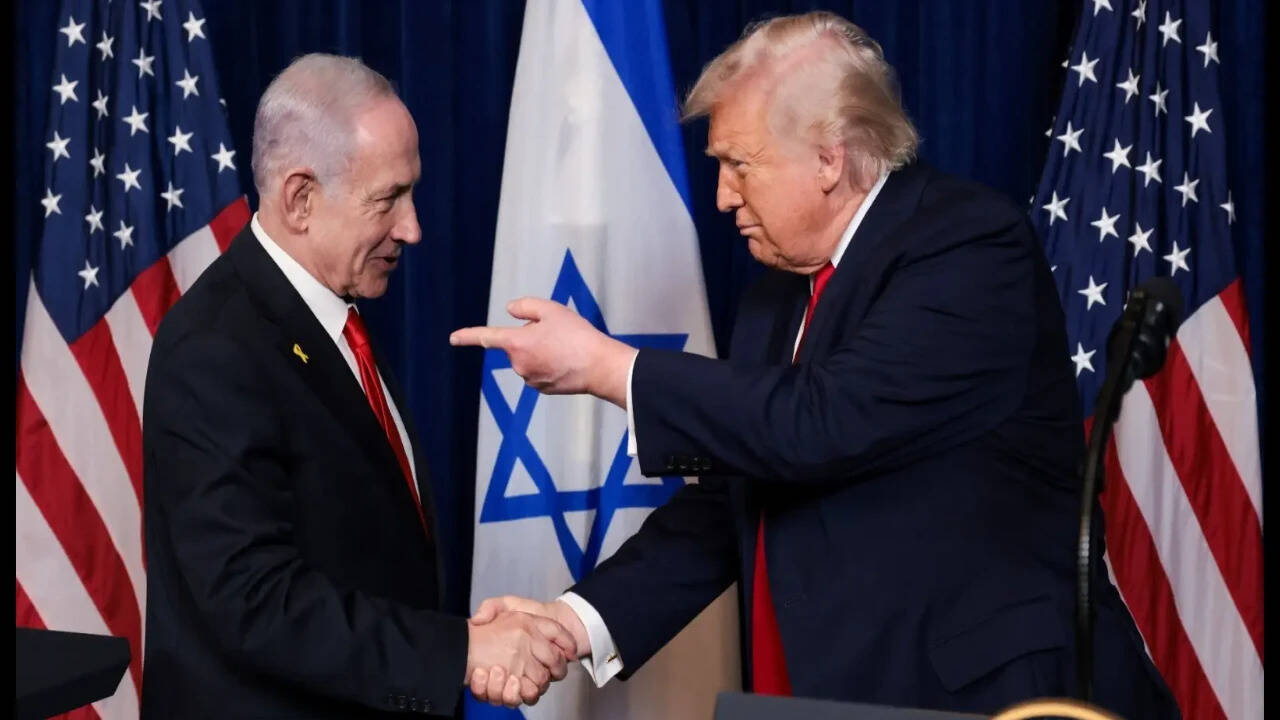
Rumors fly fast in Washington. When headlines claim Donald Trump slashed $3.8 billion in Israeli military aid, people lose their minds on social media within minutes.
Stop and look at the actual numbers. You might also find this similar article useful: Why Josef Fritzl Will Almost Certainly Die Behind Bars.
As of late 2026, no executed executive order or signed law has erased the foundational $3.8 billion annual security assistance package between the United States and Israel. That figure isn't just a random slush fund sitting on the Resolute Desk waiting for a Sharpie. It's the backbone of a decade-long Memorandum of Understanding (MOU) signed back in 2016 under the Obama administration, covering fiscal years 2019 through 2028.
Yet the panic persists. Why? Because viral headlines mash together real policy friction, budget delays, and isolationist campaign rhetoric into one giant, misleading snowball. If you want to understand what's actually happening with U.S. defense dollars in the Middle East right now, you have to separate viral noise from how Congressional appropriations actually work. As reported in recent coverage by Al Jazeera, the results are notable.
How the $3.8 Billion MOU Actually Works
Most commentators talk about foreign aid like it's pallets of cash loaded onto cargo planes. It isn't.
Under the current 10-year Memorandum of Understanding—totaling $38 billion over a decade—the U.S. commits to providing $3.3 billion annually in Foreign Military Financing (FMF) and another $500 million for cooperative missile defense programs like Iron Dome, David's Sling, and Arrow.
Here is the catch nobody mentions at dinner parties. Almost every single penny of that FMF money stays right here in the United States.
By the terms of the 2016 agreement, Israel was required to phase out its ability to spend FMF funds on its own domestic defense industry. Today, those dollars function essentially as a massive gift card redeemable exclusively at American defense contractors. Lockheed Martin, RTX (formerly Raytheon), Boeing, and General Dynamics build the jets, interceptors, and precision munitions in factories across Texas, Arizona, and California.
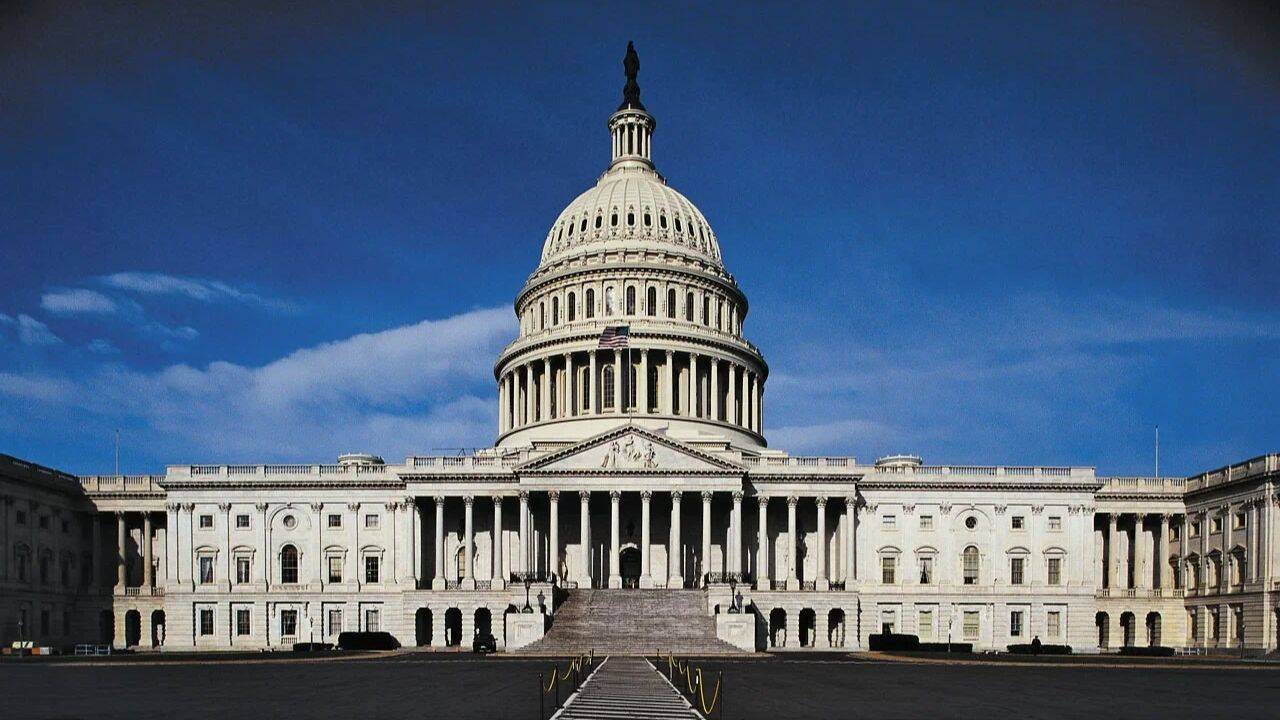
When someone claims a president "cut" the $3.8 billion package, they're ignoring a massive legal reality. An MOU isn't a treaty, sure, so it isn't legally binding in the strictest constitutional sense. Still, Congress appropriates those funds every single year through the Department of State, Foreign Operations, and Related Programs (SFOPS) bill. A president cannot simply wake up, wave a hand, and cancel money Congress has already mandated by statute without triggering a massive constitutional showdown over the Impoundment Control Act of 1974.
Why Rumors of Trump Slashing Israeli Security Assistance Keep Spreading
So where does the smoke come from? Nobody invents a $3.8 billion number out of thin air.
There are three real friction points fueling these viral claims, and understanding them makes you smarter than 99% of the pundits yelling on cable news.
First, look at the "America First" fiscal hawks inside the Republican coalition. Over the past two years, a vocal wing of populist conservatives—echoing voices like Senator Rand Paul and several House Freedom Caucus members—has openly questioned unconditional foreign military aid across the board. While their primary target was Ukraine, their broad skepticism of overseas spending naturally raised questions about whether Israel should eventually transition from grant aid to standard commercial sales. Donald Trump himself has historically floated the idea that wealthy allies should pay more for their own defense, even while boasting about moving the U.S. embassy to Jerusalem and recognizing Israeli sovereignty over the Golan Heights during his first term.
Second, people constantly confuse supplemental emergency packages with the baseline $3.8 billion MOU. Following the October 7, 2023 attacks, Congress passed massive supplemental appropriations—most notably the $14.1 billion Israel Security Supplemental Appropriations Act in April 2024. Those were one-off emergency injections, not permanent increases to the annual baseline. When emergency supplemental funding expires or isn't renewed in subsequent budget cycles, sloppy headlines frame the return to baseline spending as a "massive cut."
Third, arms delivery holds happen behind closed doors. Even when Congress approves the money, the executive branch controls the speed of Foreign Military Sales (FMS) notifications and export licenses. Both the Biden administration (which famously paused a shipment of 2,000-pound bombs in May 2024) and subsequent executive teams have used administrative slow-walks as diplomatic leverage. To an outside observer, a delayed shipment of Joint Direct Attack Munitions (JDAMs) looks identical to a budget cut, even though the underlying $3.8 billion appropriation remains untouched on paper.
The Real Stakes Behind the 2028 MOU Negotiations
If you want to watch the real battle over Israeli military aid, stop looking at fake breaking-news tweets about today's budget and start watching the quiet groundwork for 2028.
The current 10-year MOU expires at the end of Fiscal Year 2028. Negotiations for the next decade-long agreement—which will cover 2029 through 2038—normally begin roughly two to three years before expiration. That means Washington and Jerusalem are entering the exact window right now where officials hammer out the next decade of defense architecture.
And the political terrain has shifted dramatically since 2016.
In 2016, bipartisan consensus in Washington on Israel's Qualitative Military Edge (QME)—a legal requirement enshrined in U.S. law since 2008—was practically unshakeable. Today, pressure comes from two entirely different directions. On the progressive left, lawmakers routinely introduce Joint Resolutions of Disapproval (JRDs) to block specific offensive weapons transfers, citing humanitarian concerns and civilian casualties in Gaza and Lebanon. On the populist right, transactional nationalism demands clear, measurable returns for American taxpayers rather than open-ended security guarantees.
Israeli defense planners know this. Honestly, senior officials in Tel Aviv have already publicly discussed weaning Israel off the FMF grant portion of the package over the next decade while keeping joint research and development—like missile defense and directed-energy laser systems such as Iron Beam—intact. Why? Because taking $3.3 billion in grant money comes with strings attached, including restrictions on Israeli defense exports to third-party countries and strict end-use monitoring under the Leahy Law. Trading grant money for pure commercial partnerships gives Jerusalem more strategic autonomy while letting Washington claim it saved taxpayers billions.
How to Verify Foreign Aid Claims Before Sharing Them
Misinformation around defense budgets thrives because federal accounting is deliberately dense. Next time you see a viral post claiming billions in military aid vanished overnight, run it through three quick checks before you hit share.
- Check Congress.gov for enacted SFOPS bills. Proposed cuts in a White House budget request or a single lawmaker's amendment mean nothing until both chambers pass the appropriations bill and the president signs it. Search the exact bill text for "Foreign Military Financing Program" and "Israel" to see the real statutory floor.
- Separate FMF grants from FMS cash sales. Foreign Military Financing is taxpayer-funded grant money. Foreign Military Sales (FMS) is when a foreign country uses its own money to buy American weapons through the Pentagon. Media outlets routinely blur these two together, making weapons purchases look like free giveaways or making delayed sales look like budget cuts.
- Look at the Defense Security Cooperation Agency (DSCA) major arms sales feed. Every time the State Department approves a major weapons transfer above specific dollar thresholds, the DSCA publishes an official public notice on its website. If a major deal is actually canceled or drastically altered, you'll see the paper trail there first—not on an anonymous aggregator account.
Keep your eye on the official Congressional appropriations calendar and the upcoming 2029–2038 MOU framework talks, because that's where the actual future of U.S.-Israel defense funding is being decided.