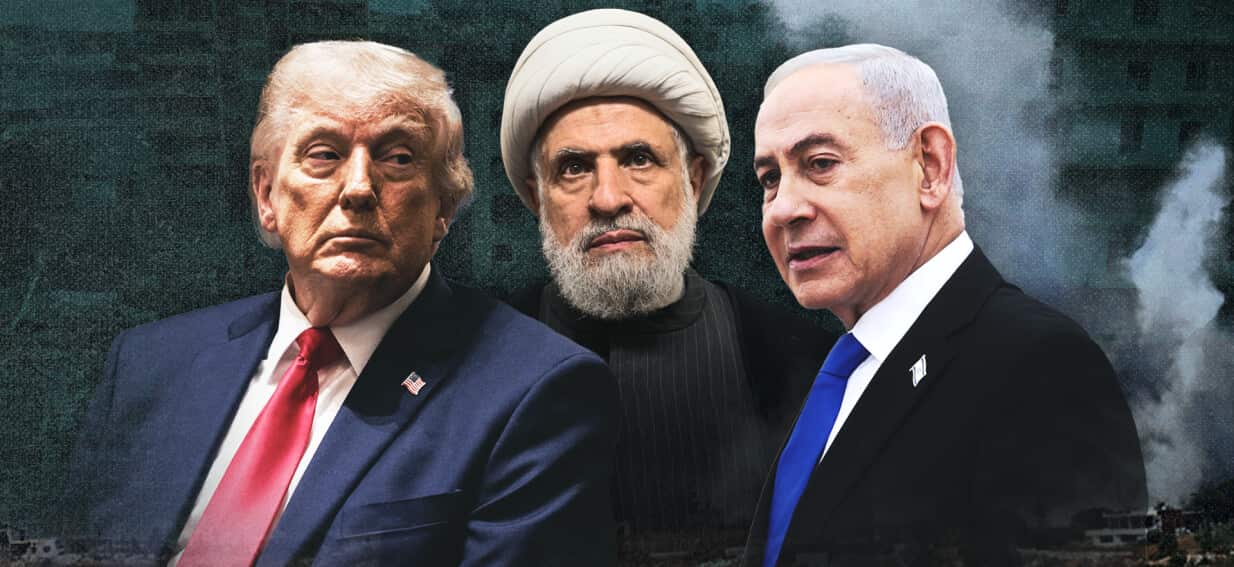
Donald Trump just bypassed decades of American diplomatic protocol with a single series of phone calls. By communicating directly with Hezbollah through highly placed representatives, the White House didn't just shock the foreign policy establishment. It fundamentally altered the trajectory of the Middle East conflict.
If you're reading the mainstream headlines, you're likely seeing a lot of chatter about an unprecedented diplomatic breakthrough. But the reality on the ground is far messier, more dangerous, and highly transactional.
This isn't a traditional peace treaty. It's high-stakes crisis management masked as a masterstroke. Understanding what really happened behind closed doors explains why this fragile truce could collapse before the ink even dries.
The Midnight Backchannel That Flipped the Script
Hours before Trump took to Truth Social to announce the breakthrough, Beirut was bracing for devastation. Prime Minister Benjamin Netanyahu and Israeli Defense Minister Israel Katz had already authorized massive, imminent airstrikes on Beirut's southern suburbs, known as Dahiyeh. Israeli troops were physically advancing toward the Lebanese capital in what was shaping up to be the deepest military incursion in a quarter-century.
Then Trump stepped in.
Reports indicate that Trump completely steamrolled Netanyahu during a heated phone conversation, demanding an immediate halt to the escalation. According to leaked details of the exchange, the American president expressed fury that Israel's military operations were on the verge of sabotaging a much larger diplomatic prize: Washington's ongoing regional talks with Iran.
Immediately after dropping the hammer on Jerusalem, Trump's team activated a backchannel to Hezbollah. Lebanese Parliament Speaker Nabih Berri acted as the critical intermediary, relaying messages between Washington and the militant group's leadership.
The result of this rapid-fire diplomacy was a dual declaration. Trump announced that Israeli troops heading toward Beirut had been turned back. In return, Hezbollah agreed to halt all rocket and missile fire into northern Israel.
The Core Defect in the Truce
The fundamental flaw in this agreement is that both sides left the table with entirely different interpretations of what they actually promised.
Hezbollah, through Nabih Berri's aides, signaled a willingness to accept a comprehensive ceasefire. Crucially, they didn't even demand an immediate, full withdrawal of Israeli forces from the massive buffer zone Israel currently occupies in southern Lebanon. For a group that prides itself on relentless resistance, that looked like a major concession.
But Netanyahu's government immediately drew a line in the sand. Within two hours of Trump's triumphant social media posts, Netanyahu issued a stark public correction. He explicitly warned that if Hezbollah launches a single projectile at Israeli towns, the IDF will immediately strike terror targets in Beirut. Furthermore, the Israeli military confirmed that operations in southern Lebanon will continue exactly as planned.
Look at the structural mismatch here. Trump negotiated a stop to the shooting, but he didn't resolve the underlying friction points.
- Israel insists on its right to operate south of the Litani River to enforce a buffer zone.
- Hezbollah views any continued Israeli presence on Lebanese soil as an active occupation that justifies armed resistance.
- Israel views any movement of Hezbollah personnel back into the south as a violation that triggers airstrikes.
It's a textbook recipe for a hair-trigger escalation. In fact, just moments after Trump declared that all shooting would stop, air sirens wailed in northern Israel as intercepted projectiles crossed the border.
The Invisible Hand of the US Iran Negotiations
To truly understand why Trump took the unprecedented step of negotiating with a designated terrorist organization, you have to look beyond the borders of Lebanon. The real driving force here is Iran.
Tehran has been engaged in intense, rapid-pace negotiations with the Trump administration regarding a broader regional framework, nuclear constraints, and potential sanctions relief. However, the Iranian political leadership recently threatened to walk away from the table completely. Their condition for staying? An immediate end to Israeli operations in Lebanon.
Trump initially brushed off the threat, telling reporters that he didn't care if the Iran talks collapsed and that going silent would be good. But behind the scenes, his actions told a completely different story.
The White House realized that the entire regional diplomatic architecture was tied to the fate of Beirut. If Israel leveled Dahiyeh, Iran would be forced by its domestic hardliners to abandon negotiations and escalate the proxy war. By forcing Netanyahu to turn his troops around, Trump preserved his shot at a historic grand bargain with Tehran.
Real Steps for Verifying Regional Stability
Don't rely on political press releases to tell you if this truce is working. If you want to know whether the region is actually moving toward stability or sliding toward a multi-front war, monitor these concrete indicators over the next 48 hours.
First, track the flight paths and target profiles in southern Lebanon. If the IDF continues striking logistics hubs near Tyre and Nabatiyeh, watch how Hezbollah responds. If Hezbollah limits its retaliation to tactical engagements with IDF troops inside the buffer zone, the backchannel is holding. If they fire deep into Haifa or Tel Aviv, the deal is dead.
Second, observe the internal political theater in Tehran. Watch for whether the Iranian government officially sends its negotiators back to active sessions with US officials. Continued silence or formal walkouts from Iranian diplomats mean Trump's backchannel maneuver failed to satisfy the regime.
Third, look at the displacement patterns in Beirut. Thousands of residents fled Dahiyeh following the initial Israeli evacuation warnings. Watch whether these families begin returning to the suburbs or if they remain displaced. The civilian population usually has the best reading on whether a ceasefire is real or just a temporary pause before the bombs start falling again.