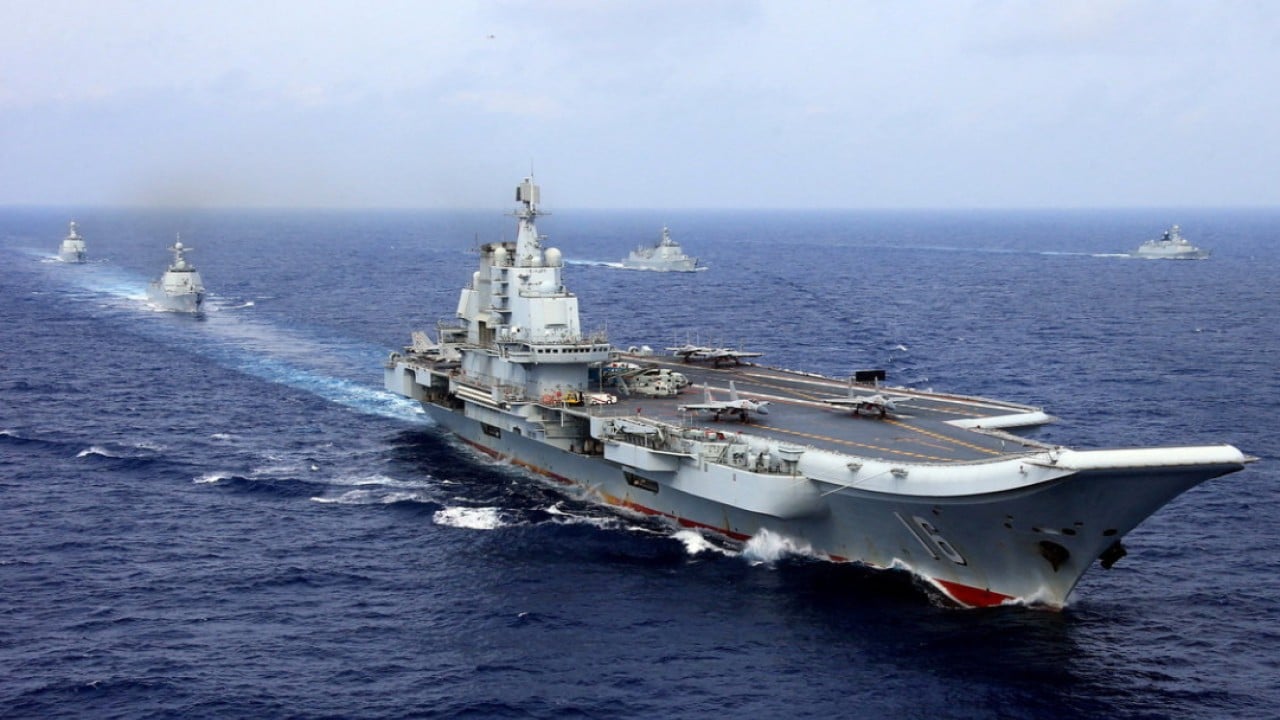
More than 100 Chinese naval and coastguard ships didn't just show up in the Western Pacific by accident in early November 2026. Neither did the 49 People's Liberation Army aircraft sorties that Taiwan's Ministry of National Defense tracked in a single 24-hour window—the highest single-day total recorded all year. Most headlines treated the surge like another loud, routine tantrum from Beijing. That's a massive misreading of what actually happened on the water.
When you look past the raw ship counts, the real story isn't the noise. It's the silence.
Unlike past major drills—think Joint Sword-2024A or Joint Sword-2024B—Beijing didn't give this November mobilisation a flashy codename, didn't release propagandistic graphics, and didn't issue formal warning zones ahead of time. According to analysis from the Institute for the Study of War, this was a large-scale, multi-theater military operation conducted entirely without a public exercise name. And if you track Indo-Pacific security closely, that "missing codename" approach is far more unsettling than an announced blockade drill.
Why the Missing Codename Changes Everything
Let's be honest about how military signaling usually works in the Taiwan Strait. Normally, Beijing wants the theatrical publicity. State media blasts out animations of missiles raining down on Taipei, spokespeople issue stern warnings, and the whole thing functions as political theater aimed at Washington and domestic audiences.
This time, the PLA skipped the theater and practiced the real thing.
When Taiwan's National Security Council Secretary-General Wu Chao-hsieh flagged over 100 People's Liberation Army Navy and China Coast Guard vessels operating across the Western Pacific on November 3, defense analysts immediately noticed an unusual operational signature. Major surface forces from all three of China's coastal theater commands—Northern, Eastern, and Southern—were participating in far-seas operations simultaneously. Pulling hulls from three separate regional commands at once doesn't happen on a whim. It takes months of logistics, fuel planning, and command-and-control synchronization.
By refusing to label the mobilisation as an official exercise, Beijing blurred the line between routine peacetime presence and active combat staging. Think about what that does to early warning systems in Taipei, Tokyo, and Washington. If the PLA can surge 100-plus ships and dozens of warplanes into encircling positions without flipping a public switch, intelligence officers lose the predictable "ramp-up" indicators they rely on to tell a drill apart from an actual invasion or quarantine.
Two Aircraft Carriers Operating at Once
You can't talk about this spike in Chinese naval mobilisation without looking at the carriers. In early November, both the Liaoning and the Fujian were active at sea at the same time.
The Liaoning strike group pushed deep into the distant Western Pacific, transiting key chokepoints including the Miyako Strait near Japan and the Basilan Strait in the southern Philippines. Meanwhile, the Fujian—China's newest, catapult-equipped supercarrier that entered service roughly a year ago—completed cross-sea-area test training, proving it can sustain operations well beyond coastal waters.
Here's why that dual-carrier presence matters so much:
- Outer-ring denial: Positioning carrier strike groups in the Philippine Sea isn't about bombarding Taiwan's west coast. It's about building an eastward wall to block U.S. Navy reinforcements—like the USS Theodore Roosevelt carrier group, which has been transiting the region following the Keen Sword 27 exercises—from reaching the fight.
- 360-degree pressure: Historically, Taiwan's military treated its rugged east coast and deep-water ports like Hualien and Suao as a relatively safe strategic rear. Carrier groups operating east of the island wipe out that sanctuary.
- Coast guard integration: Blending white-hulled China Coast Guard cutters with gray-hulled PLA Navy destroyers creates a legal headache. If Beijing decides to enforce a customs quarantine rather than a shooting blockade, coast guard ships take the lead while warships sit right behind them.
It's worth noting one caveat here. While Wu Chao-hsieh publicly cited the figure of more than 100 Chinese vessels across the Western Pacific, independent open-source trackers couldn't verify every single hull in real time due to vast ocean distances and commercial satellite coverage gaps. Even if the exact count fluctuated day to day, the geographic spread—stretching from the East China Sea through the Miyako Strait and down into the South China Sea—confirmed this was the widest maritime footprint Beijing had put on the board all year.
Breaking Down the Spike in Air Sorties
At the exact same moment those ships were fanning out across the First Island Chain, air activity around Taiwan hit a 2026 peak.
In the 24-hour period ending at 6 a.m. on Tuesday, November 3, Taiwan's Ministry of National Defense recorded 49 PLA aircraft sorties around the island. Of those 49 flights, 31 crossed the sensitive median line of the Taiwan Strait or entered Taiwan's southwestern, eastern, and southeastern Air Defense Identification Zone. Alongside the warplanes, Taiwan tracked six PLA Navy vessels and six official government ships operating immediately around its perimeter.
To put 49 sorties in perspective, daily numbers throughout much of 2026 often hovered in the single digits or low teens—for example, just two aircraft and seven ships were logged during a quieter 24-hour window later in November. Jumping to 49 in a single day wasn't random harassment.
When you map those 31 ADIZ intrusions against the ship positions, a clear pattern emerges. The aircraft weren't just flying straight lines across the median line and turning back. Fighters, bombers, and reconnaissance drones were linking up with the Liaoning carrier group in the Philippine Sea and testing joint air-sea targeting loops. Every time Taiwan scrambles its F-16s or activates coastal radar batteries in response, PLA electronic warfare aircraft soak up the data. As U.S. defense analysts have pointed out, these encounters let Beijing measure Taiwan's reaction timelines, see which airbases launch first, and spot any changes in defensive posture.
The Geopolitical Trigger Behind the Surge
Why early November? Military deployments on this scale don't happen in a vacuum.
Right before Beijing surged its fleet, the U.S., Japan, and South Korea issued fresh joint statements backing stability in the Taiwan Strait following the large-scale Keen Sword 27 bilateral drills. At the same time, QUAD navies—the United States, Japan, India, and Australia—were kicking off Exercise Malabar across the First Island Chain.
From Beijing's perspective, allied military coordination around its periphery was tightening fast. Rather than just complaining at a Ministry of Foreign Affairs press briefing, China answered with physical mass. Putting 100-plus ships in the water and sending 49 warplanes around Taiwan was Beijing's way of saying that allied exercises won't deter Chinese power projection—and that the PLA can dominate the maritime space between Taiwan and the Second Island Chain whenever it chooses.
There's also a slower, grinding attritional logic at work here. Defense thinkers call it gray-zone coercion—using persistent, sub-war military pressure to exhaust an opponent's readiness and normalize an abnormal reality. Every major surge forces Taiwan's Air Force and Navy to burn fuel, rack up airframe flight hours, and keep crews on high alert. Over months and years, that wear and tear eats into maintenance budgets and pilot endurance without China firing a single live round.
What Observers Should Actually Watch For Next
If you're following cross-strait security—whether for policy research, supply chain risk management, or market analysis—don't get hypnotized by single-day sortie headlines alone. A spike to 49 aircraft grabs news alerts, and it even nudged semiconductor and defense stocks like TSMC, RTX, and Lockheed Martin slightly on November 4, yet daily numbers always bounce up and down.
Instead, track the structural shifts underneath the daily tracker:
- Multi-command synchronization: Watch whether ships from the Northern, Eastern, and Southern Theater Commands keep operating together outside announced drills. Cross-command integration is the single best indicator of genuine warfighting readiness.
- Carrier tempo in the Philippine Sea: Pay close attention to how often the Fujian joins the Liaoning and Shandong beyond the First Island Chain. Once China regularly rotates two carrier groups east of Taiwan, the military balance in the Western Pacific shifts permanently.
- Coast guard encirclement patterns: Look at the ratio of China Coast Guard vessels to gray-hull warships around Taiwan's outlying islands and shipping lanes. A growing coast guard footprint points toward quarantine rehearsals rather than amphibious assault prep.
- Unannounced "no-codename" surges: Treat silent mobilisations far more seriously than loud, named exercises. When Beijing stops advertising its drills, the warning window for everyone else shrinks dramatically.
Bookmark Taiwan's Ministry of National Defense daily English-language tracker alongside independent open-source intelligence feeds like the Institute for the Study of War's weekly China-Taiwan updates. Reading the raw flight paths and hull counts together—rather than reacting to sensationalized headlines—is the only reliable way to tell political noise apart from real operational escalation.
For a quick visual breakdown of how China's 100-ship deployment overlapped with allied naval drills across the First Island Chain, watch Taiwan Flags Massive Chinese Naval Surge as QUAD Navies Begin Exercise Malabar, which summarizes the early November maritime standoff.