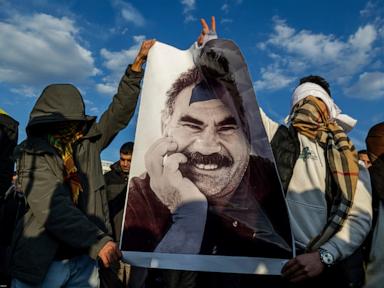
Moving a prisoner from one wing of a facility to another rarely makes international headlines. Yet when Turkish authorities relocated Abdullah Ocalan, the imprisoned founder of the Kurdistan Workers' Party (PKK), to a newly built section of the Imrali island prison, diplomatic cables across Washington, Brussels, and Ankara lit up immediately.
Why? Because in Turkish politics, physical space equals political leverage. Discover more on a connected issue: this related article.
For decades, the four-decade conflict between the Turkish state and the PKK has claimed over 40,000 lives, destabilized southeastern Turkey, and spilled across borders into northern Iraq and Syria. When Ankara alters the conditions of the man who still commands immense ideological loyalty among millions of Kurds, it isn't just an administrative shuffle. It's a calculated signal tied directly to backchannel negotiations and a fragile peace push.
Most coverage treats this relocation like a minor prison update. That's a mistake. If you want to understand where Middle Eastern geopolitics and Turkey's domestic stability are heading, you have to look at what this move actually changes on the ground—and what it doesn't. More journalism by NBC News delves into related views on the subject.
The Reality of Imrali Island and Why Isolation Mattered
Imrali isn't a normal penitentiary. Located in the Sea of Marmara, south of Istanbul, the entire island is a restricted military zone. Since Ocalan's capture in Nairobi, Kenya, in 1999, he has spent almost his entire sentence there, frequently as the sole inmate or alongside a tiny handful of other PKK prisoners transferred specifically to keep him company.
For years, Turkish officials used strict isolation—known locally as tecrit—as a political barometer. Whenever peace talks warmed up, lawyers and family members got ferry access to the island. Whenever violence flared in Diyarbakir or Ankara, the ferries stopped running, sometimes for years at a time.
Moving Ocalan into a different section of the Imrali complex breaks a long-standing stalemate. Building or renovating a new wing isn't something the Turkish Ministry of Justice does on a whim. It requires budget approvals, security clearances, and direct sign-off from the highest levels of President Recep Tayyip Erdogan's administration.
Here is what the relocation practically achieves for Ankara:
- Controlled communication channels. A redesigned living and meeting area allows state intelligence officials—specifically Turkey's National Intelligence Organization (MIT)—to host structured meetings without exposing sensitive logistics to the older, more rigid maximum-security wing.
- Plausible deniability. The government can tell nationalist voters that Ocalan remains locked away on an island fortress, while simultaneously showing Kurdish political actors that his conditions are improving.
- Physical separation from hardliners. Grouping or separating specific inmates on the island lets Ankara manage which messages leave Imrali and which ones stay trapped behind concrete walls.
Why Ankara Is Pushing for a Deal Now
You can't separate this prison transfer from the broader regional chess match. Turkey isn't acting out of sudden humanitarian concern. Geopolitical pressure is forcing Ankara's hand.
Look at the map. The Syrian civil war reshaped the Kurdish question permanently. In northeastern Syria, the Syrian Democratic Forces (SDF)—led by the People's Protection Units (YPG), which Ankara views as an indistinguishable offshoot of the PKK—control vast territory and enjoy backing from the United States military. For years, Turkey has launched cross-border operations to push those forces back from its southern border, straining relations with NATO allies to the breaking point.
At home, the economic math is brutal. Fighting an entrenched insurgency drains billions of dollars from a Turkish treasury already battling persistent inflation and currency pressure. President Erdogan and his nationalist ally, Devlet Bahceli of the Nationalist Movement Party (MHP), recognize that a lingering internal conflict leaves Turkey vulnerable as regional rivalries escalate between Israel, Iran, and major global powers.
Bahceli himself shocked the political establishment when he publicly floated the idea of allowing Ocalan to address parliament if he formally declared the end of the PKK's armed struggle. In Turkish politics, that's the equivalent of a seismic shift. Moving Ocalan to a new part of Imrali is the physical manifestation of that political trial balloon.
What Critics and Skeptics Get Wrong
If you talk to analysts in Istanbul or Washington, you'll hear two extreme reactions to this news. Both miss the mark.
The first group claims this proves a comprehensive peace treaty is around the corner. They point to the 2013–2015 "Solution Process," when MIT officials regularly visited Imrali, Ocalan's letters were read aloud to hundreds of thousands of people during Newroz celebrations in Diyarbakir, and a temporary ceasefire held across southeastern Turkey.
Those optimists forget how badly that process collapsed in the summer of 2015. Urban warfare erupted in Kurdish-majority cities like Cizre and Sur, devastating historic neighborhoods and resetting the conflict for a decade. Moving Ocalan into a better room does not erase the deep distrust between Ankara and the PKK's military leadership based in the Qandil Mountains of northern Iraq.
The second group dismisses the move entirely as a cynical election stunt designed to split the Turkish opposition. While Erdogan certainly benefits whenever the pro-Kurdish Peoples' Equality and Democracy Party (DEM Party) distances itself from the main opposition Republican People's Party (CHP), reducing everything to ballot-box arithmetic ignores the real security threats Turkey faces along its borders. Ankara genuinely wants the PKK off the battlefield so it can focus its military and diplomatic weight elsewhere.
The Power Struggle Inside the Kurdish Movement
One detail outside observers constantly overlook is that the Kurdish movement isn't a monolith. There are distinct power centers, and they don't always agree.
First, you have Ocalan himself on Imrali. Despite more than two decades behind bars, he remains the undisputed ideological figurehead. No major shift in strategy can happen without his stamp of approval.
Second, you have the Qandil leadership. Commanders in the mountains of northern Iraq run day-to-day militant operations. They have spent decades fighting in rugged terrain and are deeply skeptical of Turkish promises. In the past, Qandil leaders have subtly stalled or reinterpreted Ocalan's calls for disarmament when they felt Ankara wasn't offering concrete legal protections in return.
Third, there is the legal political wing in Turkey, represented by the DEM Party and imprisoned former leaders like Selahattin Demirtas. They operate within Turkey's constitutional framework, win municipalities across the southeast, and push for democratic reforms, mother-tongue education, and local governance.
Fourth, you have the Rojava administration in northern Syria. Leaders there must balance their historical ties to Ocalan's ideology with the pragmatic reality of managing territory, negotiating with Damascus, and coordinating with American commanders.
When Turkey moves Ocalan to a new section of Imrali, Ankara is betting that Ocalan still holds enough authority to bring Qandil and the broader movement into line. It's a high-stakes gamble. If Ocalan issues a call to lay down arms and the commanders in Iraq refuse, his leverage evaporates overnight—and Turkey loses its most useful negotiating partner.
How Past Prison Shifts Signaled Major Turning Points
History backs up the significance of Imrali's floor plan. This isn't the first time construction on the island preceded major political news.
Back in 2009, Turkey built a new facility on Imrali specifically to transfer five other PKK convicts to the island. Before that, Ocalan had been completely alone for ten years, a situation that drew repeated criticism from the European Committee for the Prevention of Torture (CPT). Shortly after those transfers took place, secret negotiations between Turkish intelligence and PKK representatives—later leaked as the Oslo Talks—got underway.
Something similar happened in early 2013. Renovations to meeting rooms and expanded visitation schedules immediately preceded the historic ceasefire announcement in March of that year.
Pattern recognition matters here. Turkish statecraft relies heavily on incremental, reversible steps. Ankara rarely announces a grand bargain upfront. Instead, it adjusts physical conditions, monitors how Kurdish politicians and militant commanders react, gauges public sentiment in nationalist strongholds like Konya or Trabzon, and decides whether to take the next step or slam the door shut.
What to Watch Next If You Track Regional Politics
Reading headlines about Imrali requires filtering out political noise and focusing on verifiable actions. If you're following Turkish politics, regional security, or energy markets in the Eastern Mediterranean, keep your eyes on three specific indicators over the coming months.
- Consistent lawyer and family visits. A single visit or a room transfer means very little on its own. True momentum shows up when Ocalan's legal team from the Asrin Law Office receives regular, uninterrupted access to the island every few weeks.
- Rhetoric from the Qandil Mountains. Watch statements coming out of northern Iraq. If senior PKK figures begin praising Ocalan's "new framework" or referencing political solutions rather than armed resistance, the backchannel talks are gaining real traction.
- Municipal pressure inside Turkey. Pay attention to how the Turkish Interior Ministry treats elected DEM Party mayors in the southeast. When Ankara is serious about a peace track, trusteeship appointments—where the state removes elected Kurdish mayors and replaces them with government-appointed governors—typically slow down or pause.
Treat every official statement from Ankara with healthy skepticism, track the actual ferry traffic to Imrali rather than political speeches, and remember that in this conflict, where a prisoner sleeps often tells you more than what politicians say at a podium.