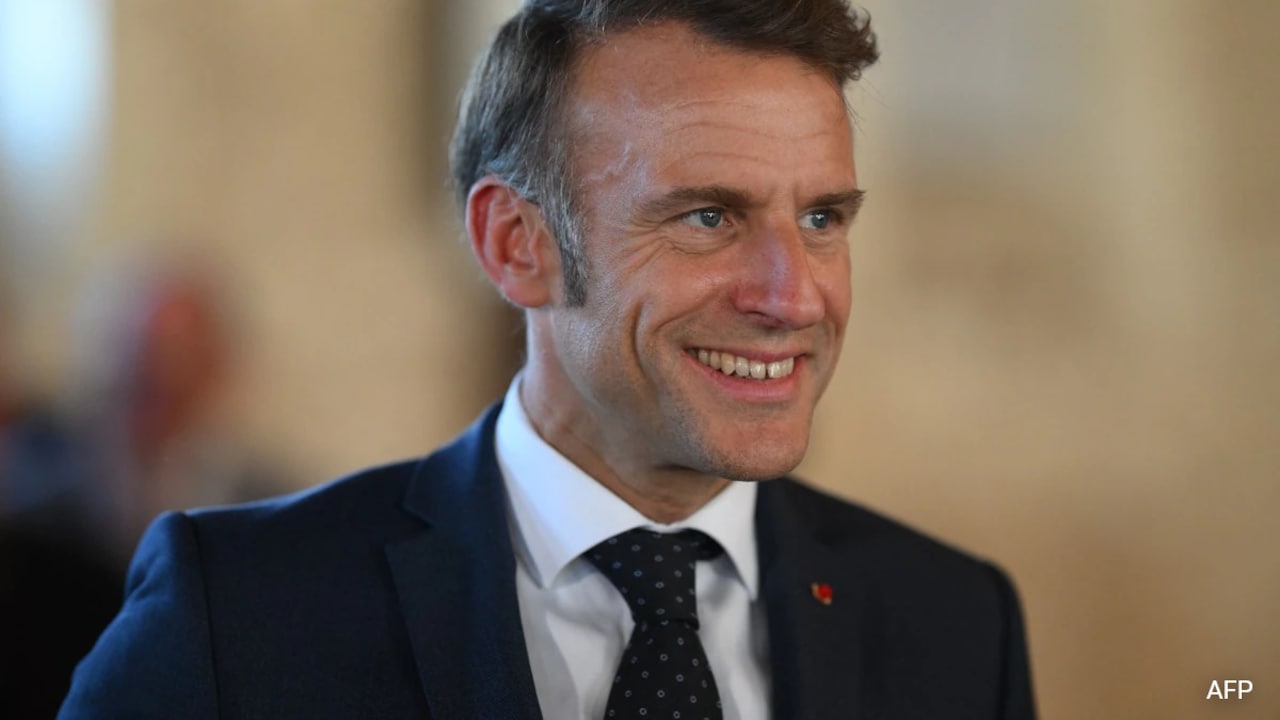
The standard political post-mortem of civil unrest relies on a binary framework: legitimate social grievance on one side, opportunistic criminality on the other. When executive leadership framed recent nationwide demonstrations in France as a sharp line between valid demands regarding living costs and "unbridled violence," it employed a conventional tactic of moral partitioning. This rhetorical dichotomy fails to capture the structural dynamics that govern modern urban friction.
Urban unrest does not emerge spontaneously, nor does it convert cleanly from economic hardship into destruction. It is the product of measurable institutional decay, police escalation dynamics, and localized organizational shifts within civil protest networks. Deconstructing the crisis requires examining three core mechanisms: the failure of institutional absorption, the economics of radicalization, and the tactical feedback loop of state security.
The Three Pillars of Failure in Institutional Absorption
Civil stability relies on the ability of state institutions to process, absorb, and diffuse societal strain before it reaches a tipping point. When inflationary pressure or systemic cost-of-living increases erode household purchasing power, the friction manifests in public spaces. The transition from economic grievance to physical disruption follows three distinct structural breakdowns:
- The Mediation Vacuum: Institutional intermediaries—principally trade unions, local municipal leaders, and civic associations—lose the capacity to act as structured bargaining agents. As decision-making shifts upward toward centralized executive authority, local mediators lose their leverage. The absence of structured avenues for concession forces grievances directly onto the street.
- The Speed Gap of Policy Response: Inflationary shocks occur dynamically and affect daily operational costs immediately. State policy interventions, by contrast, rely on legislative cycles, budget reconciliations, and bureaucracy. This temporal lag creates a prolonged phase of vulnerability where public frustration operates without systemic relief.
- Information Asymmetry in Security Infrastructure: Centralized state apparatuses frequently misread distributed urban movements. Intelligence gathering designed to monitor structured political entities fails when confronted with fluid, affinity-based activist cells. The failure to anticipate localized tactics leads to over-policing peaceful gathers or under-protecting critical infrastructure.
The Microeconomics of Escalation and Black-Bloc Dynamics
Executive rhetoric treats urban destruction as an irrational external anomaly. From a structural perspective, however, fringe escalation operates under a defined incentive structure.
When broad-based peaceful demonstrations gather density, they lower the operational friction for tactical, highly mobile fringe groups. The presence of non-violent crowds provides cover, dilutes security targeting, and complicates the execution of dispersal tactics. This dynamic generates a clear split in incentives:
- Peaceful Demonstrators: Seek long-term policy adjustments, structural reform, or economic concessions from the state. Their strategic asset is numerical volume and moral legitimacy.
- Tactical Friction Cells: Seek immediate physical confrontation, property damage, and high-visibility disruption. Their strategic asset is mobility, tactical camouflage, and the intentional provoking of indiscriminate state force.
When state leadership responds with uniform condemnation or sweeping police enforcement, it inadvertently aligns the experiences of these two distinct groups. Indiscriminate containment tactics—such as tear gas deployment or localized mass kettling—impose real physical costs on peaceful marchers. This creates a shared perception of state hostility, accelerating radicalization across previously moderate segments of the protest base.
The Security Feedback Loop: Force Proportionality and Escalation Triggers
The deployment of state security forces presents a tactical dilemma. A visible, high-density police presence can deter opportunistic property damage, but it also elevates the baseline tension of public space.
The primary cost function of security deployment is governed by force proportionality:
$$\text{Escalation Risk} = f(\text{Deployment Density}, \text{Tactical Discretion}, \text{Crowd Entrapment})$$
When security postures rely heavily on static defense of institutional symbols—such as city halls or administrative centers—they create fixed friction points. Mobile activist cells exploit these static lines by initiating quick, decentralized strikes against commercial property elsewhere, stretching law enforcement thin and triggering reactive force applications.
The systemic consequence of high-volume arrests—such as processing thousands of individuals over a condensed timeframe—is judicial congestion. Rapid judicial processing often fails to establish individual criminal culpability, resulting in low conviction rates relative to total detainment. This outcome undermines the deterrent power of state legal mechanisms and reinforces systemic distrust in institutional justice.
Strategic Realities of Managing Civil Strain
Addressing systemic civil unrest requires abandoning simple moral posturing in favor of operational adjustments that separate legitimate civic expression from tactical violence.
- Re-establish localized mediation channels by granting municipal authorities direct capacity to negotiate regional concessions, stripping national protests of their singular focal point.
- Transition public order management from static defense and indiscriminate crowd control toward targeted, intelligence-led interventions designed to isolate destructive actors without impacting peaceful assemblies.
- Accelerate economic relief mechanisms to shorten the temporal lag between macroeconomic shocks and targeted household stabilization.
Without structural reforms that address the underlying mechanics of urban friction, reliance on executive rhetoric and reactive security deployments will continue to convert economic stress into recurring civil disruption.
This video provides direct visual documentation of executive statements following civil unrest in France, illustrating the state's official rhetoric and policy framing during urban crisis events.
Macron says "nothing justifies" protest violence | RTÉ News
This video is directly relevant as it features official footage of French President Emmanuel Macron delivering his speech addressing the nationwide protest violence.