Cold rain drums against corrugated metal. Somewhere out on the tarmac of RAF Fairford, a jet engine whines with a low, vibrating hum that you feel in your teeth before you hear it in your ears.
Anyone who has ever stood near an active military airfield at dusk knows that sound. It is not just mechanical noise. It is weight. It is history pressing down on flat English pastureland in Gloucestershire, where hedgerows and stone cottages sit barely a stone's throw from one of the longest runways in Western Europe. When a press release lands on a reporter's desk saying that the United States has charged three men allegedly linked to an incident at RAF Fairford, a wire story can make the whole affair feel like a sterile line item on a court docket. Three names. A date. A phrase like "allegedly linked." In similar news, we also covered: The Architecture of the Abu Dhabi Mediations and Asymmetric Diplomatic Mechanics.
Yet a court docket never captures the human friction inside an espionage or base-security case. It rarely shows the late-night car rides along damp country lanes, the quiet calculations of people trying to stay invisible, or the tension experienced by local residents who wake up to roar overhead and wonder what happens when geopolitical rivalries brush against ordinary rural life.
To understand why federal prosecutors in the United States take an airfield security case in rural England so seriously, you have to strip away the legalese and look at what RAF Fairford actually represents. It is not a corner gas station or a quiet municipal park. Built during the Second World War and later used as a Cold War contingency base and forward operating location for long-range bombers, Fairford sits at the crossroads of transatlantic defense planning. When heavy strategic aircraft deploy there, satellite analysts, intelligence agencies, and counterintelligence units pay close attention. Every movement on the perimeter, every photograph taken from a hedge line, every digital trail left behind on an encrypted chat or a burner phone becomes part of a much larger puzzle. NBC News has provided coverage on this fascinating subject in extensive detail.
Why a Quiet English Airfield Draws Global Eyes
Gloucestershire looks peaceful from a train window. Sheep graze in green fields bordered by dry-stone walls, and market towns keep a pace that feels centuries older than a smartphone alert. Still, appearances deceive. Security professionals often compare a forward military airfield to a lighthouse in fog: the structure itself is stationary, and the surrounding coastline may look calm, yet vessels of every kind—commercial, curious, or covert—track its beam from miles away.
(Note: The following vignette is a hypothetical scenario created to illustrate how perimeter surveillance and intelligence gathering unfold in practice around sensitive installations; it does not depict specific charged individuals or verified facts of a particular case.)
Picture a hypothetical surveillance operative named Martin sitting inside a parked hatchback two miles from a perimeter fence at 5:30 a.m. His breath clouds the side window. Damp wool smells sharp in the confined cab. Across two fields, red warning lights blink on a mast while gray mist clings to the concrete apron. Martin is not kicking down gates or cutting razor wire; Hollywood breaches make terrible espionage because they get you arrested before sundown. Instead, he watches patterns. Which gates open first? Which support vehicles arrive before dawn? How long does a tanker stay near a hangar? He logs timestamps on a notepad, snaps a telephoto frame when the mist thins for ninety seconds, and drives away toward the A417 before a patrol car finishes its loop.
That hypothetical scene highlights a truth that surprises people who think espionage only happens in spy novels. Modern intelligence work often looks mundane. It looks like patience, routine, and ordinary people blending into rural traffic. And when American authorities bring charges against individuals allegedly connected to an incident at a facility like RAF Fairford, prosecutors are usually trying to connect those small, seemingly ordinary fragments into a pattern of intent, coordination, or unlawful access.
Having covered security beats and spent hours outside restricted facilities waiting for official briefings, I have seen how quickly rumors outrun verified facts. A strange car parked near a gate becomes a plot in local group chats. A drone buzz over a field becomes a state-sponsored crisis before investigators have even pulled camera footage. That uncertainty is exhausting. You want clean answers—who did what, for whom, and why—yet real investigations move slowly, constrained by classified evidence, international cooperation between British and American authorities, and strict legal thresholds.
The Invisible Stakes Behind Criminal Charges
When news breaks that three men face U.S. charges tied to an incident at RAF Fairford, a natural question arises immediately: why does the United States bring charges over something involving a base in the United Kingdom?
Jurisdiction and shared defense interests explain much of it. Under long-standing alliance arrangements, U.S. personnel, aircraft, and assets operate at RAF Fairford alongside British hosts. An act that threatens military readiness, compromises sensitive operational data, or targets personnel and infrastructure tied to American defense missions can implicate U.S. federal statutes as well as U.K. law. Prosecutors do not file charges lightly in cross-border security matters; building a case across jurisdictions requires months or years of digital forensics, financial tracing, witness interviews, and diplomatic coordination.
Even so, legal filings only tell half the story. The deeper stakes are psychological and strategic.
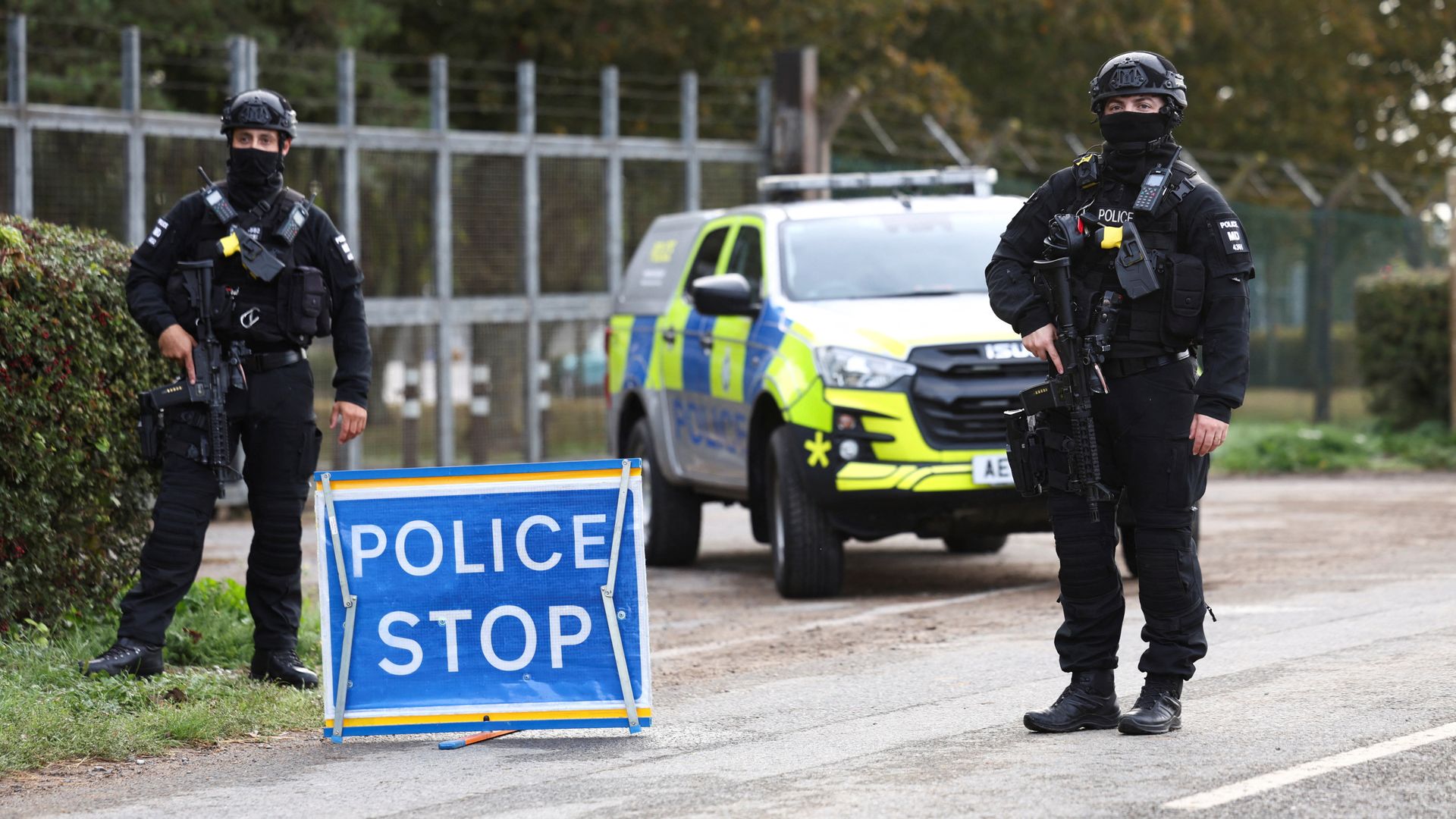
Consider what happens when a base's perimeter or security posture is tested. Even if no physical harm occurs, confidence takes a hit. Guards tighten procedures. Local commuters face extra checks or heightened scrutiny near fence lines. Aircrew and ground crews carry an extra layer of vigilance when walking from billets to the flight line. Security is a fragile equilibrium; it relies on predictability and trust. When something disrupts that predictability, everyone on the base—from the youngest airman loading gear to the senior commander signing off on flight schedules—feels the shift.
There is also the human cost to the people accused and their families. In criminal cases involving alleged security breaches or covert activity, defendants often start out as names in a headline long before a jury weighs a single piece of evidence. Family members in quiet towns or distant cities suddenly find their lives dissected. Neighbors wonder who they really knew. The gap between an allegation in a charging document and proof beyond a reasonable doubt can be wide, and navigating that space is grim work for defense attorneys, prosecutors, and loved ones alike.
What Happens When Everyday Life Meets Geopolitics
History shows that quiet corners of the map rarely stay quiet forever when great-power rivalries sharpen. During the Cold War, protesters and peace campaigners gathered outside RAF Fairford, turning a remote airfield into a symbol of nuclear deterrence and global tension. Decades later, when strategic bombers deploy to the base during crises in Europe or the Middle East, the rumble of departure climbs once again into the Gloucestershire sky.
People who live near such bases often hold complicated feelings. Some take pride in supporting allied defense; others worry about noise, environmental impact, or becoming a target in a conflict far beyond their county borders. When three men are charged in connection with an incident at the facility, those abstract worries suddenly feel personal. Geopolitics stops being a segment on the evening news and shows up down the road.
It is worth admitting how unsettling this territory can be for ordinary readers. Most of us do not work in counterintelligence or military law. Terms like "jurisdiction," "operational security," and "allegedly linked" can feel distant or slippery, leaving you wondering whether an incident was a reckless stunt, an organized scheme, or a misunderstanding caught in a wide legal net. Honesty requires saying so: until court proceedings unfold in full view, gaps in public knowledge remain real. A careful reader holds two thoughts at once—taking potential security risks seriously while remembering that charges are accusations to be tested in court.
What stays with you after reading about an airfield security case is not a list of docket numbers or statutory citations. It is the image of damp English grass stretching up to a steel fence, a guard's flashlight cutting through early-morning fog, and three men whose choices—whatever they prove to be—pulled a quiet corner of the countryside straight into the harsh glare of international law.