The cabbage cost 400 yen.
For anyone who has stood in the fluorescent chill of a Tokyo neighborhood supermarket over the last two years, watching the price of a single head of greens double while wages remained stubbornly, agonizingly flat, that number is not an economic data point. It is an insult. It is the quiet sound of a paycheck evaporating before it even hits the register.
Consider Kenji, a hypothetical forty-two-year-old mid-level logistics manager living in Saitama, just north of Tokyo. Kenji is not a radical. He does not wave flags on street corners, nor does he spend his evenings shouting into the void of social media. He irons his shirts on Sunday nights, apologizes when someone bumps into him on the Saikyo Line, and votes, when he remembers to, out of a sense of civic hygiene rather than hope. Yet, standing in front of that 400-yen cabbage, Kenji feels a cold, unfamiliar knot tightening in his stomach. He looks at the news playing on his phone—another prime minister offering carefully hedged apologies, another committee formed to study the feasibility of addressing inflation, another polite bow—and a thought crosses his mind that would have horrified his parents. He wishes someone would just break the table.
Not burn the house down. Just break the table.
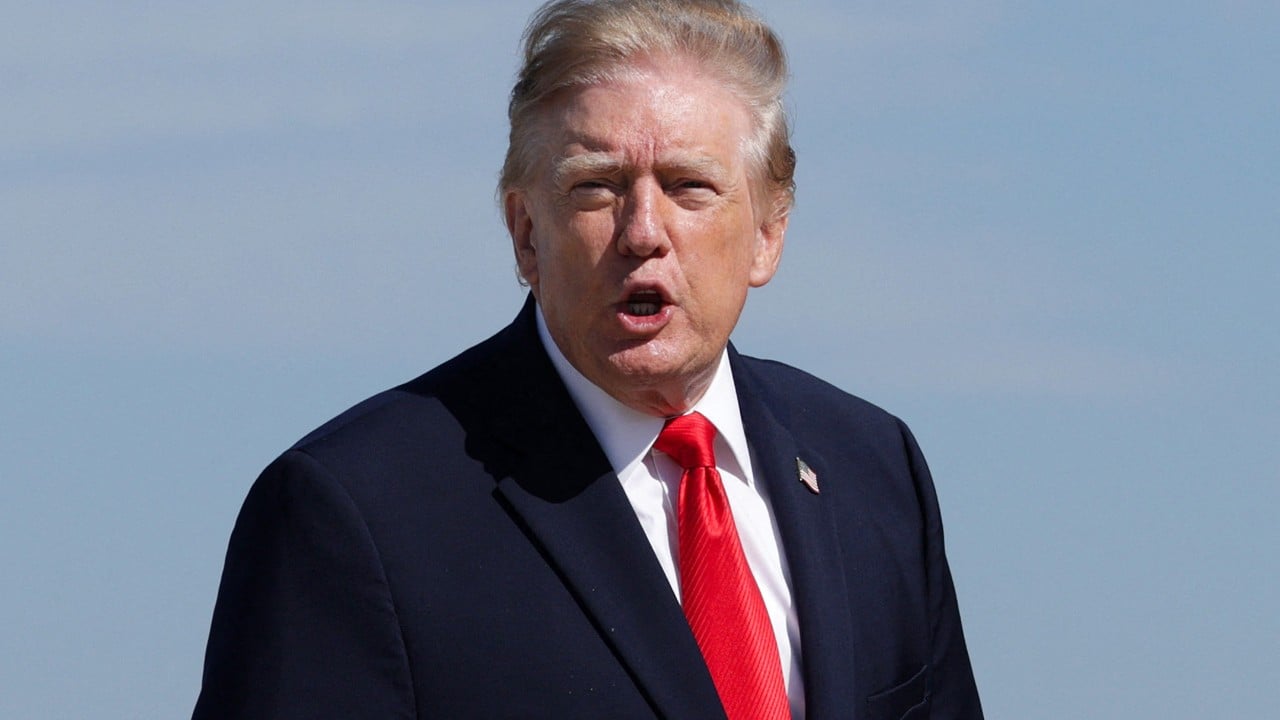
Across Japan, a silent, tectonic shift is altering the psychological bedrock of the world’s fourth-largest economy. For decades, Japanese politics was an exercise in consensus-building, a slow, deliberate choreography where avoiding offense was valued far above achieving results. Today, that choreography looks less like grace and more like paralysis. In conversations from the izakayas of Osaka to the commuter trains of Yokohama, a striking paradox has emerged in polling and public sentiment. Japanese voters are increasingly yearning for a "strong politician" in the mold of Donald Trump—a leader willing to shatter bureaucratic inertia, bulldoze entrenched interests, and deliver immediate, tangible results. Yet, they want that raw political force stripped entirely of Trump’s signature exports—the bombast, the chaos, the narcissistic theater, and the scorched-earth division.
They want the hammer, without the noise.
The Architecture of Polite Paralysis
To understand why a nation famous for social harmony is suddenly fantasizing about a political wrecking ball, you have to feel the weight of the last thirty years. Economists call them the Lost Decades, a sterile phrase that sanitizes what is actually a generational theft of optimism. For an entire cohort of Japanese adults, economic stagnation is not a temporary downturn; it is the weather. It is the only climate they have ever known.
I remember sitting in a cramped coffee shop in Shimbashi a few winters ago, listening to a retired civil servant explain why nothing ever changes in Nagatacho, the district housing Japan's parliament. He compared the Japanese political system to a massive, impeccably engineered luxury sedan whose wheels had sunk up to the axles in wet cement. Inside the cabin, the air conditioning works, the seats are plush, and the drivers are exceptionally polite to one another as they debate the theoretical angle of the steering wheel. Outside, the cement is hardening.
This is the invisible stake of Japan’s current political malaise. When the Liberal Democratic Party (LDP) has governed almost continuously since 1955, power ceases to be a tool for transformation and becomes an apparatus for self-preservation. Scandal after scandal—most notably the slush fund revelations that gutted public trust and pushed cabinet approval ratings below 20 percent—has exposed a ruling class more concerned with internal faction survival than with the shrinking purchasing power of ordinary families.
When voters look across the Pacific at American politics, they do not necessarily admire the American system. In fact, most recoil at the vitriol. The endless culture wars, the questioning of democratic institutions, and the sheer volume of American political discourse feel exhausting and foreign to a society built on wa, or social harmony. Yet, through the static of cable news, Japanese observers see something they desperately miss at home: agency. They see a leader who does not ask permission from a dozen ministry bureaucrats before acting. They see someone who treats political capital like cash meant to be spent, rather than an heirloom to be locked in a vault.
What Voters Actually Mean by Strength
If you ask a voter in Nagoya what they mean by a "strong leader," you will rarely hear a demand for authoritarianism. You will hear a plea for accountability.
Think of the difference between a surgeon and a street brawler. Both use sharp instruments, and both cut into flesh, yet their intentions and their demeanors are worlds apart. In the Japanese imagination, Donald Trump is the street brawler—loud, unpredictable, swinging wildly, and thrilling in his willingness to ignore the rules of the ring. Japanese voters have no appetite for a brawler in the Prime Minister’s Official Residence. A leader who insults allies, mocks the vulnerable, or governs by late-night social media tirade would be rejected by the Japanese electorate within weeks, not out of ideological purity, but out of sheer aesthetic revulsion. Showmanship, in Japan, is widely viewed as a symptom of insecurity. True competence is supposed to be quiet.
What voters are actually searching for is the surgeon. They want a leader who possesses the cold, unyielding resolve to cut through the cancerous bureaucracy that stalls every meaningful reform, from labor market flexibility to energy independence and defense posture.
Consider the ghosts of Japanese leaders past who briefly captured this exact lightning in a bottle. When Junichiro Koizumi took office in 2001, sporting his lion’s mane of hair and promising to "destroy the LDP" if it stood in the way of postal privatization, the public was electrified. Koizumi was theatrical, certainly, by Japanese standards, yet his appeal rested on a clear, relentless focus on breaking the iron triangle of politicians, bureaucrats, and big business. Later, Shinzo Abe returned to power in 2012 and became Japan’s longest-serving prime minister not because people loved his every policy, but because he projected stability and decisive control in an era of regional anxiety.
Since Abe’s departure and tragic assassination, Japan has cycled through leaders who felt like placeholders—men chosen because they offended the fewest factions, not because they inspired the most citizens. Each rotation of the revolving door deepens the cynicism. Voters watch as weak leaders bend to the Ministry of Finance on tax hikes, bend to agricultural lobbies on trade, and bend to corporate dinosaurs on wage growth. The yearning for a Trump-like figure is, at its core, a reaction to this endless bending. People want someone whose spine cannot be adjusted by a backroom dinner in Ginza.
The Invisible Stakes of a Shrinking Nation
The desire for decisive leadership is not merely about the price of groceries or the weakness of the yen, which has hovered near multi-decade lows, making overseas travel a distant fantasy for young Japanese workers. The stakes are existential, measured in empty classrooms and shuttered village clinics.
Japan is shrinking at a breathtaking pace. In 2023 alone, the population fell by more than 800,000 people—the equivalent of an entire major city vanishing from the map in twelve months. By 2050, roughly forty percent of the population will be sixty-five or older. These are not projections; they are demographic certainties already baked into the population pyramid.
Let us return to Kenji in Saitama. His anxiety is not just about today’s 400-yen cabbage. It is about his seventy-five-year-old mother, whose pension buys less every year, and his twelve-year-old daughter, who will enter a workforce crushed by the tax burden of supporting an elderly superpower. Kenji knows, with the quiet dread that keeps middle-aged parents awake at three in the morning, that incremental tweaks to childcare subsidies or polite encouragement for corporations to raise wages will not save his daughter’s future.
A crisis of this magnitude requires painful, structural surgery. It demands radical rethinking of immigration, labor laws, pension structures, and national security in a neighborhood where North Korean missiles regularly splash into nearby waters and Chinese naval vessels test territorial boundaries. Consensus politics is biologically incapable of solving a crisis where every viable solution infuriates a powerful voting bloc. If you raise the retirement age, you anger the elderly. If you open the doors to large-scale immigration, you unsettle a homogenous society nervous about social cohesion. If you slash wasteful public works, you alienate rural prefectures that keep the ruling party in power.
A consensus politician looks at those three options and chooses to form a study group. A strong politician chooses one, absorbs the fury, and forces the nation forward.
The Trap of the Quiet Strongman
Yet, there is a profound, unsettling tension at the heart of what Japanese voters are wishing for—a contradiction that no political alchemy may be able to resolve.
Can you actually separate political strength from political theater?
In modern democracies, power is rarely granted quietly. To overcome entrenched bureaucracies and vested interests, a leader needs a mandate so overwhelming that the establishment fears defying them. Historically, leaders who break political deadlocks—whether Trump in the United States, Margaret Thatcher in Britain, or Koizumi in Japan—do so precisely because they weaponize public emotion. They simplify complex problems into moral crusades. They name enemies. They create friction, noise, and polarization because friction is the only force strong enough to break rust.
Expecting a leader to possess the bulldozing power of Donald Trump while maintaining the polite, self-effacing demeanor of a traditional Japanese statesman is like asking for a thunderstorm without the lightning. The very traits that make a politician palatable to Japanese cultural norms—modesty, deference, caution, and collective responsibility—are the exact traits that neutralize them once they enter the halls of power. Conversely, any politician ruthless enough to dismantle Japan’s bureaucratic gridlock will almost certainly bring along the very ego, abrasiveness, and disruption that Japanese voters claim to despise.
We have seen glimpses of this dilemma in local politics. Figures like former Osaka Governor Toru Hashimoto or Tokyo Governor Yuriko Koike gained massive popularity precisely because they positioned themselves as fierce, media-savvy outsiders willing to battle established assemblies. Yet, the moment they grew too loud, too abrasive, or too overtly ambitious, public affection cooled into suspicion. The nail that sticks out still gets hammered down, even when the crowd is begging for someone to build a new house.
Waiting in the Rain
Walk outside Shinjuku Station on a rainy Tuesday evening, and you will see thousands of people moving in near-total silence beneath a sea of clear plastic umbrellas. Nobody shouts. Nobody shoves. Even in the crushing density of the world’s busiest transit hub, an invisible choreography keeps everyone from colliding. It is one of the great triumphs of human civilization—a testament to mutual respect and collective restraint.
Political analysts often look at that sea of umbrellas and assume Japan is immune to the populist fever that has swept through Europe and the Americas. They are looking at the surface and missing the current underneath.
The quietness of the Japanese electorate is not contentment; it is endurance. For years, people have absorbed rising prices, stagnant wages, and political scandals with a stoic sigh, adjusting their budgets, buying fewer luxuries, and lowering their expectations for the future. That endurance has a half-life. The growing fascination with the archetype of the strong, decisive leader—stripped of American circus theatrics—is the first visible crack in that stoic facade. It is a warning signal flashing across the dashboard of Japanese democracy.
If the established parties cannot produce a leader capable of genuine, courageous action within the bounds of decency, voters will eventually stop insisting on the decency. When a house is burning, nobody complains about the volume of the firefighter's voice.
For now, Kenji folds his clear plastic umbrella, steps onto the crowded train for the forty-minute ride home to Saitama, and stares at his reflection in the dark glass of the window, waiting for someone strong enough to move the train, and quiet enough to let him ride in peace.