The tarmac at Milan Rastislav Štefánik Airport does not care about history. It only cares about weight, friction, and the relentless heat of late spring. When the Air India Boeing 777 touched down in Bratislava, the screech of rubber against concrete sounded exactly like it would in London, Tokyo, or New Delhi.
But the air inside the cabin carried a different kind of pressure. For a different view, consider: this related article.
For decades, Western Europe sucked all the oxygen out of continental diplomacy. Paris, Berlin, and Brussels dictated the rhythm of global partnerships, while cities like Bratislava were relegated to the footnotes—charming stopovers for tourists seeking cheap beer and cobblestone streets, but largely invisible on the grand chessboard of international trade.
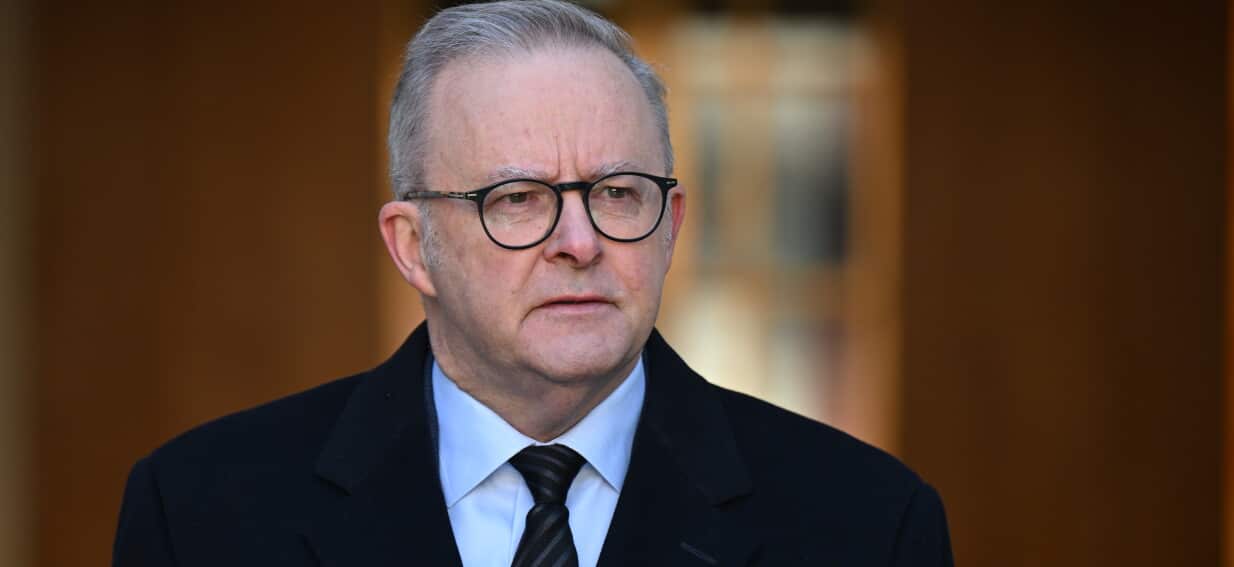
Then, Narendra Modi stepped onto the gangway. Similar insight on this matter has been published by BBC News.
To the casual observer scrolling through a news feed, it was just another state visit. A handshake. A photo op. A standard press release packed with dry phrases about deepening bilateral ties and opening new avenues of cooperation. But if you look past the tailored Nehru jackets and the stiff protocol of the welcoming committee, a completely different story emerges. This is not a routine diplomatic junket. It is a calculated pivot in how the world's most populous nation intends to anchor itself in Europe.
The View from the Danube
Walk down to the banks of the Danube River in Bratislava, and you can see the borders of Austria and Hungary on a clear day. This geography is both a blessing and a quiet torment for Slovakia. It is a country that understands what it means to be stuck between titans. For centuries, empires washed over this region, leaving behind a resilient, highly skilled population that quietly turned their nation into the automotive backbone of Europe.
Slovakia produces more cars per capita than any other country on Earth. Think about that. Not Germany. Not Japan. Slovakia.
Yet, when Indian tech giants or manufacturing conglomerates look to expand into Europe, their eyes traditionally wander toward the established hubs of the West. They look at Frankfurt. They look at London.
Consider a hypothetical engineer named Peter, working in a specialized robotics facility just outside the Slovak capital. Peter does not read diplomatic dispatches. He worries about supply chains, microchip shortages, and whether his factory will secure the capital needed to transition into electric vehicle battery production. For Peter, India is a massive, abstract entity somewhere on the other side of the globe—a market, maybe, but not a partner.
When an Indian Prime Minister lands in Bratislava, the invisible stakes of Peter’s world shift. The visit signals to the boardrooms of Mumbai and Bengaluru that Central Europe is no longer a peripheral market. It is a gateway.
The transition happens quietly. It starts with a memorandum of understanding on semiconductor research, moves into joint ventures in defense manufacturing, and ends with Peter working alongside a software specialist from Hyderabad who brought a specific expertise in machine learning that Peter’s firm had been trying to recruit for years.
Why Bratislava Matters Now
The timing is not accidental. The global economy is fractured, recovering from years of supply chain shocks that made every major corporation realize that relying on a single manufacturing hub is a recipe for disaster.
India needs reliable partners in Europe who possess advanced industrial capabilities but lack the crushing bureaucratic inertia of the traditional Western powers. Slovakia fits the bill perfectly. It is nimble. It is hungry. It sits squarely within the European Single Market, offering a frictionless entry point for Indian goods, services, and investments.
But the real transformation lies elsewhere. It is in the human capital.
Right now, thousands of young Indian students and professionals are looking at the tightening visa regimes of North America and Western Europe with growing frustration. They see walls going up where there used to be doors. Central Europe presents an alternative narrative. By establishing strong bilateral frameworks, this visit lays the groundwork for a more fluid exchange of talent.
Imagine a classroom at the Slovak University of Technology. A decade ago, it would have been entirely local. Today, you are just as likely to find a brilliant young mind from Chennai sitting in the front row, working on a joint aerospace project funded by an Indian aerospace firm. This is what "opening new avenues" actually means when you strip away the political theater. It means a shared lab bench, a shared problem, and a shared future.
The skepticism is easy to understand. We have all become numb to the spectacle of international diplomacy. Leaders fly in, sign papers that sit in archives, exchange gifts, and fly out. The cynicism is a protective layer we wear to avoid being fooled by the rhetoric of statecraft.
But history is rarely made in sudden, explosive leaps. It is made in these precise, quiet alignments. It is made when two nations realize their needs are complementary—that one has the scale and the demographic dividend, while the other possesses the strategic location and the specialized industrial know-how.
When the state dinners end and the flags are packed away, the true measure of this visit will not be found in the official communiqués. It will be found in the cargo manifests of freight trains moving across the continent. It will be found in the ease with which a startup in Bratislava secures funding from an angel investor in New Delhi.
The plane will take off from Bratislava, leaving the tarmac empty once again. The heat of the day will fade into a cool Central European evening. But the air will have changed, carrying with it the faint, unmistakable scent of a map being redrawn.