Every armchair pundit in New Delhi is hyperventilating over the exact same talking point.
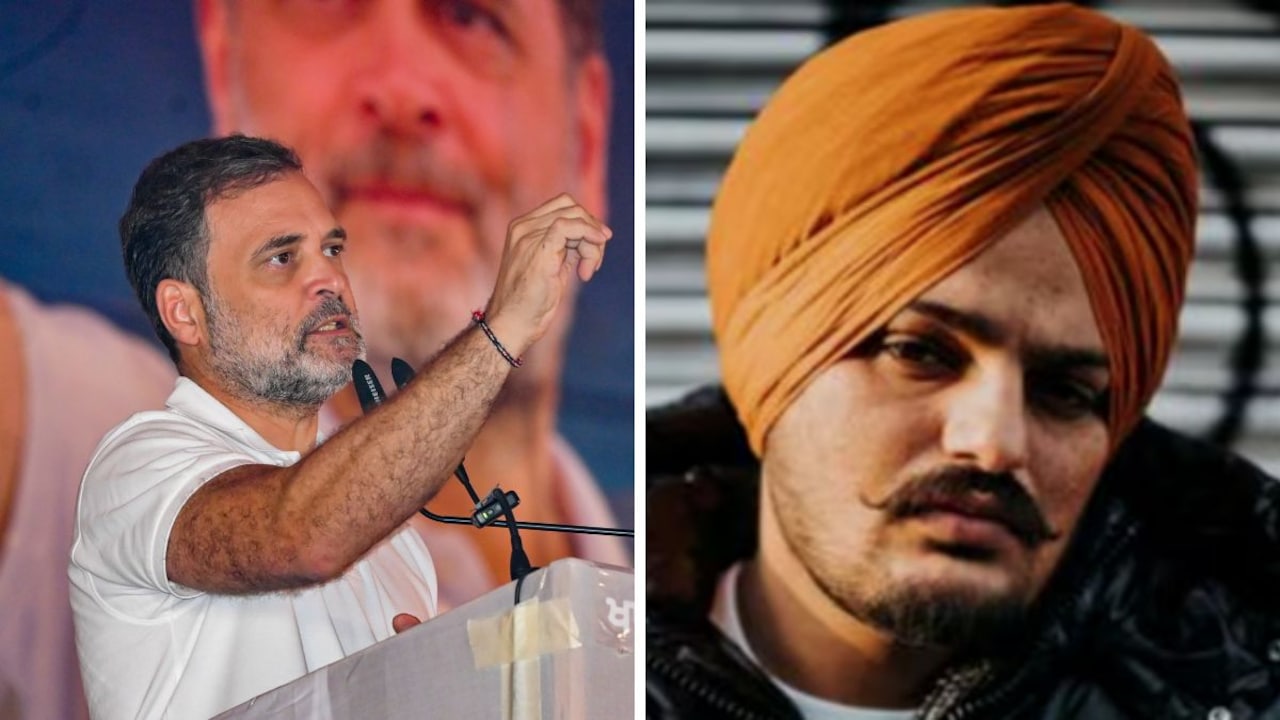
They see Rahul Gandhi invoking the late Punjabi icon Sidhu Moose Wala and immediately reach for their pearls. How dare a leader preaching non-violence and secularism align himself with a rapper whose discography is packed with AK-47s, Jatt pride, and hyper-masculine bravado? How can the Indian National Congress stomach lyrics that glorify gun culture while simultaneously demanding strict law and order in Punjab? Discover more on a similar issue: this related article.
That critique is lazy. It is elitist. And it completely misunderstands how modern political power actually works.
The Lutyens’ Delhi consensus assumes that voters treat political endorsements like a Supreme Court audit—checking every lyric, tweet, and past association for ideological purity before casting a ballot. Voters do not do that. Especially not in Punjab. And certainly not under the age of thirty. Additional journalism by BBC News highlights similar perspectives on this issue.
If you judge Rahul Gandhi’s embrace of Sidhu Moose Wala through the sterile lens of a metropolitan editorial board, you see a contradiction. If you look at it from the ground in Mansa, Bathinda, or Brampton, you see the only smart tactical move the Congress party has made in the region in a decade.
The Myth of Ideological Purity in Indian Politics
Let’s dismantle the central premise of the critics first. The argument goes like this: Congress stands for Gandhian non-violence and constitutional sobriety; Sidhu Moose Wala sang about gandasas (axes), blood feuds, and outlaws; therefore, Congress is either hypocritical or desperate.
This argument relies on a fictional version of Indian politics that has never existed.
I have watched national parties spend hundreds of crores on sanitized, focus-grouped campaigns that die on arrival because they smell like a corporate boardroom. Meanwhile, regional movements built on raw, unpolished cultural pride sweep entire states. Political parties do not win elections by becoming ideological monasteries. They win by becoming coalitions of sentiment.
When a politician invokes a cultural icon, they are not signing an affidavit endorsing every stanza of that artist’s catalog. They are tapping into an emotional frequency.
Think about how politics operates across the spectrum:
- The Right Wing routinely celebrates historical warrior figures and hyper-nationalist pop culture while preaching discipline, family values, and institutional order.
- Regional Dravidian Parties in Tamil Nadu built entire political dynasties out of cinema heroes who played vigilantes beating up corrupt police officers on screen—while those same parties ran the state police force.
- American Presidents from Ronald Reagan to Barack Obama blasted Bruce Springsteen’s Born in the U.S.A. at rallies, completely ignoring that the song is a bitter indictment of how the government treated Vietnam veterans.
Politics is not a peer-reviewed journal. It is the art of capturing mass emotion. Holding Rahul Gandhi to a literalist lyric-by-lyric purity test while ignoring how every other political machine operates is pure intellectual dishonesty.
What Critics Miss About Sidhu Moose Wala
The metropolitan commentary around Sidhu Moose Wala suffers from a fatal flaw: it listens to his beats without understanding his sociology.
To an outsider sitting in a South Delhi café, a track like 295 or The Last Ride sounds like generic gangster rap imported from Compton and translated into Punjabi. That is a surface-level reading. Moose Wala was not merely glorifying crime; he was articulating a very specific, deeply felt grievance among rural Punjabi youth.
For decades, young men from Punjab’s agrarian heartland—the Malwa belt in particular—have felt locked out of India’s urban economic boom. Agriculture was stagnating. Government jobs were drying up. The state was drowning in debt and a devastating drug crisis. The traditional political class treated rural youth either as a law-and-order problem or as cheap muscle for election rallies.
Moose Wala walked into that vacuum and gave them something no politician in Chandigarh or Delhi could offer: unapologetic agency.
He refused to soften his rural accent for Mumbai music executives. He refused to ditch his turban to fit into Bollywood’s sanitized aesthetic. He stayed in his village, Moosa, even after becoming a global streaming juggernaut. When he sang about standing his ground, fighting back against an unfair system, and refusing to bow to elites, young men across Punjab and the global diaspora did not hear a call to go buy illegal firearms. They heard someone finally telling the establishment to go to hell.
When Rahul Gandhi praises Moose Wala, he is not endorsing the gun. He is acknowledging the grievance.
The Law-and-Order Trap
Critics love to point out the irony that Moose Wala was murdered in broad daylight in May 2022, just days after the Aam Aadmi Party (AAP) government in Punjab scaled back his security detail. They argue that Congress cannot simultaneously blame AAP for failing to control gangster violence while celebrating a singer who romanticized gangsters.
Here is the uncomfortable truth nobody in the pundit class wants to admit: two things can be true at the exact same time.
- Glamorizing weapons in pop culture has real-world social consequences, and Punjab’s gun culture is a genuine public safety crisis that requires policing and cultural reform.
- A citizen—regardless of what songs he sang—has a constitutional right to state protection when facing credible death threats from organized crime syndicates, and the state’s failure to protect him is a catastrophic governance failure.
By conflating Moose Wala’s lyrics with his assassination, critics are dangerously close to victim-blaming. You do not forfeit your right to live because your music was aggressive.
Furthermore, look at the political reality on the ground. In Punjab, Moose Wala’s death was not viewed as the end of a controversial rapper. It was viewed as the martyrdom of a son of the soil who spoke truth to power and paid for it with his life. His father, Balkaur Singh, turned his son’s funeral and subsequent memorials into massive public gatherings that shook the state’s political establishment.
For the Congress party, walking away from Moose Wala out of fear of offending urban sensibilities would have been political suicide. It would have signaled to millions of Punjabi voters that the party cares more about looking respectable to English-language columnists than standing with a grieving family and an outraged youth demographic.
The Generation Gap Congress Desperately Needs to Bridge
Let’s look at the cold, hard math of Indian electoral politics.
India has one of the youngest populations on the planet. Yet the Congress party has spent the better part of fifteen years looking like a heritage museum. Its messaging often feels stuck in the 1990s—heavy on bureaucratic jargon, welfare schematics, and nostalgia for past prime ministers.
Meanwhile, the Bharatiya Janata Party (BJP) and regional outfits have mastered the art of cultural disruption. They understand memes, music, cinema, and subcultures. They meet young voters where they actually live: on YouTube, Instagram, and Spotify.
Imagine a scenario where the Congress leadership decides to take the critics' advice. They issue a nuanced, carefully worded statement distancing themselves from Sidhu Moose Wala’s "problematic lyrics" while offering generic condolences to his family. What happens next?
- Every young voter in Punjab immediately writes Congress off as out-of-touch, cowardly, and condescending.
- Opponents weaponize the statement to paint Congress as anti-Punjabi pride.
- The party loses its most organic bridge to the 18-to-30 demographic in a state where it is fighting for survival.
Politics rewards boldness, not disclaimers. By embracing Moose Wala without flinching, Rahul Gandhi broke out of the sterile, overly cautious mold that has crippled his party for years. He spoke a cultural language that resonates instantaneously without needing a five-page manifesto to explain it.
Does "Can Congress Live With All He Sang?" Even Matter?
This is the classic "People Also Ask" style question that dominates television debates, and its entire premise is flawed.
Voters do not ask, "Can Congress live with every lyric Sidhu Moose Wala ever wrote?"
Voters ask: "Do you see us? Do you respect where we come from? Are you willing to stand with our icons when they are attacked?"
When you look at Moose Wala’s discography in its entirety, cherry-picking the gun tracks is a deliberate distortion. This is the same artist who wrote SYL, a fiercely political track touching on Punjab’s river water rights, the 1984 trauma, and Sikh prisoners—a song so potent the Indian government banned it on YouTube within days of its release. He wrote Panjab (My Motherland), a deeply emotional tribute to the state's history and resilience. He spoke openly about the farmers' protest when major Bollywood stars were terrified of losing brand endorsements.
Moose Wala was a complex, contradictory, fiercely political artist. Like Bob Marley, Tupac Shakur, or Fela Kuti, you cannot sanitize him into a corporate mascot, and you cannot reduce him to a caricature of violence.
To ask if Congress can "live with all he sang" is like asking if a party that quotes Rabindranath Tagore agrees with every philosophical detour Tagore took in his letters, or if a party that invokes Bhagat Singh endorses throwing bombs in legislative assemblies. Nobody applies that absurd standard to historical icons. They only apply it to modern, working-class, vernacular artists whose aesthetics make metropolitan elites uncomfortable.
The Real Risk for Rahul Gandhi
Now, let’s be intellectually honest about the downside. Contrarian thinking does not mean blind cheerleading. There is a very real danger in this strategy, and it has nothing to do with lyrical hypocrisy.
The danger is authenticity.
Cultural borrowing only works when the politician actually understands the underlying pain of the community—not when they treat a dead artist like a campaign prop.
If Rahul Gandhi invokes Sidhu Moose Wala on stage in Punjab, gets his applause lines, poses for photos with Balkaur Singh, and then returns to Delhi without a concrete, aggressive policy blueprint to fix Punjab’s agrarian distress, unemployment, and gangster-politician nexus, the backlash will be brutal.
Young voters have an unmatched radar for fake solidarity. If they sense that Congress is merely using Moose Wala’s clout to harvest votes while offering the same tired, corrupt local leadership that drove Punjab into the ground in the first place, the blowback will destroy whatever goodwill Gandhi has built.
Embracing a rebel icon raises the stakes. You cannot invoke a voice of anti-establishment anger and then govern like a sleepy, status-quo bureaucracy.
How Political Parties Must Actually Engage With Pop Culture
If political strategists want to stop failing at cultural outreach, they need to throw out the old playbook. Here is what actually works when politics meets raw pop culture:
- Stop sanitizing icons. Trying to edit out the messy, controversial parts of a cultural figure makes politicians look weak and dishonest. Acknowledge the complexity and move on.
- Focus on the root grievance, not the aesthetic. When youth culture turns dark, aggressive, or hyper-masculine, it is almost always a symptom of economic and social alienation. Address the alienation instead of lecturing the youth about their playlists.
- Match symbolism with policy. Cultural nods open the door; structural solutions keep people in the room. If you invoke a voice of rural frustration, your next sentence must be about rural economic reform.
- Ignore the metropolitan echo chamber. The people writing outraged opinion columns about "problematic lyrics" rarely decide elections in rural constituencies. Stop letting dinner-party sensibilities dictate ground-level political strategy.
The Verdict Nobody Wants to Hear
The outrage over Rahul Gandhi hailing Sidhu Moose Wala has very little to do with non-violence, Gandhian principles, or lyrical morality. It is a clash between two Indias.
One India is polite, English-speaking, institutionally comfortable, and deeply unsettled by raw, unfiltered regional assertion. The other India is young, restless, proud of its roots, and tired of being lectured by people who do not live its reality.
Sidhu Moose Wala belonged entirely to the second India. For decades, the Congress party has been accused of being trapped in the first.
By standing with Moose Wala, Rahul Gandhi did not betray his party’s values. He finally realized that a political party cannot save the Constitution from an ivory tower—it has to win the streets first.