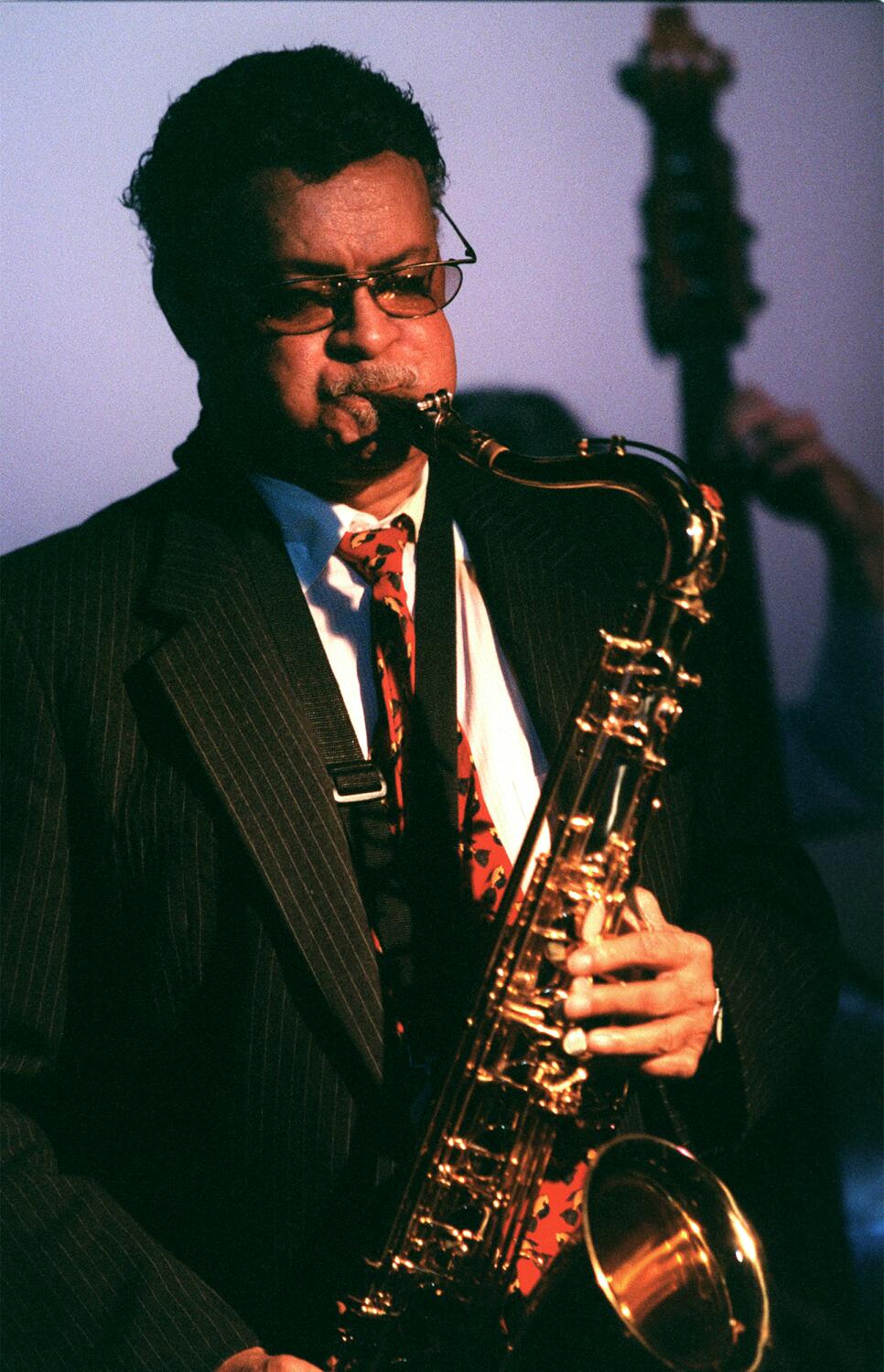
When news broke that Plas Johnson died at 94, the obituaries written across the media landscape reflexively collapsed a monumental, six-decade career into a four-note tenor saxophone motif. The headlines were identical. They called him the "Pink Panther saxophonist," handed out three paragraphs about Henry Mancini, listed a few studio sessions, and called it a day.
It is lazy journalism, and worse, it completely fundamentally misunderstands how modern music was built.
I have spent decades analyzing session logs, interviewing veteran studio sidemen, and dissecting the mechanics of the Los Angeles recording ecosystem. The mainstream obituary machine loves a simple narrative: one iconic riff, one genius player, case closed. But framing Plas Johnson as "the Pink Panther guy" is like calling Michelangelo the guy who painted a ceiling in Rome. It reduces an architect of mid-century sound to a trivia question.
If you actually care about music history, it is time to dismantle the myth of the solo icon and confront the brutal, unglamorous reality of how Plas Johnson actually changed the culture.
The Pink Panther Myth: Why the Riff Was an Anomaly, Not a Defining Moment
Let us start by dismantling the thing everyone wants to celebrate.
Yes, Henry Mancini wrote a brilliant melody. Yes, Johnson’s tone on that 1963 track was purring, seductive, and instantly recognizable. But treating The Pink Panther Theme as the high-water mark of Johnson’s career fundamentally misreads what made him a genius.
The industry wants you to believe that legendary studio musicians are defined by their featured solos. They are not. They are defined by their utility, their speed, and their ability to salvage mediocre records under extreme pressure.
In the 1950s and 1960s, Hollywood recording studios were meat grinders. Producers booked musicians for three-hour blocks to track four songs. There were no digital edits, no punch-ins, no auto-tune, and no second chances. If a horn player took three takes to find the groove, they were blacklisted.
Johnson did not survive that environment because he played a famous theme for a cartoon panther. He survived because he possessed a hyper-adaptable, muscular tone that could anchor a rowdy rock 'n' roll record at 10:00 AM, slide into a lush Frank Sinatra arrangement at 2:00 PM, and punch through a big-band brass section at 8:00 PM.
The Pink Panther hit was an outlier because his name was actually associated with it. The true genius of Plas Johnson lies in the thousands of hours where his name was completely erased from the credits.
The Wrecking Crew Erasure: The Economics of Anonymous Genius
Ask the average casual listener who played on the foundational pop and rock tracks of the 20th century, and they will name the singer on the album sleeve. Ask a music critic, and they will give you a sanitized story about a close-knit group of studio legends called the Wrecking Crew.
Both answers are wrong.
The story of West Coast studio recording has been heavily romanticized over the last twenty years. Documentaries and books love to present this era as a cozy, egalitarian brotherhood of session geniuses who casually tossed off hits for Phil Spector, The Beach Boys, and The Monkees.
What those accounts routinely gloss over is the brutal economic machinery behind it.
African American musicians like Plas Johnson, Earl Palmer, and René Hall were the foundational bedrock of the Los Angeles session scene long before white executives coined cute nicknames for studio bands. Johnson was on the frontlines of dismantling the strict color line in Hollywood studios, not through political grandstanding, but through sheer technical superiority.
Consider the reality of the 1950s session economy:
- No Royalties: Session players received a flat union rate per session. When Johnson laid down the saxophone solos on tracks that sold tens of millions of records, he received a check for a few hundred dollars. No backend, no points, no long-term rights.
- No Label Credit: Major record labels actively suppressed session musician credits to maintain the illusion that self-contained bands were playing every instrument.
- Extreme Demand: Johnson was routinely playing on three to four separate tracking sessions a day, moving between Capitol Records, Gold Star Studios, and RCA.
To put this in perspective, imagine a world where a software engineer writes the core codebase for five different billion-dollar tech platforms in a single year, gets paid a basic hourly wage, and receives zero stock options or public acknowledgment. That was Plas Johnson’s daily reality for twenty years.
The Anatomy of the Johnson Sound: Why Modern Saxophonists Can't Replicate It
Go into any university jazz program today and you will hear endless miles of complex, scalar improvisation. You will hear students playing twice as fast as Johnson ever did, navigating complex harmonic shifts with academic precision.
And almost none of it feels good to listen to.
Why? Because modern music education treats the saxophone as an instrument of pitch and speed rather than texture and weight. Plas Johnson was a master of the bottom end of the horn. He understood something that contemporary horn players have completely forgotten: tone is a narrative device, not a technical delivery system.
The Technical Mechanics of His Style
- Sub-Toning and Air Density: Johnson could blow raw, warm breath through a hard reed without losing the core pitch, creating a raspy, vocal quality that cut through dense analog mixes.
- Micro-Timing: He did not play on the beat, nor did he drag behind it in the traditional lazy swing style. He played on the extreme back edge of the pocket—a fraction of a millisecond behind the bass drum—which forced the entire rhythm section to feel thicker and heavier than it actually was.
- Rhythm-and-Blues Edge: Unlike the cerebral, dry tone of West Coast cool jazz players like Paul Desmond, Johnson brought the dangerous, unsanctified honk of Southern R&B into upscale pop arrangements.
When you hear Johnson on Ricky Nelson's Be-Bop Baby or tracks for B.B. King, Ray Charles, and Sam Cooke, you are hearing an aggressive, blues-drenched sensibility smashing directly into rigid pop structures. That friction is what gave mid-century American pop music its swagger.
The Death of the Session Legend: Why We Will Never See Another Plas Johnson
The obituaries for Plas Johnson miss the scariest truth of all: his passing does not just mark the end of a single man's life. It marks the total extinction of an entire operational model for human culture.
The ecosystem that created Plas Johnson no longer exists, and it is never coming back.
Today, if a producer wants a saxophone track, they do not hire a master who spent fifteen years playing dirty clubs in Texas and California before logging 10,000 hours in recording studios. They open a digital audio workstation, pull up a royalty-free sample library, or drag-and-drop a pre-recorded loop into the timeline. If they do hire a live musician, that musician records their part alone in a home bedroom, emailing a dry audio file to a mix engineer they will never meet.
The dynamic tension of five to ten world-class musicians standing in the same room, pushing air through wood and brass, reading sheet music they have never seen before, and cutting a hit record in two takes is gone forever.
When you look at Johnson's discography, you are looking at an unrepeatable anomaly in human history. He was present at the exact, brief intersection where the music industry had astronomical budgets, massive physical studio spaces, and a desperate reliance on raw, unedited human skill.
Stop Reading the Whitewashed History
If you want to actually honor Plas Johnson, stop playing The Pink Panther Theme on repeat and pretending you know his work.
Go listen to the back catalog. Listen to the subtle, driving tenor work on Frank Sinatra's Ring-a-Ding-Ding!. Listen to his explosive solos on early rockabilly and R&B sides where he single-handedly injected soul into sterile pop tracks. Listen to his work with Les Brown, Ella Fitzgerald, and Peggy Lee.
Plas Johnson was not a pop culture footnote who happened to play a funny riff about a cartoon cat. He was an absolute titan of American studio craftsmanship who helped build the sonic vocabulary of modern music while the industry took the profits and kept his name off the sleeve.
It is time to stop celebrating the caricature and start recognizing the architect.