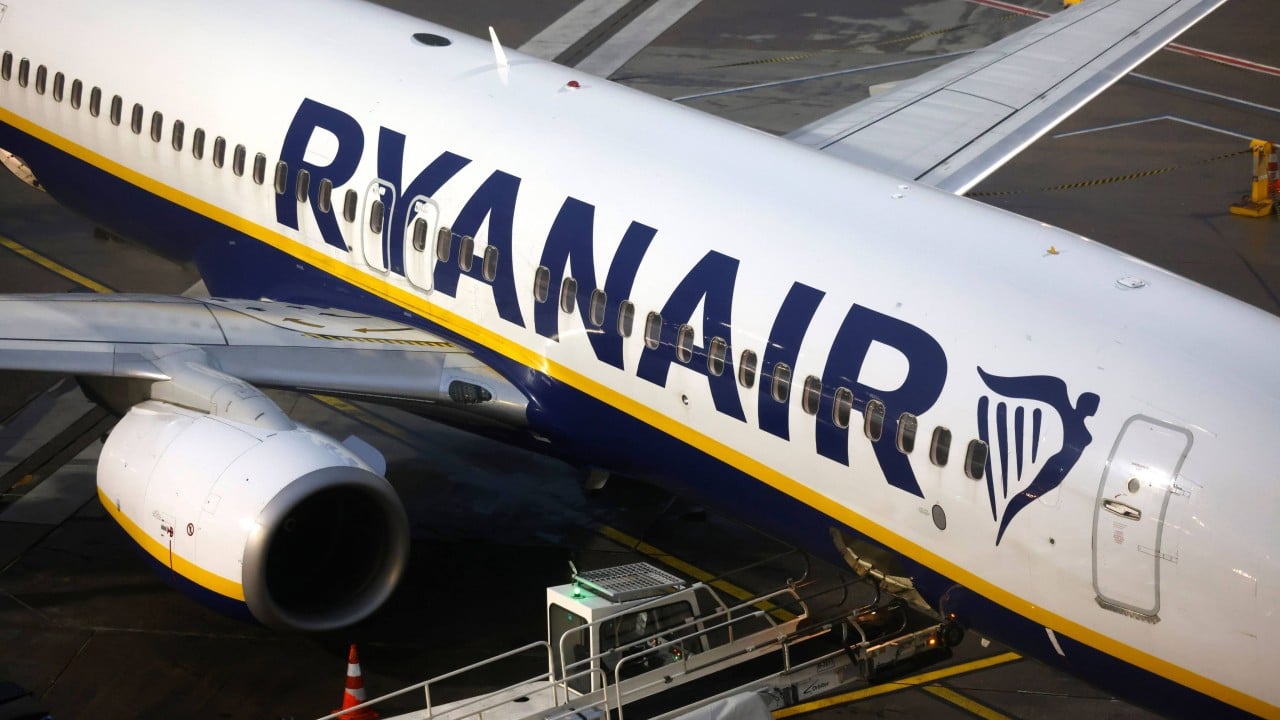
A passenger on a Ryanair flight was nearly sucked out of a cabin window after the window structure became detached mid-flight. While the incident triggered immediate panic on board, it exposes a much deeper, systemic vulnerability within the ultra-low-cost carrier business model. This was not a freak act of nature. It was a predictable consequence of aggressive turnaround schedules, outsourced maintenance contracts, and the intense financial pressure placed on ground crews to keep commercial aircraft in the air at all costs.
When an aircraft window frame fails at 30,000 feet, physics takes over instantly. The cabin pressure, artificially maintained to allow humans to breathe comfortably at high altitudes, is significantly higher than the thin atmospheric pressure outside. If a structural seal breaches, the rush of escaping air creates a powerful vacuum effect. Anything—or anyone—not securely fastened near the breach will be violently pulled toward the opening. Discover more on a similar issue: this related article.
While regulators frequently treat these events as isolated mechanical anomalies, seasoned aviation auditors know better. Commercial aircraft windows do not simply fall out. They are engineered to withstand immense pressure differentials, secured by heavy-duty retaining clips, seals, and structural fasteners. A sudden detachment almost invariably points to a breakdown in the stringent inspection and maintenance protocols that are supposed to catch micro-fissures and loose fittings long before a plane leaves the tarmac.
The Secret Pressure of the Twenty Minute Turnaround
Ultra-low-cost carriers do not make money while their planes are sitting on the ground. To maintain rock-bottom ticket prices while remaining highly profitable, airlines like Ryanair rely on hyper-efficient scheduling. This is known in the industry as the quick turnaround. More analysis by Travel + Leisure highlights related views on this issue.
A standard budget fleet aircraft is expected to land, taxi to the gate, deplane over a hundred passengers, load a fresh batch of travelers, restock essential supplies, undergo a safety check, and push back for departure in as little as twenty to twenty-five minutes.
This breakneck pace places an immense burden on both flight crews and ground engineers. Consider the sheer math of the daily schedule. A single aircraft might fly six to eight sectors a day. If a ground crew detects a minor structural anomaly—such as a slightly loose window seal or a hairline fracture in a non-structural cabin component—they face a brutal dilemma. Reporting the issue for a comprehensive engineering review means pulling the plane out of service. Doing so causes rolling delays across the entire network, costing the airline tens of thousands of dollars in passenger compensation and airport fees.
The system inherently incentivizes rapid, visual-only inspections over meticulous, time-consuming structural assessments. When speed is prioritized above all else, subtle warning signs get missed.
Outsourced Maintenance and the Accountability Gap
The evolution of commercial aviation over the past three decades has seen a massive shift away from in-house engineering departments. Major legacy carriers used to employ armies of dedicated mechanics who spent their entire careers working on a single type of aircraft. Today, the industry relies heavily on third-party Maintenance, Repair, and Overhaul (MRO) facilities.
Budget airlines frequently contract their heavy maintenance to the lowest bidder across various regional hubs. This distributed model creates fragmented oversight. While these MRO providers are certified by national and international aviation authorities, the quality of daily labor can vary wildly.
Furthermore, the technicians working at these facilities are often under identical pressure to hit tight deadlines. A commercial jet undergoing a C-check—a comprehensive inspection where the aircraft is largely disassembled—is subject to strict contract penalties if the work overruns the scheduled timeline.
When a window assembly is replaced or serviced during one of these heavy maintenance checks, it requires precise torque applications on every single retaining bolt. If a technician uses an uncalibrated tool, or rushes through the final checklist to meet a strict deadline, the error may remain hidden for months. It slowly degrades under the constant cycles of cabin pressurization and depressurization until, finally, the structure gives way mid-flight.
The Myth of the Unbreakable Cabin Window
Public perception often holds that airplane windows are simple pieces of glass. In reality, they are highly sophisticated engineering assemblies consisting of three distinct layers.
- The Outer Pane: A thick, structural layer designed to bear the full force of the cabin pressure differential.
- The Middle Pane: A secondary structural layer, equipped with a tiny "bleed hole" to manage moisture and balance pressure, acting as a fail-safe if the outer pane fails.
- The Inner Scratch Pane: A thin sheet of plastic designed purely to protect the structural panes from being damaged by passengers.
For a window to detach entirely or fail to the point of nearly ejecting a passenger, a multi-layered structural failure must occur. The retaining mechanism holding the entire window assembly within the fuselage frame must fail, or the surrounding composite skin of the aircraft must suffer localized fatigue.
Aviation safety boards have long warned about the dangers of structural fatigue in high-utilization fleets. Short-haul budget aircraft undergo far more pressurization cycles per year than long-haul widebody jets. Each time a plane climbs and descends, the metal and composite materials expand and contract. This constant stress makes budget fleets uniquely susceptible to fast-moving structural wear that demands rigorous, unhurried inspection techniques like eddy-current testing or ultrasonic scanning.
Regulatory Blind Spots in High-Frequency Aviation
National aviation authorities, such as the European Union Aviation Safety Agency (EASA) or the Federal Aviation Administration (FAA), operate largely on a system of self-auditing and trust. Regulators set the framework, but the airlines and their contracted MROs are responsible for self-reporting errors and compliance.
This system works perfectly until financial survival clashes with safety idealism.
A review of past commercial aviation incidents reveals a pattern where regulatory bodies only step in with emergency airworthiness directives after a near-catastrophic event occurs. The internal safety culture of an airline determines whether minor defects are logged and addressed or quietly deferred under the guise of "acceptable deferred defects" logs.
When a passenger is nearly drawn through a window frame, it is a stark reminder that the margins of safety in modern aviation are razor-thin. The industry has become incredibly safe due to decades of redundant engineering, but those redundancies rely on the human element executing maintenance flawlessly.
The True Price of a Cheap Ticket
Passengers have become conditioned to expect international travel for the price of a modest dinner out. This economic reality means airlines must strip costs from every conceivable corner of their operations. They charge for baggage, they charge for water, and they optimize fuel consumption down to the liter.
However, the consumer rarely considers where the rest of the cost-cutting happens. It happens in the procurement of cheaper spare parts, the negotiation of lower rates for ground handling crews, and the relentless optimization of maintenance schedules.
The immediate fix for window detachments and similar cabin structural failures is not a secret. It requires lowering the operational cadence of high-utilization fleets. Airlines must give ground crews the explicit authority—and the financial backing—to ground an aircraft for a minor defect without fear of corporate retribution or scheduling penalties.
Until regulatory bodies mandate longer minimum turnaround times and institute unannounced, physical audits of aircraft at the gate rather than reviewing paperwork in an office, the structural integrity of budget aircraft will remain pushed to the absolute limit. Passengers will continue to gamble their safety against the efficiency of a twenty-minute window on the tarmac.