The lazy consensus in international relations is deafening. Every op-ed from Paris to Washington wrings its hands over American sanctions against the International Criminal Court, painting them as a clumsy authoritarian temper tantrum thrown by a superpower terrified of accountability. Commentators scream about the death of the rules-based order. They clutch their pearls over sovereignty and write long, weeping obituaries for global justice.
They are entirely, dangerously wrong.
Washington did not stumble into an open war with the ICC out of panic. The White House executed a surgical, premeditated pressure test designed to expose the structural hypocrisy of every single state party to the Rome Statute. When the United States targets the court's financial lifelines and slaps visa restrictions on prosecutors, it is not throwing a punch. It is holding up a mirror. And nobody in Europe likes what they see.
Let us dismantle the primary delusion right out of the gate: the ICC has never been an independent engine of universal justice. It is a politically fragile treaty body whose budget, intelligence feeds, and enforcement mechanisms rely entirely on the hegemony it occasionally tries to bite. When the court threatens American or allied personnel, it steps outside its institutional lane. It tries to bind non-party states to a compact they never signed. That violates the foundational Vienna Convention principle of treaties not creating obligations for third parties without their consent.
Washington's ultimatum to member states is not a threat of brute force. It is a stark legal and economic reality check.
The Sovereignty Myth That Europe Refuses To Admit
Here is the inconvenient truth that European diplomats whisper over closed-door lunches in Brussels: European security is completely underwritten by American military power, yet European governments hide behind international tribunals to score cheap moral points.
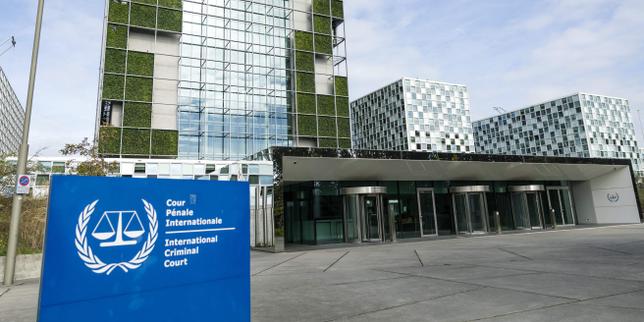
When the prosecutor in The Hague opens investigations that touch on great power conflicts, member states suddenly discover the limits of their institutional zeal. They realize that a court financed by their taxes is actively destabilizing the geopolitical architecture keeping them safe. Washington’s ultimatum forces a binary choice that European capitals have spent decades dodging. You cannot outsource your hard security to the Pentagon while outsourcing your geopolitical moralizing to a court in the Netherlands and expect no friction.
I have spent years watching institutional bureaucrats build legal frameworks that look magnificent on paper and collapse into dust the moment a real national interest is threatened. The ICC prosecutor operates under the illusion of absolute independence, completely divorced from the messy reality of deterrence. International law without a monopoly on violence is not law. It is theater.
When Washington threatens financial asset freezes against court officials, it lays bare the core vulnerability of the entire system. The court cannot arrest a single person without state cooperation. It cannot protect its own investigators. It depends entirely on the voluntary compliance of states that are now caught in the crosshairs of American secondary sanctions.
The lazy narrative says Washington is isolating itself. Look closer at the quiet scramble in European foreign ministries. Ambassadors are not drafting fierce denunciations; they are quietly finding legal workarounds to avoid triggering American financial penalties while paying lip service to the court. Sovereignty is cheap until your banks lose access to the clearinghouse in New York.
The Jurisdiction Trap And Why The Rome Statute Is Flawed
Let us talk about the foundational architecture of the court because the legal illiteracy surrounding this topic is staggering.
The standard defense of the ICC goes like this: "Everyone must submit to international justice because crimes against humanity demand accountability." It sounds noble. It also ignores how jurisdiction actually works in public international law.
A treaty is a contract. Under standard legal doctrine, a contract binds only the parties that sign it. The United States never ratified the Rome Statute. It explicitly unsigned it in 2002 under the Bilateral Immunity Agreements era. Yet the court has repeatedly attempted to stretch territorial jurisdiction through tortured legal gymnastics—such as claiming jurisdiction over non-party states because actions occurred on the territory of a state that did join, even if that state’s government was not a functioning sovereign at the time of the alleged acts.
This is not jurisprudence. This is judicial imperialism.
If a private club writes bylaws stating that anyone who walks past their clubhouse is now bound by their code of conduct, you would call them insane. Yet when an international bureaucracy does the exact same thing with state borders, elite commentators call it progress. Washington’s sanctions are the logical pushback against an unelected prosecutor attempting to legislate for the globe.
To understand why this matters, look at how the court handles geopolitical asymmetry. It targets weak states because it can. It launches sweeping inquiries into nations with no projection power, while major powers with actual nuclear arsenals and global security footprints remain untouched. When the court finally tried to peer into conflicts involving major Western allies or strategic flashpoints, the system instantly buckled.
A legal institution that only works when it targets the powerless is not a court. It is a political weapon. And when that weapon is pointed at the architects of global deterrence, those architects have every right to disarm it.
The Compliance Illusion
People ask why Washington cares so much about a court that lacks an army. The answer reveals a profound misunderstanding of how modern power operates.
It is not about a specific arrest warrant or a single indictment. It is about the creep of lawfare. If an international prosecutor can delegitimize the sovereign actions of a superpower or its allies through politically motivated indictments, it creates a paralyzing compliance hazard for military planners, intelligence officers, and elected leaders. It introduces friction into the machinery of deterrence.
In a world descending back into great power competition, strategic paralysis is fatal. If American commanders have to worry about whether a Dutch magistrate will issue a sealed indictment because of a counter-terrorism strike in a grey zone, the speed of decision-making drops to zero. Washington’s ultimatum is a firewall against that institutional decay.
The pushback from the White House forces a brutal clarification among its allies: Whose security umbrella do you actually trust? Do you trust the US Navy protecting global trade routes and European energy corridors, or do you trust a panel of judges in The Hague who answer to no electorate and face zero consequences when their rulings plunge a region into deeper chaos?
You cannot have both. The friction we are witnessing is the inevitable collision between utopian legalism and hard geopolitical reality.
What The Pundits Miss About Economic Statecraft
Most commentators analyzing these sanctions focus on human rights rhetoric. They miss the plumbing.
American financial power is the ultimate arbiter of global disputes because the dollar-denominated financial system is inescapable. When Washington applies sanctions to international judicial bodies, it uses the same mechanisms it deploys against rogue states or illicit cartels. Critics scream that this weaponizes the financial system against international justice.
They have it backward. International justice is attempting to free-ride on a global stability system paid for and secured by American taxpayers, while simultaneously undermining the strategic flexibility required to maintain that system.
When a superpower tells an international organization that crossing certain jurisdictional lines will result in asset freezes and travel bans, it is establishing a clear boundary. It is drawing a bright line between legitimate multilateral cooperation and unaccountable judicial overreach.
Look at the practical outcome. Has the court collapsed? No. Has it moderated its immediate prosecutorial ambitions regarding non-party states? Absolutely. The chilling effect of Washington's pressure is palpable in every corridor of The Hague. Prosecutors now think twice before launching headline-grabbing investigations that carry severe diplomatic and financial blowback.
That is not the destruction of the international order. That is the system correcting itself through raw, unvarnished power politics—which has been the only language that truly matters since the Peace of Westphalia.
The Real Choice Facing Member States
The ultimatum handed down to Rome Statute members is a masterclass in strategic clarity. It strips away the comforting fog of multilateral diplomacy and forces governments to make hard choices.
If European capitals want to prioritize the ICC over their strategic alignment with Washington, they are entirely free to do so. They can increase their contributions to cover the budget shortfalls caused by American financial pressure. They can offer asylum and protection to targeted judges and prosecutors. They can test whether their own domestic security architectures can survive without American intelligence-sharing and nuclear deterrence.
They won't.
Because at the end of the day, European leaders know that the ICC is a luxury item. It is a moral accessory worn during peacetime, discarded the moment the security climate turns cold.
Washington knows this. The strategists drafting these sanctions know this. And that is why the pressure will not let up. The next time an international body tries to stretch its mandate beyond its actual power to enforce, it will run into the exact same immovable wall.
Power dictates law, not the other way around. Get used to it.