The air smells like wet asphalt and cold exhaust. It is seven minutes past eight on a Tuesday morning, and Maya is standing at the edge of a crosswalk in Kensington, shifting her toddler’s weight on her hip. Her coffee is lukewarm. The wind cuts right through her wool coat, carrying the faint, metallic scent of the C-Train rattling down the line a block away.
She wants to cross the street. Just twelve feet of grey concrete separate her from the bakery where a warm cinnamon bun sits waiting in a glass case. Twelve feet. But right now, those feet feel like a staging ground.
A silver SUV approaches, slowing down, but not enough to erase the knot that forms right beneath Maya’s ribs. We have all stood there. We know that sharp intake of breath. We know the sudden calculation every pedestrian makes when a machine weighing two tons rolls toward them at forty kilometers an hour: Do they see me? Will they stop in time?
Calgary is shifting.
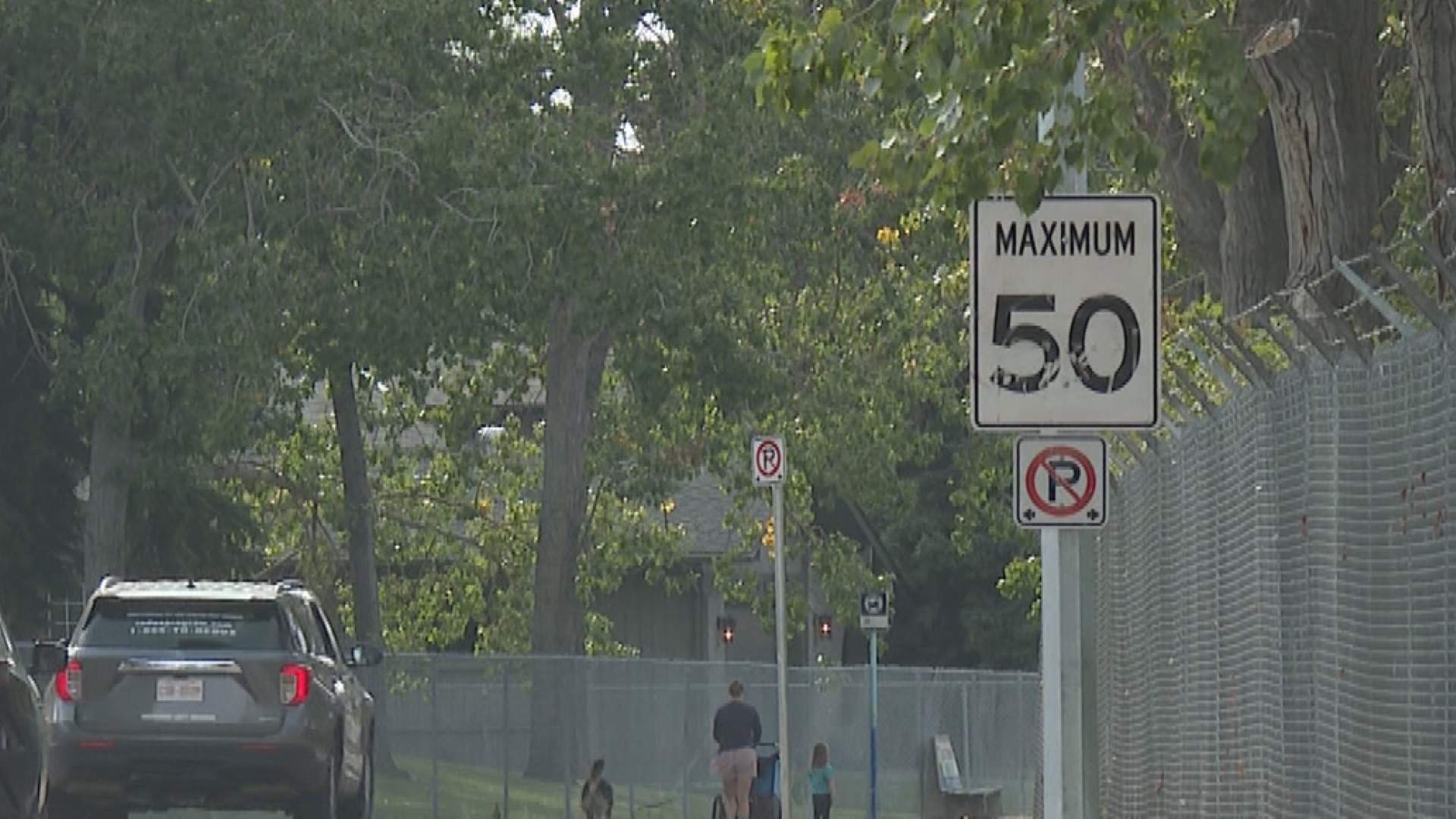
Street signs are changing. Numbers are dropping. Across communities from Montgomery to Crescent Heights, the speed limits are sliding down to thirty kilometers an hour on residential roads. And if you look at the raw municipal paperwork, it sounds like dry bureaucratic plumbing. Just a stroke of a pen, a handful of new aluminum signs bolted to wooden posts, a city council vote finalized in a dim chamber.
Numbers on a page.
But behind those numbers is a quiet, radical restructuring of how we share the ground beneath our feet.
Consider what happens next: Maya steps off the curb.
To understand why those numbers are dropping, you have to leave the spreadsheets behind and look at physics. Pure, unforgiving, unarguable physics.
Imagine a car as a hammer and a human body as glass. At fifty kilometers an hour, a collision is catastrophic. The human body breaks. Bones splinter; organs bruise against the inside of the ribcage; the kinetic energy is a physical violence that leaves very little room for survival. At forty, the odds shift slightly, but the margin for error remains razor-thin.
Drop that speed to thirty kilometers an hour, however, and the math changes its mind.
At thirty, the survival rate for a pedestrian struck by a vehicle leaps dramatically. It is the difference between a funeral and a fractured wrist. It is the difference between a child running after a stray tennis ball coming home for dinner or never coming home at all. Kinetic energy scales with the square of velocity. Every single kilometer per hour you shave off a vehicle's speed strips away a massive percentage of its destructive force.
We forget this because we spend so much of our lives insulated inside steel cocoons. We sit behind heated steering wheels, listening to podcasts, watching the neighborhoods slide past like a low-budget movie reel. The car makes us feel invulnerable. It isolates us from the texture of the city we are moving through.
When you are inside the car, forty feels agonizingly slow. It feels like crawling. It feels like an insult to your morning commute.
When you are standing on the curb with a toddler, forty feels like a threat.
This is the tension gripping Calgary right now. It is a friction between two entirely different ways of experiencing the exact same space.
Critics call it a nuisance. They talk about lost minutes, about the creeping dread of urban stagnation, about a city trying to sanitize the open road. They point to wide, clear streets built for movement, demanding to know why a boulevard designed for flow should suddenly treat drivers like suspects.
They are not entirely wrong about the frustration. Anyone who has crawled down a residential street behind an ultra-cautious driver knows the itch of impatience. We live fast. We measure our days in efficiency. We want to get home, make dinner, check the boxes, and collapse onto the couch.
Yet, efficiency has a body count.
For years, we built our cities around the car's desire for velocity. We carved wide arterial paths and treated residential side streets as overflow valves, shortcuts for commuters trying to shave three minutes off their cross-town trek. We turned neighborhoods into thoroughfares.
And then we wondered why children didn't play street hockey anymore. We wondered why neighbors didn't linger on front porches to chat as the sun dipped behind the Rockies. We engineered our streets for cars, and in doing so, we accidentally engineered out human life.
The drop in speed limits is an attempt to claw that life back.
Think about the rhythm of a street where cars move at thirty. The engine roar softens to a low, distant hum. You can hear the wind in the poplar trees. You can hear the laughter of kids kicking a soccer ball in a front yard. Cyclists don't have to constantly check their mirrors with a sense of impending doom; they can just ride.
It changes the psychological gravity of a neighborhood. When cars move slower, the street stops being a danger zone and starts being a public square again.
Change is awkward. It creates friction. People honk. People tailgate. People grumble at red lights that seem to linger forever. We curse the new signs because they disrupt our muscle memory. We have spent decades training our brains to drive a certain way, and unlearning that habit feels like an itch you cannot scratch.
Yet muscle memory can be rewritten.
Look at European cities that made this leap decades ago. Initially, there was uproar. Business owners panicked. Commuters revolted. But within a year or two, something strange happened. The streets didn't die; they thrived. Foot traffic increased. Local shops saw more casual browsers because people weren't zooming past storefronts at fifty kilometers an hour, entirely blind to the boutique or the café tucked into the corner.
Safety bred vitality.
When Maya finally crosses that street in Kensington, the silver SUV has stopped well back, its driver giving her a small, polite nod. She nods back. It takes three extra seconds of her life. Just three.
Those three seconds are not lost time. They are reclaimed space. They are the quiet acknowledgment that we are sharing this fragile, freezing, beautiful city with living, breathing human beings who want the exact same thing we do: to get where we are going safely, and to make it home to the people we love.
The signs are up. The numbers are lower. The asphalt is still wet with the morning chill.
And as the SUV rolls slowly past, its tires barely whispering against the pavement, the street finally feels like somewhere you might actually want to live.