The coffee in Terminal 3 at Dubai International usually tastes like ambition and burnt beans. Today, it tastes like adrenaline.
Elena is sitting on her carry-on bag because every chrome-and-leather seat within a half-mile radius is occupied by someone staring at a flickering departure board. She was supposed to be in London by dinner. Then the notification chirped—not a delay, but a cancellation. Then another. Then the screens began to bleed red.
Tehran. Erbil. Amman. Baghdad. Tel Aviv.
Closed.
The air above the Middle East is usually a frantic, invisible highway, a complex lattice of aluminum tubes hurtling at five hundred miles per hour. We don’t think about the geography of the sky until someone draws a line through it. When the missiles began their arc and the drones hummed into the night, that highway didn't just get congested. It vanished.
The Geography of Silence
For decades, we have lived in an era of "The Shrinking World." We took for granted that a silver tube could bridge continents in a dozen hours. But as the conflict between Iran and its neighbors escalated into a direct exchange of fire, the world suddenly grew massive again.
When the airspace over Iran and Iraq shuts down, it isn’t just a local problem. It is a tectonic shift in global movement. This region is the literal "Middle" of the world. It is the narrow neck of an hourglass through which almost all traffic between Europe and Asia must flow.
Imagine trying to drive across a city where the central four-way intersection is suddenly blocked by a sinkhole. You don't just wait; you reroute. But in aviation, a detour isn't a turn down a side street. It’s an extra three hours of flight time. It’s twenty extra tons of jet fuel. It’s a pilot’s legal duty-time clock ticking toward zero while they are still over the Caspian Sea.
The facts are stark: Lebanon, Jordan, and Israel closed their skies entirely as the shadows of drones crossed their borders. Iran followed suit, grounding the very flights that serve as its own pulse. This isn't just "travel chaos." It is the physical manifestation of geopolitical fracture.
The Math of a Long Way Round
Consider a hypothetical flight: Flight 402 from Singapore to Paris.
Under normal circumstances, this flight traces a graceful curve over the Bay of Bengal, crosses the mountains of Iran, skims the edge of Turkey, and slides into Europe. It is a masterpiece of efficiency.
Now, look at the screen in the cockpit when the "Notice to Air Missions" (NOTAM) flashes. The Iranian corridor is a "No-Go." To the south, Yemen is a war zone. To the north, Russia’s vast airspace remains a restricted graveyard for Western carriers due to the war in Ukraine.
The pilot is left with a needle’s eye.
They must fly south, hugging the coast of Saudi Arabia, squeezing through the narrow corridor over Egypt, or looping far north over the Himalayas. This is the invisible stake of the conflict. It isn't just about the people in the bunkers; it’s about the total disruption of the global circulatory system.
The cost is staggering. A single rerouted long-haul flight can burn through $30,000 in additional fuel. Multiply that by the hundreds of flights crossing the Suez corridor daily. The airlines don't just eat that cost. It ripples. It shows up in your ticket price next summer. It shows up in the price of the strawberry that was flown from a farm in Egypt to a grocery store in Berlin.
The Human Weight of a Red Screen
Back in the terminal, Elena watches a family of four arguing with a gate agent who looks like he hasn't slept since the previous fiscal year. They were going to a wedding. Or a funeral. Or a first job.
We treat travel like a commodity, but it is actually the way we weave our lives together. When a missile strike shuts down an airport in Tehran, a grandmother in Sydney doesn't get to hold her new grandson. A business deal that would have funded a school in Vietnam falls apart because the CEO is stuck in a lounge in Istanbul.
The "chaos" the news anchors talk about is a sterile word. It doesn't capture the smell of a crowded terminal where the air conditioning is struggling to keep up with the heat of three thousand anxious bodies. It doesn't capture the specific, hollow thud in your chest when you realize you are stranded in a country where you don't speak the language, watching the news of a war you didn't start.
There is a profound vulnerability in being "in transit." You are neither here nor there. You are a ward of the airline, a body in a queue, waiting for a government to decide if the sky is safe enough to reclaim.
The Fragility of the Lined Map
Why is this happening now? Because the "rules of the road" have changed.
For years, aviation security relied on a certain level of predictability. Even in tense times, commercial corridors were generally respected. But the shooting down of MH17 years ago and more recent incidents have made airlines deeply, perhaps permanently, skittish.
They won't take the risk anymore. If there is a 1% chance of a stray surface-to-air missile, the route is scrubbed.
This creates a "domino sky." When Iran’s airspace closes, the traffic shifts to Turkey. Turkey’s controllers become overwhelmed. Delays pile up. Then, because the planes are late arriving in London, they are late leaving for New York. A drone launch in the Middle East can—and does—cause a missed connection in Chicago.
It is a reminder that our modern, high-tech existence is built on a foundation of precarious peace. We built these incredible machines that can defy gravity, but they are still held hostage by the oldest human impulse: the desire to claim and defend a patch of dirt.
The Sky is a Mirror
If you look at a flight tracking map during these shutdowns, you see something haunting.
There is a giant, empty hole where millions of people live. A vast silence where there should be the roar of engines. It looks like a wound on the map.
The planes cluster around the edges, huddling together in safe corridors like sheep avoiding a predator. This isn't just about logistical "worsening." It is a visual representation of a world pulling apart. We are losing the ability to cross over each other.
The industry will call this a "capacity crisis." They will talk about "load factors" and "yield management." But for the people on the ground, it is a crisis of distance. The person you love is suddenly five thousand miles and three "No-Fly" zones away.
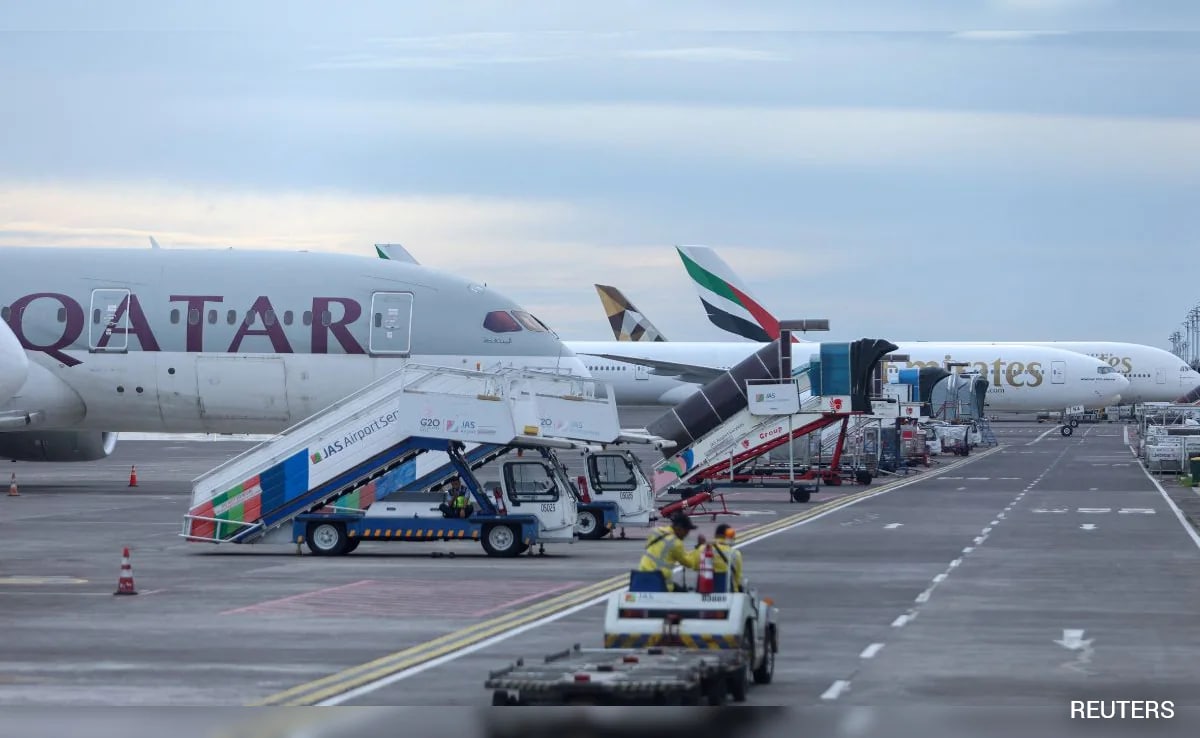
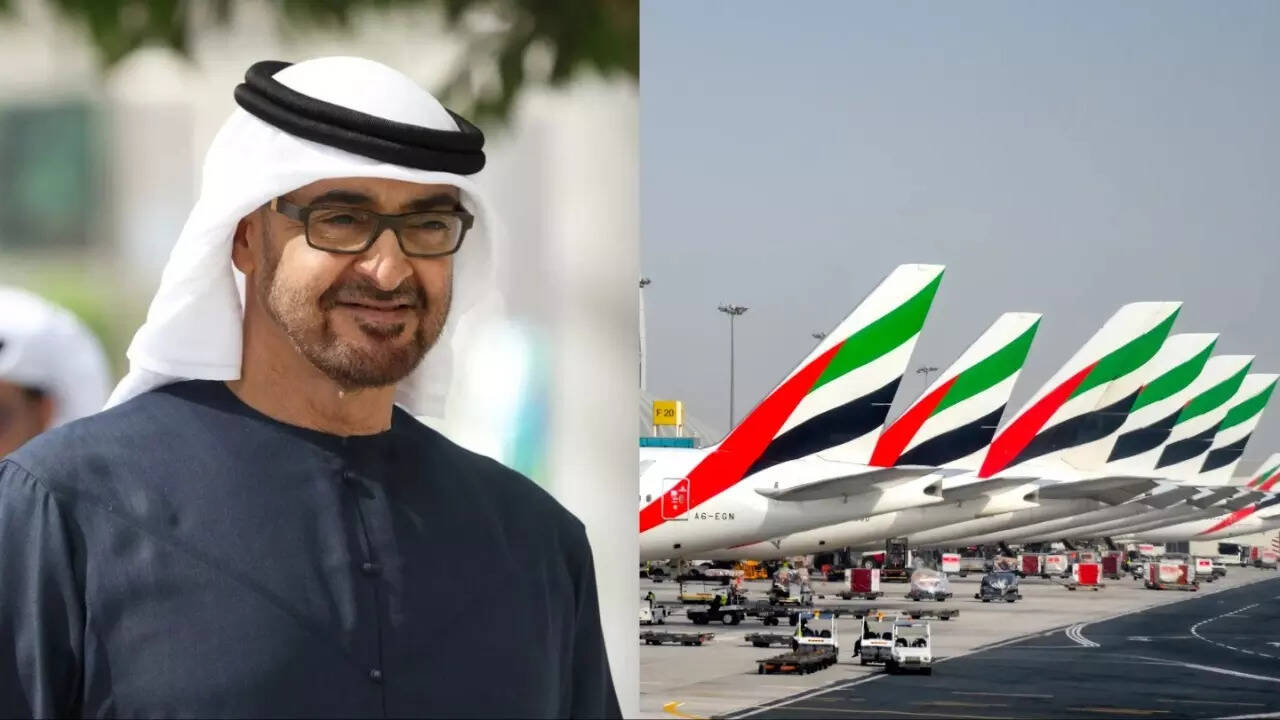
The sun begins to rise over the tarmac in Dubai. The light catches the tails of dozens of grounded planes, their logos glowing in the desert heat. They look like statues. Massive, multi-million dollar monuments to a connectivity that has been temporarily revoked.
Elena finally gets a seat on a flight. It’s not to London. It’s to Cyprus, where she’ll wait for another connection that might not happen. She gathers her bags. She is one of the lucky ones.
As the plane finally taxis out, the pilot's voice comes over the intercom. He doesn't talk about the war. He doesn't talk about the drones. He simply says that due to "operational constraints," the flight will be taking a significantly longer route today.
He asks for our patience. He tells us to look out the window.
Below, the desert is vast, ancient, and indifferent to the lines we draw in the air. We bank hard to the west, steering clear of the invisible wall, chasing the horizon the long way around.
The world is huge again. And we are very, very small.