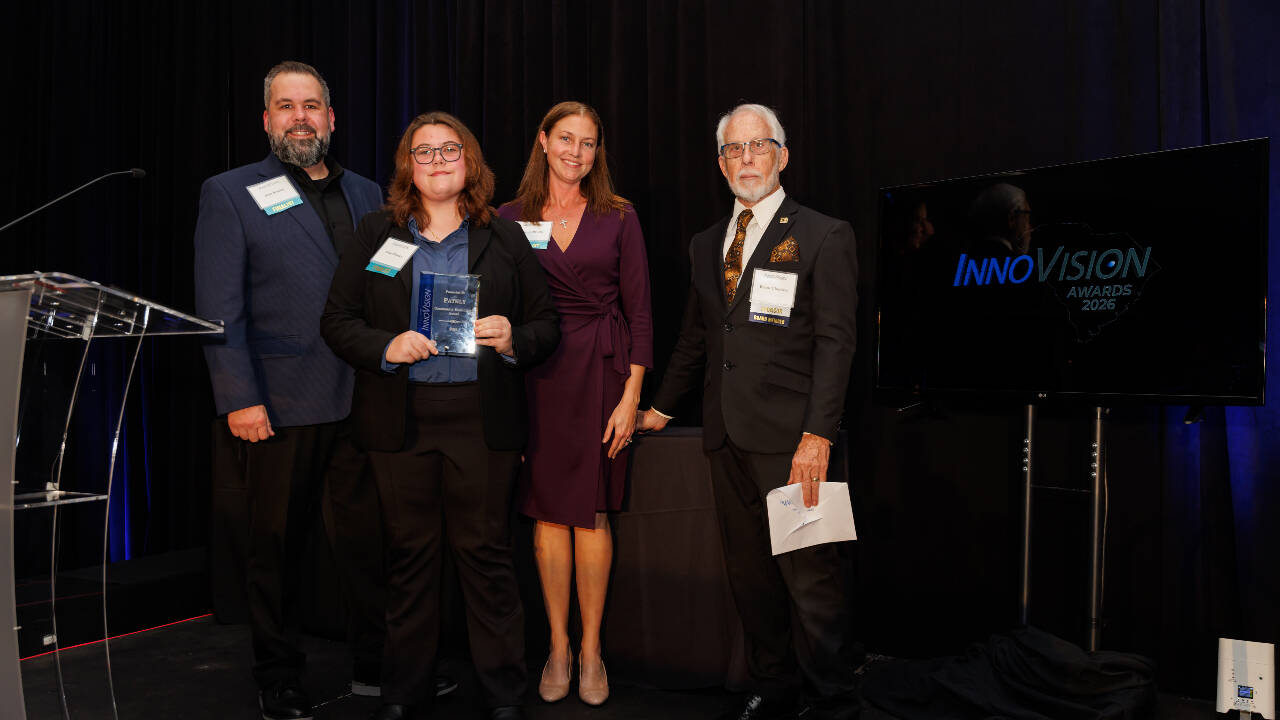
Local business journals love a wunderkind. Put a 17-year-old on a stage in South Carolina, hand her a trophy for an artificial intelligence startup, and watch the regional press applaud itself for building the next Silicon Valley.
It makes for great local PR. It also reveals everything broken about how we evaluate early-stage technology companies.
When 17-year-old Grace Brusky took home South Carolina’s top innovation honor, the coverage followed a predictable script. Prodigy builds AI tool. Judges swoon. State officials claim victory for local economic development. Everyone goes home feeling optimistic about the future of tech.
Nobody asks the only question that actually matters in software. Does this business survive when the novelty of the founder’s birth certificate wears off?
The Lazy Consensus of Youth Worship
The startup ecosystem suffers from a chronic addiction to narrative over unit economics. Regional innovation awards are the worst offenders. Judges routinely confuse founder charisma and youthful ambition with defensible market traction.
Let us be brutally honest about what happens behind closed doors at these competitions. A panel of local executives, university administrators, and regional economic boosters sits down to score pitch decks. Most of them have never built a scalable software product from scratch. When a teenager walks up and demonstrates a working prototype—likely built on top of existing large language model APIs—the room loses all critical judgment.
The unspoken standard drops instantly. Instead of asking about customer acquisition cost, net dollar retention, or proprietary data moats, the judges grade on a curve. She is only seventeen! they whisper. Imagine what she will build by twenty-five!
That is not business evaluation. That is a science fair with bigger checks.
I have sat on investment committees and watched founders—both teenagers and forty-year-old industry veterans—burn through millions of dollars because early validation lied to them. Trophies are the most dangerous form of fake validation. They convince young builders that pitching is the job, when the actual job is surviving brutal, unglamorous customer discovery.
The API Wrapper Trap
To understand why awarding early AI startups is premature, look at the technical reality of modern artificial intelligence.
In 2015, building an AI product required PhD-level machine learning engineers, custom neural network architectures, and massive compute clusters. Today, a high school student with a credit card and basic Python skills can connect an OpenAI or Anthropic API to a clean user interface over a long weekend.
This democratization of tools is fantastic for builders. It is catastrophic for award judges who cannot tell the difference between core technological innovation and a clever prompt wrapped in a React frontend.
When a startup relies entirely on third-party foundation models without proprietary training data or deeply embedded workflow integrations, it does not own a moat. It owns a lease. Every time the underlying model provider updates its platform, those wrapper startups risk getting wiped out overnight. Sam Altman and Dario Amodei do not care about your state innovation trophy when they release a native feature that swallows your entire product roadmap.
If you want to know whether an AI startup actually deserves praise, ignore the press release and inspect the architecture:
- Where does the proprietary data live? If the product uses public data and standard foundation models, competitors can replicate the entire software stack in fourteen days.
- What is the switching cost? If a customer can cancel their subscription and replace the tool with a clever ChatGPT prompt, the business has zero defensibility.
- Who is paying real money without a personal favor? Friends, family, local mentors, and state-backed pilot programs do not count as market validation.
Why Regional Innovation Awards Do More Harm Than Good
State-level innovation awards exist for one primary reason—to market the state. Economic development boards need shiny success stories to prove their tax incentives and incubator programs work. South Carolina wants to show it can produce tech talent just like Austin, Boston, or San Francisco.
Using a 17-year-old founder as the poster child for regional tech growth creates a warped incentive structure for every other young builder watching from the sidelines.
First, it teaches teenagers to optimize for pitch competitions instead of product-market fit. Winning a local trophy gets you local press, handshake photos with politicians, and maybe twenty grand in non-dilutive grant money. None of those things force you to cold-call fifty hostile procurement officers and figure out why they refuse to buy your software.
Second, it accelerates premature scaling. Once a young founder gets labeled a prodigy, local angel investors start throwing small checks at the company out of fear of missing out. Suddenly, a teenager who should be spending sixteen hours a day writing code and talking to users is managing cap tables, attending panels, and fielding media requests.
Third, it sets an impossible psychological trap. When your entire public identity is built around being "the 17-year-old AI wunderkind," admitting that your initial product idea does not work feels like public humiliation. Great founders pivot ruthlessly because they have no ego tied to their first draft. Child prodigies often cling to broken business models because changing direction ruins the newspaper headline.
Answering the Questions Nobody Wants to Ask
Whenever a story like Grace Brusky’s goes viral in regional business circles, the public asks the same surface-level questions. Let us dismantle the flawed premises behind them.
Can a 17-year-old actually build a successful enterprise AI company?
Yes, technically. Stripe was founded by the Collison brothers when John was nineteen and Patrick was twenty-one. Palmer Luckey started developing the Oculus Rift in his parents' garage as a teenager. Age does not prevent someone from writing brilliant code or spotting an obvious market inefficiency. What age does limit is domain expertise. Unless a 17-year-old has spent years working inside hospital billing departments, freight logistics hubs, or manufacturing floors, they are guessing at how enterprise buyers actually make decisions. Guessing works in consumer apps. It dies in B2B software.
Do innovation awards help young founders attract real venture capital?
Rarely. Tier-one institutional investors—firms like Sequoia, Benchmark, or Andreessen Horowitz—view state innovation trophies as noise. In fact, seasoned VCs often treat heavy award circuit participation as a negative signal. They want founders who are obsessed with their customers, not founders who spend their Tuesdays polishing slide decks for regional business chambers.
Should teenagers avoid starting AI companies altogether?
Not at all. Teenagers have the lowest opportunity cost on earth. They have no mortgages, no dependents, and no corporate golden handcuffs. Starting a company at seventeen is the best education on the planet—provided the founder treats it as an apprenticeship in hard reality rather than a coronation.
The Counter-Intuitive Blueprint for Young Builders
If I were advising a 17-year-old founder who just won a major innovation award, I would tell her to put the trophy in a closet, delete her LinkedIn notifications, and execute a completely different playbook.
- Ban yourself from pitch competitions for twelve months. Every hour spent preparing a five-minute pitch is an hour stolen from product engineering and customer support. If a competition does not write a check for at least $250,000 with zero strings attached, do not apply.
- Hunt for the most boring, unsexy problem in your local economy. Do not build generic AI productivity tools or consumer chatbots. Go talk to HVAC contractors, agricultural suppliers, or regional trucking dispatchers in South Carolina. Find the manual paperwork nightmare they hate doing every Friday afternoon, and automate that specific workflow.
- Charge full price from day one. Never offer free pilots to "build case studies." Free users lie to you because they have no skin in the game. If a business will not pay $500 a month for your AI tool today, your software is a vitamin, not a painkiller.
- Hire an industry graybeard as an advisor, not a cheerleader. Skip the local startup mentors who hand out generic encouragement. Find a retired operations director from the exact industry you are targeting and pay them in equity to tear your product apart every week.
The Brutal Reality of the Counter-Argument
Of course, my stance has a clear blind spot. Cynicism is cheap, and early encouragement matters.
In states outside traditional coastal tech hubs, young people rarely see peers building technology companies. Most high school students in South Carolina are pushed toward traditional career paths—law, medicine, corporate finance, or local trades. Seeing a 17-year-old girl win a major innovation award proves to thousands of other teenagers that building software is a legitimate path. That cultural signal has real value, even if the specific startup never becomes a unicorn.
Moreover, entrepreneurship is a reps-based game. Even if this first AI venture fails completely within eighteen months, the founder will enter her twenties with battle scars that put her miles ahead of peers who spent four years memorizing business school textbooks.
Stop Confusing the Starting Line with the Finish
Grace Brusky deserves credit for building something real while most of her peers are still worrying about high school exams. Taking initiative at seventeen takes guts.
The failure here belongs entirely to the adults in the room. By treating an early-stage prototype as a finished triumph, the regional tech ecosystem confuses potential with proof.
Anyone can win an innovation trophy in front of a friendly hometown crowd. Real innovation starts the morning after the banquet, when the cameras leave, the applause stops, and a paying customer demands to know why your software broke their workflow.
Turn off the spotlight and go sell something.