The political commentariat loves a simple villain.
When the Christian Democratic Union collapses in regional strongholds, bleeding votes to insurgents on both flanks, the narrative writes itself in twenty minutes. Journalists point the finger straight at the top. They describe a veteran political leader with sharp elbows, poor television warmth, and an allegedly tin ear for public anxiety. They treat the electoral disaster as a personal branding failure.
It is a lazy diagnosis designed to comfort anyone who refuses to look under the hood of modern European statecraft.
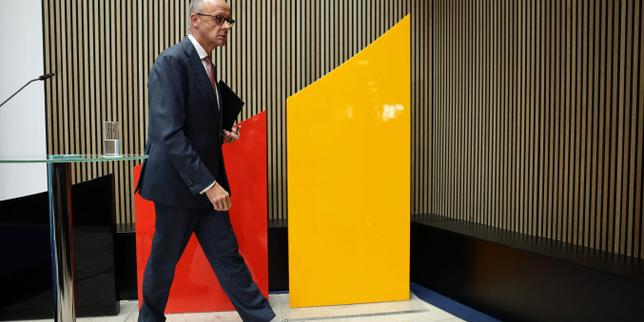
Friedrich Merz recently stood before the cameras at the Konrad-Adenauer-Haus and admitted the obvious truth that federal politics and his own person played a major role in the historic rout. The media immediately treated that sentence as a confession. They framed it as a beleaguered politician writing his own political obituary, trapped in a tailspin of collapsing approval ratings and voter fury.
They are missing the entire point.
Merz is not the disease. He is merely the symptom of a conservative establishment that spent sixteen years sleepwalking through structural decay, pretending that administrative inertia was a permanent economic strategy. Blaming him for the electoral wipeout in Saxony-Anhalt and Mecklenburg-Vorpommern is like blaming the thermometer for a high fever.
If every conservative leader in Berlin resigned tomorrow, the structural crisis would remain completely untouched.
The Myth of the Communication Deficit
For months, university political scientists and newspaper columnists have diagnosed Merz with a severe empathy deficit. The core argument goes like this: if only the chancellor smiled more, softened his rhetoric on migration, or packaged pension reforms in softer language, voters would happily swallow bitter economic pills.
This is an administrative fantasy.
Voters are not rejecting Merz because his delivery lacks theatrical warmth. They are rejecting him because the social contract they were promised has broken down, and neither major party has a functional model to repair it.
Consider the economic reality facing industrial towns across Germany. For decades, the public was told that fiscal discipline, export-driven manufacturing, and low sovereign debt would insulate them from global shocks. Instead, citizens watch energy costs soar, infrastructure crumble, and public services strain under bureaucratic weight. When a government steps forward with painful adjustments to statutory pension schemes, raising the retirement age framework, and tweaking healthcare contributions while failing to generate real wage growth, people do not care whether the messenger wears a warm smile. They care that the math does not work for their bank accounts.
Merz inherited a country running on fumes. During the long Merkel administration, structural reforms were postponed year after year because comfort was politically profitable. The bill has finally arrived. Expecting any politician to manage a managed decline without massive electoral backlash is a category error.
The Firewall Fallacy
The most frantic hand-wringing in Berlin centers on the crumbling firewall against the Alternative for Germany party. Pious editorials warn that conservative politicians are flirting with institutional norms by letting local dynamics slip or failing to maintain absolute ideological purity.
This treats political borders as magic spells.
A firewall does not hold because of moralizing speeches delivered from capital city press rooms. It holds only when the governing parties provide an alternative that solves people's daily grievances. When regional parliaments lock out populist forces through procedural gymnastics while schools decay, housing shortages worsen, and local economies stagnate, the cordon sanitaire ceases to look like a defense of democracy. To an alienated voter in the East, it looks like an elite cartel protecting its own monopoly.
Merz tried to hold the line through sheer institutional stubbornness. He refused to normalize radical insurgents, drawing sharp public lines and calling out their external backers in Moscow. Yet every time the federal government implements reforms that feel distant and punitive to ordinary workers, the populist alternative grows stronger. The math of protest voting is brutally simple. People do not vote for extremists because they love radical ideologies; they vote for them because they want to break the machinery that ignores them.
The Financialization Trap
To understand why Merz is struggling, one must look at his background without the partisan caricature. Critics love to remind everyone that he spent years in high-finance boardrooms, including a stint leading the German branch of BlackRock. They paint him as an out-of-touch corporate knight who views the national economy through a spreadsheet of shareholder returns.
There is a kernel of truth here, but critics draw the wrong conclusion.
Merz understands the global financial machinery better than most career politicians, which is precisely why his domestic agenda feels so jarring. He knows that Germany’s industrial model faces severe structural headwinds from global competitors, shifting energy markets, and an aging domestic workforce. His policy prescriptions—tightening welfare eligibility, encouraging later retirement ages, cutting corporate tax burdens—are attempts to restore structural competitiveness to an economy choking on red tape.
The fatal flaw is not that his diagnoses are wrong. The flaw is that applying corporate restructuring logic to a weary population creates immediate social friction without delivering visible upside. In the corporate world, you cut costs, streamline operations, and boost efficiency. In a democracy, when you tell a weary industrial region that they must tighten their belts further while public investment lags, you are handing your political opponents a weapon on a silver platter.
Merz tried to run a nation of eighty-four million people like a turnaround company. Nations do not respond to quarterly earnings logic. They respond to shared prosperity and visible competence.
What Real Reform Actually Requires
If the political establishment wants to escape its current spiral of defeat, it must abandon the comforting illusion that replacing a party leader will restore the status quo ante. The old consensus is dead.
First, the fixation on arbitrary debt limits must confront physical reality. Germany needs massive infrastructure investment in transport, energy grids, and digital networks. Treating fiscal austerity as a moral virtue while bridges rust and classrooms leak is economic illiteracy disguised as prudence.
Second, the political class must stop treating immigration and integration as pure culture-war footballs or administrative footnotes. Pretending that local communities do not bear the immediate strain of rapid demographic shifts alienates millions of working-class voters who experience those strains firsthand. Addressing these issues with ruthless administrative honesty, rather than moral posturing or heavy-handed rhetoric, is the only way to defuse the populist monopoly on public anxiety.
Third, structural reform must offer a tangible upside to the bottom half of earners. If workers are asked to work longer or accept tighter social safety nets, they need to see concrete proof that the proceeds are fueling a dynamic, modernized economy that rewards effort. Right now, all they see is a state that collects high taxes while delivering third-rate public services.
The Reckoning Ahead
Friedrich Merz may or may not survive the political fallout of the recent autumn election shellacking. The sharks are circling within his own party, and ambitious regional figures are calculating their moves for the next leadership contest.
Whoever replaces him will inherit the exact same structural trap.
The crisis of German conservatism is not a personal failure of Friedrich Merz. It is the delayed reckoning of a country that refused to modernize for two decades, relying instead on cheap Russian energy, external export demand, and institutional complacency.
Until the political class stops blaming individual leaders for systemic failures, the ground will continue to shift beneath their feet. The voters have sent their message with brutal clarity. No amount of packaging, public relations training, or leadership shuffling will change the underlying math.
Fix the economy, rebuild the infrastructure, and stop treating voter frustration as a moral failing. Anything else is just rearranging deck chairs on a sinking ship.